WINTERNACHTEN 1

20091013110245

Winternachten 1, the first big full-evening programme in the festival, offers you a choice of programmes on five stages in one theatre. Your ticket gives access to all venues. With literature, film, music, and dozens of guests from The Netherlands and abroad. This evening is opened by Dutch Lawyer Gerard Spong, who'll give his view on the Dutch attitude towards rules. Among the others performing tonight are Raoul Heertje, Tarun Tejpal, Xue Xinran, Bas Heijne, Tash Aw and Hagar Peeters. An international programme from the Arab world, Morocco, Turkey, South-Africa, Indonesia, China and elsewhere in the world.

On the main stage, the evening evolves around the 'Golden Rule'. Wouldn't it be easy if we could thin out the deep and dark wood of regulations to a handful of Golden Rules? Are there any principles we all agree on, no matter where we come from? Or is that aimed too high and do we have to hope for something rules will never be able to fulfil? It is a question that isn't solved in an hour or so. Raoul Heertje meets writers from all corners of the globe in the Grote Zaal for a slightly disorganizing quest for Golden Rules. In the other venues meanwhile all those laboriously acquired Golden Rules are broken ever so cheerfully.

Information

Date and time Friday 15 January 2010 from 20:00 to 01:30 hrs
Location Theater aan het Spui & Filmhuis Den Haag

Tijdschema 15 January

Filter by location:
Filter by spoken language:
Time Location
20:00 - 21:00 Theater aan het Spui - grote zaal In search for the Golden Rule I: the Dutch and rules
20:00 - 21:00 Theater aan het Spui - kleine zaal Indonesia, country of outsiders
20:00 - 21:00 Filmhuis - zaal 7 Wintercafé 1: Godless in Morocco
20:00 - 21:30 Filmhuis - zaal 6 Film: The Yes Men Fix the World
20:00 - 23:50 Theater aan het Spui - foyer Foyerprogramma: music by DJ Miss World - booksigning sessions in the bookshop
21:05 - 22:00 Theater aan het Spui - grote zaal In search of the Golden Rule II
21:05 - 22:00 Theater aan het Spui - kleine zaal The tone and the Music
21:05 - 22:00 Filmhuis - zaal 7 Wintercafé 2: Who is afraid of Youth?
22:05 - 23:00 Theater aan het Spui - grote zaal In search of the Golden Rule III
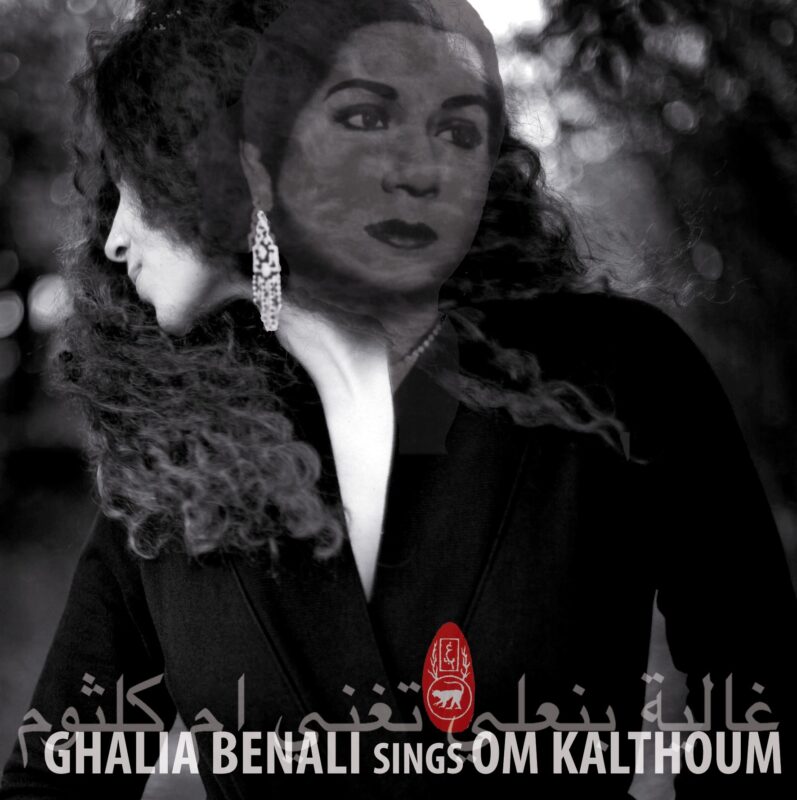
22:05 - 23:00 Theater aan het Spui - kleine zaal Music: Ghalia Benali
22:05 - 23:00 Filmhuis - zaal 7 Wintercafé 3: Istanbul and the Cosmopolitan Future
22:05 - 23:20 Filmhuis - zaal 6 Film: Je Veux Voir
23:05 - 23:50 Theater aan het Spui - grote zaal Love's Golden Rules
23:05 - 23:50 Theater aan het Spui - kleine zaal I speak your language
23:05 - 23:50 Filmhuis - zaal 7 Wintercafé 4: Rules for Radicals 2.0
23:50 - 01:30 Theater aan het Spui - foyer Dancing into the night: Amsterdam Klezmer Band

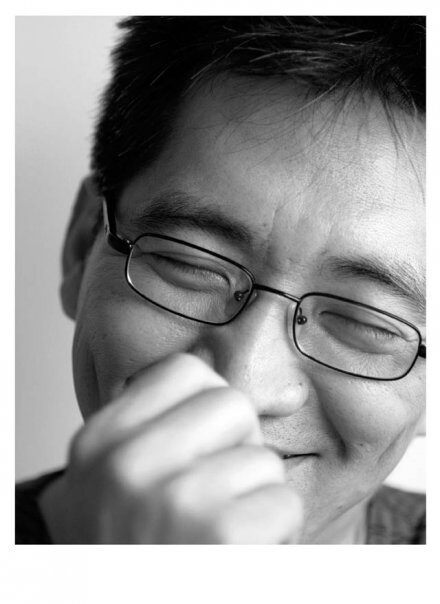
Tash Aw

(Taiwan, 1971) is a writer and essayist with Malaysian roots. His globally successful debut novel The Harmony Silk Factory was translated into more than twenty languages and won renowned literary prizes. His second book, Map of the Invisible World (2009) was also an instant international success. Both books deal with Asia's recent colonial past. The second novel is partly set in the turbulent 1960s in Indonesia; his characters make tangible the effects that political decisions can have on ordinary people. Subsequently, Aw published the novels Five Star Billionaire (2013) and We, the Survivors (2019), as well as the non-fiction book The Face: Strangers on a Pier (2016), in which he explores modern Asia through his own family story of migration and adaptation.
20231024130505 2

Antjie Krog

(South Africa, 1952) is a poet, writer, academic and a cherished reciter. Her book Country of My Skull (2000, adapted for film in 2004) is a personal account of the proceedings of the Truth and Reconciliation Commission. She published her autobiographical memoirs as A Change of Tongue (2003). Krog has won many prizes, including the Hertzog prize in South Africa and the 2018 Gouden Ganzenveer in the Netherlands. An anthology of her poetry was published in Dutch in 2010, titled Hoe zeg je dat (How Do You Say That), and Begging to be Black, the sequel to Country of My Skull and A Change of Tongue.
20190107121937 1

Asis Aynan

(Haarlem, NL, 1980) studied philosophy at the University of Amsterdam. Aynan, the son of Moroccan immigrants, is an active advocate of Berber culture. His debut Veldslag en Andere Herinneringen (Battle and Other Memories) was published in 2007, about his youth or, as he calls it, his "Catholic-Islamic-Berber background". Aynan is the creator of the Berber Library, a series of classics from Berber countries translated into Dutch. He further wrote Ik, Driss  (I, Driss, together with Hassan Bahara), the short-story collection Gebed zonder eind (Endless Prayer, 2014) and Linoleumkoorts (Linoleum Fever, 2019). Aynan works as a teacher at Hogeschool van Amsterdam; his articles have appeared in the NRC, Het ParoolFolia and Trouw.
20080131132856

Petina Gappah

(Zimbabwe, 1971) debuted in 2009 with the short-story collection An Elegy for Easterly, followed by her first novel The Book of Memory (2015) and another story collection, Rotten Row (2016). Her new book Out of Darkness, Shining Light tells the story of the perilous, months-long trek made in 1873 by 69 workers to transport the body of the explorer David Livinstone from central Africa to the Zanzibar coast, so it could eventually be buried in England. "I write the history of the black people of Zimbabwe, those about whom nobody ever speaks." Gappah studied law in Zimbabwe and Cambridge, worked as a lawyer, and lives in Berlin as artist-in-residence. She has won many international prizes for her work.
20150923121628 1

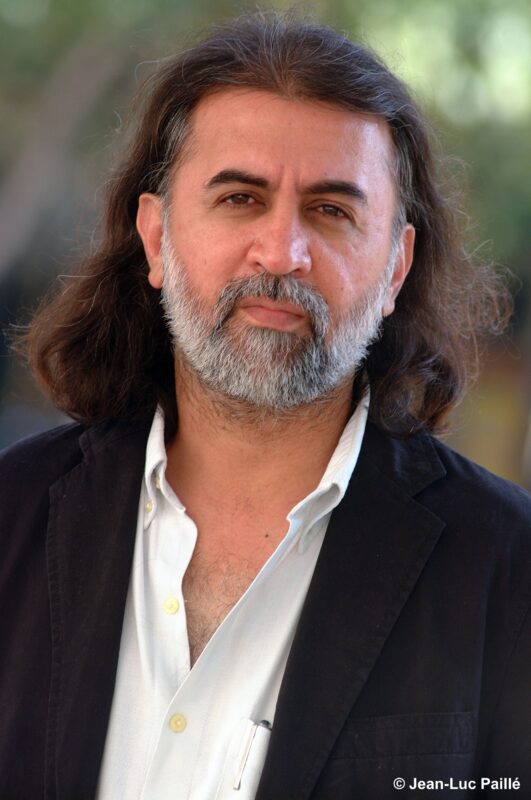
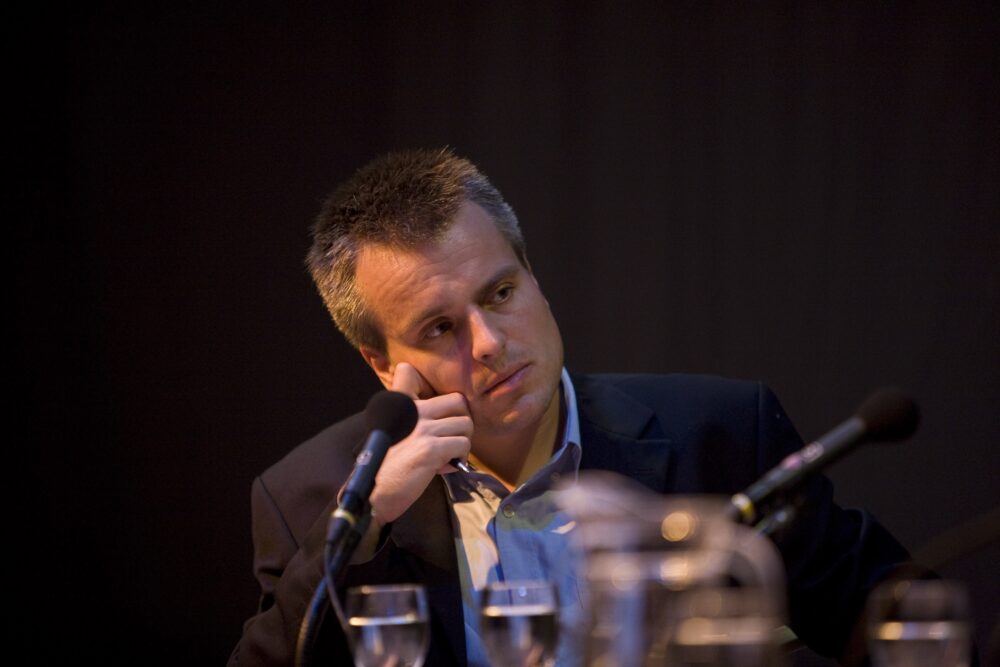
Tarun Tejpal

(India, 1963) in 2009 was elected by Business Week one of the fifty most influential men of India. He owes that to his pioneering work as an investigative journalist. In 2000 Tejpal started the webzine Tehelka which became the watchdog of Indian media. in 2001 Tehelka's inquiries led to the resignation of the Minister of Defence. Meanwhile Tehelka ('sensation' in Hindi) has developed into a leading weekly magazine-cum-news site with a staff of more than 100. In his spare time Tejpal found time to write two novels: The Alchemy of Desire (2005), and The Story of my Assassins (2009). Both novels portray the complexities of Indian society, but in his debut passion and a longing for love play a central role. V.S. Naipaul called Tejpal's debut ‘brilliant’.
20091015133935

Ronelda S. Kamfer

(South Africa, 1981) is one of today's most important South African authors. She writes in Cape-Afrikaans, a spoken language containing English words and slang. Her work has been translated into Dutch, French, Greek, Italian and English. Her first poetry collection Noudat Slapende Honde (Now Then Sleeping Dogs, 2008) paints a sharp picture of poverty. Santekraam (2012) contains stories in verse about a fishing village that must make way for a military site. Mammie (2017) is a loving as well as raw ode to her mother. Chinatown (2021) is typically hard-hitting. Kamfer's poems, as controlled as they are intimate and darkly humourous, tackle violence, the position of women, love and parenthood. Her first novel, Kompoun, was published in 2021. She compiled Die maan is swart (The Moon is Black, 2022), a collection of poetry by Adam Small, and has translated two of Kirsty Applebaum's Princess Minna children's books into Afrikaans.
20211118142156 2

Christine Otten

(Deventer, NL, 1961) is a writer, performer and theatre producer. Her 2004 breakthrough came with De laatste dichters (The Last Poets), nominated for the Libris Literature Prize. This novel about the lives of four black Americans who became famous as "The Last Poets" was adapted for theatre. We hadden liefde, we hadden wapens (We Had Love, We Had Weapons), Otten's swirling 2016 novel, is about the life of the black citizen's rights activist Robert F. Williams in America, and about taking a stand for the right to be who you are, regardless of the consequences. Een van ons (One of Us, 2020), her novel about lifelong prisoner Luc was performed as a theatre monologue. In her novel Als ik je eenmaal mijn verhaal heb verteld (Once I told you my story, 2024), Anir tries to build a new life ‘outside’ after 12 years of detention. The Blocknotes Foundation, co-founded by Otten in 2020, uses creative writing for empowerment and talent development of people in prison.
20240923140124 2

Ernst Reijseger

(Bussum, NL, 1954) was taught to play cello as of age eight by Anner Bijlsma, then the first cellist of the Concertgebouw Orchestra. At the end of the 1960s he began improvising and developed his own playing style. From this time onward he performed throughout Europe with various ensembles, playing modern classical music as well as jazz improv. In the late 1980s he founded the Clusone Trio, which made five albums in ten years and gave concerts around the world. Currently Reijseger performs mostly with pianist Harmen Fraanje and the Senegalese vocalist Molla Sylla. He also composes scores for films and documentaries, including for director Werner Herzog. He teaches children and adults worldwide and has accompanied the likes of poets Ramsey Nasr and Ester Naomi Perquin, writer/poet Joke van Leeuwen, and artist Gerti Bierenbroodspot. The cellist has made more than 150 CDs and won the Boy Edgar Prize and an Edison, among others. In 2010 he won a Golden Calf (the Dutch Oscar) for best film score.
20100201125752

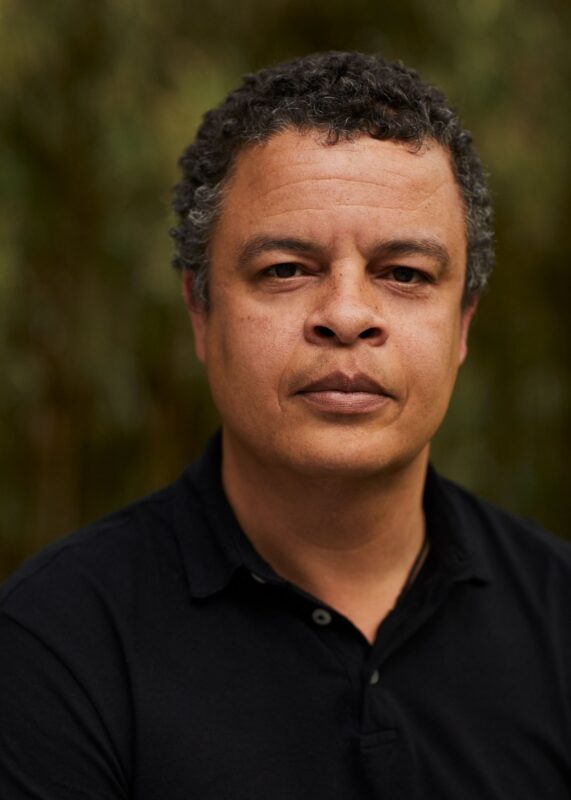
Bas Heijne

(Nijmegen, NL, 1960) writes essays, short stories and plays, and is a columnist with the daily newspaper NRC Handelsblad. He published the novels Laatste woorden (Last words) and Suez and received the Henriëtte Roland Holst Prize in 2005. In 2011's Moeten wij van elkaar houden, het populisme ontleed (Do We Have to Love One Another? Populism Dissected) Heijne shows how globalisation and individualism pave the way for populism. Angst en schoonheid (Fear and Beauty) was published in 2013, an essay about Dutch writer Louis Couperus, whom Heijne admires. In the same year his documentary about Couperus was broadcast. In 2015 he hosted the five-part documentary De volmaakte mens (The Perfect Human). In 2016 his essay Onbehagen – nieuw licht op de beschaafde mens (Discontent - new light on civilized man) was published. In 2017 Heijne received the P.C. Hooft Award for his essayistic works.
20131029170754 1

Ramsey Nasr

(The Netherlands, 1974) is a poet, writer, actor and director. He made his poetry debut in 2000 with 27 gedichten & Geen lied (27 Poems & No Song). Nasr acts in films and TV series and is a member of the International Theatre Amsterdam ensemble. His stage and screen roles have been awarded multiple times. He also writes theatre pieces, columns, essays and opinon pieces. From 2009 to 2013 he was the Dutch Poet Laureate. In his essay collection De fundamenten (The Fundamentals, 2021), he assesses a corona pandemic-struck nation; Nasr compacter (2021) gathers the best of his poems from a two-decade career. In 2023 he created a series for Dutch TV about objects from his own collections, Dr Nasrs Wunderkammer (Dr. Nasr's Chamber of Wonders).
20231030143806 1

Raoul Heertje

(Bussum, 1963) as a stand-up comedian, tv maker and writer likes to mop the floor with – in his eyes – often stupid politicians and journalists. In 2009 he began his own talk show with VPRO, Heerlijk, eerlijk Heertje (delicious, honest Heertje). In this programme he showed that many seemingly spontaneous processes in tv programmes are actually precooked. In 1990 Heertje introduced the stand-up comedy in the Netherlands with the launch of the Comedytrain. He is also the initiator of Comedy Café Toomler in Amsterdam. Heertje is especially known as team captain of the tv programme Dit was het Nieuws (the Dutch version of Have I got news for you) cooperating sincs 1995. In addition he writes. He wrote columns and interviews for among others Vrij Nederland, Sportweek, NRC Handelsblad and Het Parool, which were published in book form. In 2009-2010 he made the VPRO programme Wintergasten (Winter guests). Raoul Heertje also performed in foreign comedy clubs and was a guest in various foreign tv programmes, such as Ruby Wax’ show. Right now he is working on a new book Circus Nederland (Circus the Netherlands), on the media and manipulation, which will appear in 2011.
20091013110245

Stephan Sanders

(Haarlem, NL, 1961) is a columnist, presenter, essayist and writer. In 2015 he came out of the closet for the second time: he publicly acknowledged that he believes in god, even if this is "not done" in intellectual circles. Since mid-2016 he has been a regular columnist with the Volkskrant newspaper. In his 2007 book Zon, zee en oorlog (Sun, Sea and War) he describes experiences in places like Capetown, where he discovered that his biological father was South African. Sanders, who was adopted by Dutch foster parents, studied philosophy and political science and has written for various dailies and weeklies since 1982. He has published story and essay collections, novels, journalistic pieces, and the 2013 book Iets meer dan een seizoen (A Little More than One Season).
20160319220043 1

Naima Albdiouni

(Antwerp, 1981) in her first novel Voyeur (2009) writes about the hard life in Tangier, where traditional and poor Moroccans and free compatriots educated in the West live together with difficulty. People talk on and on but no one communicates and everyone judges on everything that's different. The main character is Abdullah, who has been released from the infamous desert prison Lmart. One of the central questions in the novel is whether people are really as free as they think they are. Albdiouni debuted with the much-praised story ‘F’, which appeared in the book of short stories Gelezen en goedgekeurd (Read and passed) and published opinionated columns in De Standaard entitled Te Naima of te laten (To Naima or to leave). For De Buren she wrote a radio book which she read herself. Albdiouni is a translator of French and Spanish and lived in Spain and Morocco for a long time when she studied.
20091112134445

Fouad Laroui

(Morocco, 1958) in 2013 won  the Prix Goncourt de la Nouvelle for his collection of short stories The Curious Case of Dassoukine's Trousers. Since his debut in 1996 humor has been his weapon against intolerance, both in his novels and in his other work. In his fiction, such as the collection of short stories Poldermarokkanen (2010), the novels Une année chez les Français (2011) and La femme la plus riche de Yorkshire (2011), Laroui describes time and again the collision between North African culture and Western culture. Laroui grew up in Casablanca and studied econometry, mathematics, physics and architecture in Paris. He lectures French literature and Arab culture at the University of Amsterdam.
20181217095441 1

Paul van der Gaag

(Netherlands, 1958) has produced and presented the VPRO radio programme OVT since 2002, a two-hour show about the historical roots of current events as well as newly released historical books, films, commemorations, and anything else related to history. The show features live interviews, reportage, columns and a weekly documentary during the last half hour. He was already linked to OVT since 1992 as a programmer and previously freelanced for other national Dutch broadcasters such as VARA and IKON.
20120204162040

Pieter Steinz

(Rotterdam 1963 - Haarlem 2016) in 2010 published Grote Verwachtingen. Opgroeien in de letteren in 25 schema’s (Great Expectations. Growing up in Literature in 25 Charts). He did the same in Luisteren & cetera, (Listening etc) about 25 1970s pop albums. Somewhat earlier Macbet heeft echt geleefd (Macbeth Really Existed) appeared, on places where literary heroes used to live. In Verleden in verf (Past in Paint, 2011), Steinz sketches Dutch history in forty paintings. Steinz became an art editor with NRC Handelsblad in 1989. From 2005-2011 he headed the bookpages of that paper. Steinz studied ancient history and English. Earlier he wrote, among other books, Klein ABC van de wereldliteratuur (Concise ABC of world literature; 2008), Het web van de wereldliteratuur (The World Literature Web; 2007) and Lezen op locatie (Reading on Location; 2003), sixty maps on which he identifies where masterpieces of literature are set. In 2010 he published De Duivelskunstenaar (The wizard), a journey through Europe in search of Faust. Since 2012 Steinz has been head of the Dutch Literary Fund. He died in august 2016.
20111103145813

Shahriar Mandanipour

(Shiraz, Iran, 1956) is one of the most successful Iranian writers of today. His work, which consists of essays, children's books, travelogues, novels and film reviews, has been awarded many times. In 2009 a novel of his appeared in translation for the first time, Censuring an Iranian Love Story, which was received with a lot of acclaim by the international press. The main character is the writer Shahriar who decides to write a love story on Sara and Dara, the Romeo and Juliette of Islamic Iran. Their love and the writing process are frustrated by the severe moral and censorship laws in Iran. Mandanipour has had an eventful life. In the 1970s he joined the demonstrations against the sjah and in the 1980s he fought in the war against Iraq. He risked his neck as editor-in-chief of the literary magazine Asr-e Panjshanbeh (Thursday night), founded in 1999 and banned in 2007. Today Mandanipour lives in exile in Cambridge and lectures at Harvard University.
20091013155458

Vamba Sherif

(Liberia, 1973) is a novelist, essayist, journalist and film critic. His debut novel Land of the Fathers (1999) is partly based on his grandmother's stories and deals with the clash between slaves returning from the US and other Liberians. The novel The Black Napoleon (2015) portrays Samori Touré, who founded the Wasulu-empire in western Africa in the 19th century. His journalism, including film reviews, appears in publications such as The New York Times, Trouw and One World. Together with  Ebissé Rouw he compiled Zwart (Black, 2018), a collection of stories by Afro-European authors from the Low Countries. Ongekende liefde (Unprecedented Love), in which he tells his life story to his ten-year-old daughter Bendu, was published in 2021. Sherif's historical novel The Emperor’s Son (2023) follows Zaiwulo, a young prodigy who trains under sage Talata of the Haidarah family in Musadu. Entangled in the intrigues of Emperor Samori, the 'Black Napoleon,' Zaiwulo matures into a formidable soldier.
20240930103308 2

Seray Şahiner

(Turkey, 1984) is a young Turksish writer, who grew up in Istanbul. In 2007 her book of short stores Gelin Ba (Wedding Hairdo) received a special mentioning in a Turkish award ceremony of short stories. In 2008 three stories from the book were adapted for the stage and staged in various theatres in Istanbul.
Seray Sahiner studied journalism and worked for magazines like Aylık Paldır Kültür Dergisi Hayvan (The Monthly Wham-Bam Culture Magazine Beast) and Aylak Öykü Dergisi (Story Magazine for Layabouts). At the same time she was involved in the publication of the fanzines Kaygan Zemin (Slippery Grounds) and Kara Kutu (Black Box) and worked as a correspondent for Marie Claire and two newspapers. Right now she writes screenplays and is a correspondent for the newspaper Gaste.
20091028101638

Markha Valenta

Markha Valenta (1967) assistant-professor at the Radboud University, is especially interested in the interaction between global politics, democratic societies and questions of religion, citizenship, and belonging. Her articles in NRC Handelsblad on Dutch moralism and intolerance have caused a great deal of controversy. Ms Valenta argues in a reply to an article in the Gay Krant on Tariq Ramadan that inside a democracy there must be room to think and act differently. To her this not only applies to homosexuals (Ms Valenta is a lesbian) but to Muslims too, who have their own views on homosexuality.
20100126114838

Hylke

performs sporadically with performer UNOM. Their first joint stage experience was with the poets' collective Poetry Circle. Then the two lost sight of each other, but when they met again Hylke took the guitar and they jammed away. Short films of these sessions can be seen on youtube. Meanwhile a year has gone by and they will have their initiation as a duo during Winternachten.
20091210105743

Gerard Spong

(Paramaribo, 1946) is regarded as one of the best criminal lawyers in the Netherlands, often delivering fierce criticism on Dutch society. I want to make people realise that they're living in a narrow-minded country,' he once said in an interview with Intermediair. Spong established himself in 1976 as a criminal lawyer in The Hague, and later in Amsterdam. As early as 1978 he drew the attention of the media with the epoch-making case against three members of the Rote Armee Fraktion (Red Army Faction) who were imprisoned in the Netherlands. He denounced the media after the death of Pim Fortuyn and tried to get Geert Wilders in the witness box. Spong likes to keep people on the alert with crisp remarks. Thus he said that he'd much wanted to bring charges against queen Beatrix for meeting Robert Mugabe. Spong is opposed to a middle-class mentality, which he claims is the product of social pressure and oppression. 'I can't accept that. Because a middle-class mentality eventually paves the way to social aggression.'
20090921115903

Unom

(1986, St Maarten) is one of the most promising young performers of today. UNOM (Untouchable Nobody Outplays Many) grew up on St Maarten as Jörgen Gario. According to him, he was inspired by his creative mother, books on philosophy, J.A. Deelder, wise sayings of Bob Marley, Bill Clinton and Gandhi, love and existentialism. In 2003 he wrote his first songs, exploring his musical and poetic limits. The rap with critical texts is a strong basis, but UNOM likes to push out frontiers. That's why he regularly participates in international musical projects. Late 2009 he took part in Change Beat in Tanzania with young people from all parts of the world played music together. During Winternachten he teams up with Hylke.
20091210110013

Jonathan Safran Foer

20091012171227

Sandew Hira

(Suriname, 1955) is the pen-name of economist and writer Dew Baburam. He published twenty books and numerous reports and articles on the recent history of Suriname, the position of migrants in the Netherlands and the Hindu diaspora. Hira is among others things author of the book Eddy Jharap. Vertrouwen in eigen kunnen (Eddy Jharap. Confidence in One's Own Abilities (2007), the story of a poor boy who succeeds in becoming managing director of the Surinamese state oil company. Hira developed the Historic Database Suriname, with data of Hindu, Javanese and Chinese contract workers. Right now he's working on a global database on Hindu's and a thirty volume encyclopedia on the colonial history of Suriname. Dew Baburam is the brother of John Baburam, one of the victims of the December murders. On this black page in Surinamese history he wrote the book Balans van een coup (Balance of a Coup, 1983). Hira writes regularly in the Dutch media and together with Ivette Foster made historical documentaries on Suriname.
20091015114820

Soundos

(Amsterdam, 1981) is an actress, host and stand-up comedian. In 2006 the magazine BLVD declared her one of the most promising women in the Netherlands. Soundos el Ahmadi received national renown in her role as the Moroccan farm girl Aïsha in the film Shouf Shouf Habibi. After secondary school she went to drama school for a while, but left it prematurely to make her own theatrical productions and to become a stand-up comedian. Without any experience she made it to the finale of the stand-up comedy tournament of the Amsterdam Kleinkunst Festival and joined Toomlers almost immediately. As one of the latest members of the Comedytrain she makes fun of her Amsterdam-Moroccan origin and social biases. Right now she tours the country with The Girls' Night Out.
20091201165951

Hugo Brandt Corstius

(Eindhoven, 1935) is one of the most productive and controversial writers in the Netherlands. In all he published more than forty books since 1966. He gained national fame as a columnist and literary critic. Brandt Corstius wrote his often cutting pieces using more than fifty pen-names. According to himself every one of them is part of his persona. His columns as Piet Grijs for VN and Stoker for the Volkskrant regularly led to controversy. In 1985 the Dutch Cabinet refused to give him the P.C.-Hooft Prize because according to the responsible minister for culture he used offence as his sole instrument: In a column Brandt Corstius had resembled the minister of finance to Adolf Eichmann. Eventually he received the prize in 1987, but owing to the riot, it had been degraded from state prize to ‘ordinary’ prijs. Brandt Corstius studied mathematics in Amsterdam and is a specialist in computer linguistics.
20091026162243

Anton Valens

(Paterswolde, 1964) got critical acclaim and various literary awards for his debut Meester in de Hygiëne (Master in Hygiene, 2004). In this strongly autobiographical collection of short stories Valens writes about his experiences in home care. Just like Valens, the main character Bonne is a visual artist with ties with Groningen. His second book Dweiloorlog (Mop War, 2008) is a sequel to his debut, with more stories about Bonne's experiences. In 2009 he published the novella Vis (Fish). Again the main character is a visual artist who this time sails on a fishing boat, and so gets to know the rough life of a fisherman. In between he wrote a travelogue on China, Ik wilde naar de rand van Beijing (Journey to the Outskirts of Beijing, 2008). In 2012 he published Het boek Ont (The book Ont) and in 2016 Het compostcirculatieplan (The compost circulation plan), the novel for which he has been awarded with the F. Bordewijk Prize. The jury states: "Gardening is garden warfare in this wonderful novel about friendship and mourning. In superb style Valens shows the effort with which we, season after season, try to get to grips with life - with our feet in the mud, in which we finally all will have to disappear."
20091210131114

Joke van Leeuwen

(The Hague, NL 1952) is a jack-of-all-trades. Apart from writing prose and poetry for children and adults, she illustrates and performs. In 2008 and 2009 she was city poet of Antwerp, Belgium. Her illustrated novel Alles Nieuw (Everything New) made it to the shortlist of the 2009 Ako Literature Prize. Van Leeuwen's children's books have been awarded many times with the Zilveren Griffel (Silver Pencil), Gouden Uil (Golden Owl) and the Woutertje Pieterse Prize. Especially her children's book Deesje was translated in many languages and awarded abroad. The power in her work is that she enriches her texts with beautiful illustrations. Van Leeuwen's main characters often walk through life with a gaze of wonderment while at the same time they seem locked by everyday routine. Van Leeuwen’s career began in 1978 when she won the Camaretten (cabaret) festival and published her first children's book. Since then she hes been performing in smaller and bigger productions, combining cabaret, literature and image.
20121114135827

Sanna Andréa-Dia

(The Hague, 1979) is a theatre maker, dancer, singer and cellist. She is doing an international musical training in London and trained at the drama school in Utrecht. Andréa-Dia has a Dutch mother and a Lebanese father, which explains her interest in intercultural connections. She teaches drama at the Geert Groote College in Amsterdam and is cellist in the women's quintet Joya.
20091105095448

Maarten Ornstein

(Amstelveen, 1967) is a saxophonist, composer and musical jack-of-all-trades who is involved in a great number of projects. In 2004 he founded the group DASH! to combine all the projects he was working on, from theatre productions and concerts with classical musicians to performances with work of his own. In 1989 Ornstein won the soloists' prize at the North Sea Jazz festival. Some years later he was involved in the foundation of the big band New Cool Collective, as a composer and an arranger. Also, Ornstein composed for, among others, the Metropole Orchestra, Ties Mellema, Calefax Rietkwintet, Koor Nieuwe Muziek en North Sea Jazz Festival.
20091116104922

Marja Pruis

(The Netherlands, 1959) has been writing about the expectations men and women have of each other and of life since her debut novel Bloem (Flower). Her novel Atoomgeheimen (Nuclear Secrets is about intimacy and the loss of ideals. She has been called the chronicler of contemporary womanhood; she explores her themes further in her novels De vertrouweling (The Confidant) and Zachte riten (Soft Rites). Pruis works at De Groene Amsterdammer weekly as a literary editor and columnist, writing essays on topics as diverse as humour, shyness and greed. She received the Jan Hanlo Prize for her collection of essays Kus me, straf me, and the J. Greshoff Prize for essayism with Genoeg nu over mij. For her columns, collected in Oplossingen (Solutions), she received the J. Heldring Prize. In Boos Meisje. Over vrouwen en frictie (Angry Girl. About Women and Friction), she writes about the split in which girls and women find themselves, including portraits of writers she admires such as Renate Rubinstein and Vivian Gornick. Her recently published confrontational novel Huiswerk (Homework) is about white privilege and the tension between employer and employee.
20231018153850 2

Andreas Harsono

(East Java, 1965) is an investigative journalist who lives and works in Jakarta. Harsono has devoted a lifetime to independent journalism in Indonesia. He was involved in the foundation of the Alliance of Independent Journalists (AJI) in Jakarta and of various other Asiatic organisations defending free speech. Harsono was fired in 1994 as reporter of the Jakarta Post because he was said to be ‘unsuited for the job’. Since then he has been searching his way through the Internet and other sources. Right now he is chairman with the Pantau Foundation, a media training group, writes blogs (with articles in English and Malay) and is an avid twitterer. Recently he travelled across Indonesia to write a travelogue entitled A Nation in Name: Debunking the Myth of Indonesian Nationalism. The book is to appear in English. He co-edited a book in Malay on literary journalism Jurnalisme Sastrawi: Antologi Liputan Memikat dan Mendalam. In 1999 he was recipient of the Nieman Fellowship of Harvard University.
20090928160650

Joris Luyendijk

(Amsterdam, 1971) travelled to Egypt at age 24 to do research among Egyptian contemporaries. That not only earned him a degree in religious anthropology, but also his debut, Een goede man slaat soms zijn vrouw (A Good Man Sometimes Hits his Wife). It was an instant success and Volkskrant and Radio 1 Journaal asked him to become a correspondent in the Arab World. Later he also worked for NRC Handelsblad and NOS. During his stay he wrote Een tipje van de sluier (A Corner of the Veil) and after his return to the Netherlands in 2003 Het zijn net mensen (People Like Us), on his experiences as a correspondent. Meanwhile Luyendijk has shifted his attention elsewhere: Dutch politics and sustainability. His latest book, Je hebt het niet van mij, maar…Een maand aan het Binnenhof (Don’t mention my name, but… A Month in Parliament), caused a great deal of controversy in Dutch journalist circles. Joris Luyendijk took a closer look at the bell-jar world of Dutch politics. With some amazement he describes how close the link between journalists, lobbyists, public relations officials and politicians is. In 2006 and 2007 Luyendijk hosted the tv interview programme Zomergasten (Summer Guests) and in 2007-2008 and 2008-2009 Wintergasten (Winter Guests). Since March 2010 he is one of the regular hosts of the late night radio current affairs programme Met het oog op morgen (With a View to Tomorrow).
20080206105246

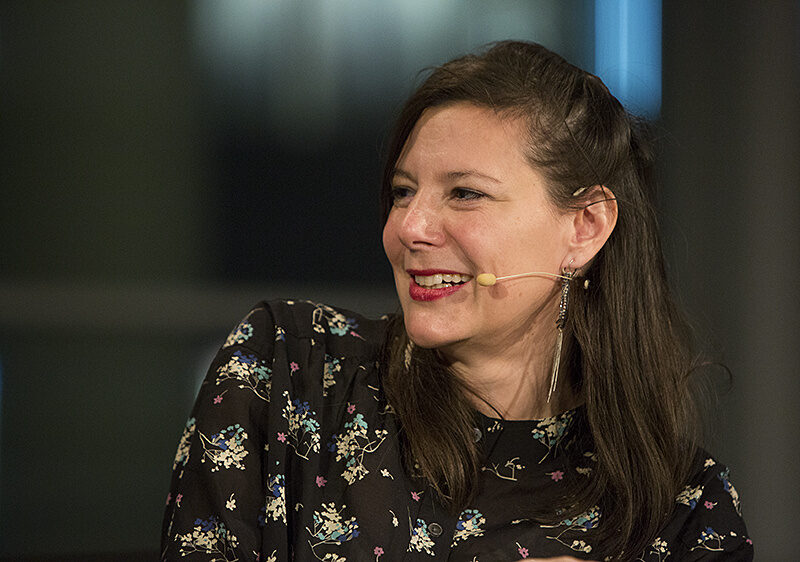
Hagar Peeters

(Amsterdam, 1972) was already known as a poet-performer before a syllable letter of hers had been published. In 1997 she became well-known nationally through her performances at big literary festivals. Her debut Genoeg gedicht over de liefde vandaag (Done enough love poetry for today) followed only two years later and was nominated instantly for the NPS-Cultuurprijs. Her second collection of poems, Koffers Zeelucht (Trunks full of sea air; 2003) was awarded twice. By the end of 2008 Loper van Licht (Light walker) appeared. Peeters aspires to give poetry a bigger role in society. Early 2009 she participated in the election of Dutch Poet Laureate. Her new collection of poems Wasdom (Growth) was published in 2011. In 2016 her first novel was published, 'Malva'. It tells the story of the daughter of poet and Nobel Prize winner Pablo Neruda.
20161215215032 4

Alfred Schaffer

(Leidschendam, 1973) is a poet, translator and lecturer at the University of Stellenbosch, South Africa. He made his debut in 2000 with the poetry collection Zijn opkomst in de voorstad (His Rise in the Suburb). Over the years, his poetry collections were often awarded or nominated for several important prizes, and translations appeared in English, Afrikaans, French, Chinese, Indonesian, Swedish and other languages. For the collection Kooi he received the Jan Campert Prize and the Ida Gerhardt Poetry Prize in 2008. His work is sometimes humorous, sometimes matter-of-fact and at the same time full of absurd inventions. In 2014, he published his, again critically acclaimed collection Mens Dier Ding. In 2021, he published the personal collection Wie was ik?, for which he received the Herman De Coninck Prize. That same year, Alfred Schaffer was awarded the P.C. Hooft Prize, the largest annual oeuvre prize in Dutch literature.
20250116131023 1

Elsbeth Etty

(Hulshorst, NL, 1951) received the Anne Vondeling Award for political journalism in 2008, owing to her sharp analyses of social problems. She is a journalist in the widest sense of the word. Besides being an editor and columnist with the NRC Handelsblad newspaper, she makes frequent appearances on radio and TV. In 2007 she debuted as a novelist with Maak jezelf maar klaar (Go Get Yourself Off), in which one of the characters from Harry Mulisch's The Discovery of Heaven figures as a main character. Etty obtained her Ph.D. with distinction from Utrecht University with a biography of Henriëtte Roland Holst, Liefde is heel het leven niet (Love Is Not All of Life, 1996). Her newspaper columns appeared in four different books. Her reviews were compiled in Dames gaan voor - Van Hella Haasse to Connie Palmen (Ladies First: From Hella Haasse to Connie Palmen, 1999). Etty is a special lecturer in Literary Criticism at the Free University in Amsterdam, and is now at work on a biography of the late Dutch poet and songwriter Willem Wilmink.
20100201124623

Saskia De Coster

(Belgium, 1976) in the blurb of her novel Wij en ik (We and I, 2013) Tom Lanoye called her ‘for years the most stubborn, most capricious and most attractive pen in Belgium. In this penetrating family novel she chastises modern European man and describes how strong family ties are. ‘The Great Flemish novel isn't dead. It has just been written by Saskia De Coster’, Herman Koch wrote. Multitalented De Coster made her debut in 2000 with the story Onder elkaar (Among Each Other). She writes with gusto and soaks her stories - often populated by unwordly characters  - in a firm dash of humor. She writes columns too, is a visual and video artist and she writes for the theatre - and lyrics. Saskia De Coster is very active on international literary stages. De Costers latest novel was published in 2015 and received (just like 'Wij en ik' did) the 'Cutting Edge Award'.
20131010135936 1

Het Verbond Tegen De Liefde

Bert Hana (Heerlen) is a theatre maker, host and organiser of theatrical events. The general public know him from tv commercials. He played the frightened boy with the quarterly figures in a Cup a Soup commercial and was a sausage seller in an Unox tv advert. In 2009 he hosted the Uitmarkt programme in Theater Frascati. In 2000 Hana moved from Limburg to Amsterdam, where he took drama, singing and dancing lessons with theatre group De Nieuw Amsterdam. Since then he has played in various theatre productions, films and tv series. Late 2009 Hana won the Fringe Award for his performance Papadag (Daddy Day) a ‘slide show’ where dad Bert Hana reports on his holiday with his daughter of six.
20091124131303

Chris Keulemans

(Tunisia, 1960) is a writer, essayist, traveller and popular panel moderator. He has published fiction and non-fiction; was the director of the debating platform and venue De Balie; and was founder of the literary bookshop Perdu and the cultural centre De Tolhuistuin (all in Amsterdam). He performed with Enkidu Khaled in their jointly created documentary play Bagdad. Due to his curiosity about how artists recreate their cities after a crisis, he travelled to Sarajevo, Beirut, Tirana, Algiers, New York, Kiev, Jakarta and Qamishlo. At the invitation of PAX, he wrote Srebrenica & PAX 1995-2020, an overview of 25 years of support to the Association of Women of Srebrenica by the IKV and PAX in response to the genocide in Bosnia. In 2021 he published Gastvrijheid (Hospitality), in which he explores the art of hospitality through a mix of travel stories, observations, memories and imagery.
20211110133423 1

Uğur Ziya Şimşek

(1980) wrote his first novel, Cin Tarikatı (The Order of Djins) at the age of 24. Out of frustration by the lack of interest of the big publishinghouses in young writers, he founded a publishing house and an non-governemental organisation called Sokak Yazarları Hareketi (Movement of Streetwriters). He published his own work, and that of other young writers. This group, that doesn't feel ashamed to sell books in the street, is a new element in the literary scene in Turkey. Uğur Ziya Şimşek teaches law in a private organisation. Themes in his novels are social exclusion, politic and psychology. He tries to show the influence of Istanbul on the indivual.
20091207100936

Mohammed Benzakour

(Morocco, 1972) is a publicist, columnist, writer, and poet. In 2014 he won the 2013 E. du Perron Prize for his novel Yemma, based on the story of his mother, who has a stroke and ends up in care institutions not geared to illiterate Moroccans. Benzakour grew up in a first-generation family of migrant workers in Zwijndrecht, NL, where he became a city councillor while studying sociology and public administration. As of 1998 he has taken part in public debates on issues ranging from the long arm of the Moroccan government to the squandering of leftist ideology by the Dutch Labour Party to the captive polar bear Knut. His columns and opinion pieces for the Volkskrant newspaper and other publications regularly stir things up, and have been collected in Osama's Grot, Allah, Holland en ik (Osama's Cave, Allah, Holland and Me, 2005) and Stinkende heelmeesters (Stinking Surgeons, 2008). His book Abou Jahjah, nieuwlichter of oplichter? (Abou Jahjah: Innovator or swindler?, 2004) describes how the Netherlands and Belgium handled the Muslim activist.
20190113232924 1

Ali Amazigh

(Nador, 1960) debuted in 2009 with the bilingual book of poetry Opkomst/Anqar (Ascent/Anqar). The poetry of Ali Amazigh, who was born in Morocco as Ali Oulad Saddiq, has been written in Tifinagh, Berber writing. At school this language (Tamazight) was banned, however, which he saw as an obstacle for his development. “We felt taken for a ride that outside the teacher spoke the language and in class spoke Arabic”, he said in an interview with Amazightv. However, he is positive about present developments. “Now fortunately we are free to talk Tamazight ” In the early 1970s he listened to engaged Amazigh music and decided to start writing. In 1974 he moved to the Netherlands, but he was still intrigued by his mother tongue. Forty poems of his, in praise of the culture of his ancestors, have been translated into Dutch by the linguist Khalid Mourigh.
20130327092940 1

Naema Tahir

(Great Britain, 1970) came to The Netherlands at age nine with her Pakistani parents. She read law and worked for various government ministries, the UNHCR and the Council of Europe in Strassbourg. In 2006, however, she decided to settle in the Netherlands and focus on her writer's career. In the fall of 2008 her book of Muslim fairy tales Little Green Ridinghood And the Converted Wolf appeared, in which she jocularly deals with the clash of civilizations. In Lonely Present (2008) a migrant child tells about its feeling of being uprooted. Tahir made her debut with the nonfiction anthology A Muslima Unveiled, dealing with themes such as Muslims' self-criticism and women's liberation. Her fiction debut Precious Property (2006), a book with candid erotic stories, was a great success. Tahir is a regular contributor to the public debate. Her articles have been published by Volkskrant en NRC-Handelsblad among others. In 2008 she was one of the guests in the VPRO television programme Zomergasten (Summer Guests).
20111024104557

Frans Timmermans

(Maastricht, 1961) has been Secretary of State for European Affairs since February 2007. In that job he has made out a case for the improvement of international cultural relationships. 'Art and culture are... not the blob of cream on the cake but rather: man and society translated into form and reduced to their essence. And thus the heart of the matter,' he said recently in a speech. According to Timmermans it is of 'vital importance' to open the blinds to other cultures. Timmermans grew up in a diplomat family and studied French literature. He wrote his Ph.D. at the university of Nancy. A remarkable detail in his cv is the mention that both his grandfathers were miners. Before entering the government Timmermans was a Dutch Labour MP from 1998. Before that he worked as a diplomat and civil servant with the ministry of Foreign Affairs and was advisor to Max van der Stoel with the OCSE.
20080122095017

Bòi Antoin

(Bonaire, 1955) Franklin Domenico ('Bòi') Antoin sympathises with the fate of his native island of Bonaire. His love for this island has transformed into a deep interest in the history, the preservation of culture and the protection of nature and the environment of Bonaire. Since 1978 Boi Antoin has worked as a journalist and writer and since 1991 he has published regularly on the history and culture of Bonaire. In the field of nature conservation he is a very committed man. As a journalist he delivers an important contribution to the work of nature conservation groups, by regularly giving positive attention to their work.
20050222150939

Ruben Severina

(Curaçao, 1956) For years was the face of the Antillean community in the Netherlands. He came to the country in 1989 to study and wanted to return afterwards. However, he stayed because of his young family and found a new mission: taking care of the interests of Arubans and Antilleans in the Netherlands. With the Splika foundation he dedicated himself to the promotion of Papiamentu, the language that he also teaches. Subsequently he chaired MAAPP (Movimentu Antiano i Arubano pa Partisipashon Politiko), the platform for the social participation of Antilleans and Arubans in the Netherlands. When he resigned on 1 March 2009 he received the MAAPP award Mi ta yuda, a new medal which will be awarded on Severina's birthday to people who have dedicated themselves to the Antillean and Aruban communities. For some time Severina served on the town council for the Dutch Labour Party in the town of Zoetermeer and now chairs HAAB (The Hague Antillean Aruban Board).
20050223215954

Gilbert Wawoe

(Curaçao, 1937) from 1994-2007 served as the Antillean representative on the Dutch Council of State. A chemical engineer, he held various top positions with Shell, but became particularly known for his dedication towards Antillean interests in the Netherlands and as an advisor to the Antillean government. He occupied a host of additional offices, including that of chair of the National Bureau to Combat Racial Discrimination and membership of the recommending committee for a national monument to commemorate slavery.
20091021144818

Wycliffe Smith

(Saba, 1948) is a teacher, poet, musician and one of the connoisseurs of the literature of the Windward Islands, on which he wrote several books and articles. He debuted in 1976 with the poetry book A Voice from Windward. In his poetic work Smith describes the beauty of the Windward Islands, but also criticizes political and social wrongs. In addition, he deals with universal themes like death and fear. Smith, who studied in the Netherlands in the 1970s to become a teacher, likes to perform in front of an audience, ranging from school children to students. He likes to talk about his passion for Windward literature as well as recite his own poetry. His lectures are peppered with text fragments which he not only recites but sings as well, accompanying himself on the guitar. In the nineties he was administrator (Gezaghebber) of the island of Saba for some years.
20091116100520

Maxim Februari

(Coevorden, NL, 1963) was born as Marjolijn Drenth. Besides being a writer, he is an ethicist, an art historian, and a lawyer. Februari understands the art of turning moral dilemmas and legal issues into elegant prose. "It's got to be exciting and entertaining. If you write a pamphlet, no one will read it," he commented. His novel De literaire kring (The Book Club, 2007), on the morals of the Dutch cultural elite, got a very positive reception. From 2001 to 2010 Februari wrote columns for the Volkskrant newspaper. Some of these columns were published in Park Welgelegen - Notities over Morele Verwarring (Welgelegen Park: Notes on Moral Confusion, 2004). In his PhD thesis Een Pruik van Paardenhaar & Over het Lezen van een Boek (A Wig of Horse's Hair & On Reading a Book, 2000), nominated for the Golden Owl Award, he examines the relationship between economics and ethics. Currently he writes a weekly column for opinion page of NRC Handelsblad. Some of these, together with some Volkskrant columns, have been anthologised in Ons soort mensen (Our Kind of People, 2011). De maakbare man (The Makeable Man), notes on transsexuality, was published in 2013.
20121213162959

Wim Brands

(Brummen, NL, 1959 - Amsterdam, 2016) was a poet, journalist, and media presenter. At a young age he debuted as a poet in the Dutch literary magazine Hollands Maandblad. Since then he has published books of poetry quite regularly, such as Neem me mee zei de hond (Take Me With You Said the Dog, 2010). After the publication of his first collection Inslag (Impact, 1985), he began working as an interviewer for the VPRO broadcasting company. Later he became head producer of the Radio 6 programme "De Avonden." Since 2005  he talked to writers on VPRO's book programme "Boeken" on both TV and radio. He put together Briefgeheimen (Postcard Secrets, 2007), a colourful compilation of postcards linked to a website where people can divulge their deepest secrets. Overkomst dringend gewenst (Return Voyage Urgently Requested), his anthology of the work of poet Jan Emmens, was published in 2012, and his most recent poetry collection, 's Middags zwem ik in de Noordzee (In the Afternoons I Swim in the North Sea) in 2014. Brands was one of the "Lonely Departure" poets who compose and present a final poetic tribute to people who pass away without friends or family.
20050225154109

Sams

(St Eustasius, 1955) is a singer, composer, percussionist and ngoni player. At first he played and sang only in reggae bands but in the 1980s he fell under the spell of djembé music. To improve his technique he travelled to Africa regularly to practise with the great masters of djembé music. During one of his first travels he heard the sound of the ngoni, and he learned to play this instrument as well. The ngoni is one of the oldest string instruments of Africa, made of a gourd, a piece of wood and fishing line. Sams subsequently founded his own ngoni band and concentrated on African music. In the meantime he has returned to his old love, reggae. Sams performs regularly at home and abroad with Sams Reggae band and Sams N’goni band. He also gives djembé workshops at schools.
During Winternachten 2009, on Saturday afternoon, he will perform together with his brother, the base player, and with the inseparable steelpan duo Cornel Brown and Leroy James, all from Statia.
20081111170520

Beatrijs Ritsema

(1954) in her column Modern Ways in Trouw discusses everyday problems such as: When does talking change into gossiping? How do you tell someone he smells? Does my child have to use the polite form of address 'u'? Etiquette specialist and social psychologist Beatrijs Ritsema knows what to do with this these and provides readers of Trouw with advice on rules and tricks to make the life of others easier and more pleasant. Ritsema has written various books on good manners in love, the family, work and between friends and acquaintances. Apart from Trouw she regularly publishes in other media including HP De Tijd and NRC Handelsblad. Frequently she can be seen on tv as a specialist in good manners.
20091218114826

Mathijs Deen

(Hengelo, NL 1962) is a radio journalist and a writer. His most recently published book is De Wadden (The Frisian islands; 2013), a poetic history of the Frisian islands. His book of short stories Brutus heeft honger (Brutus is hungry, 2011) was nominated for the AKO Literature Prize. Eating being the leitmotiv, Deen jumps through world history. The forty-four historical stories are fine miniatures of scarcely one and a half page long. After having studied Dutch in Groningen Deen worked for Radio Noord for some years. His radio columns from those days were collected in two publications. Since 2001 Deen has been programme maker with VPRO radio, hosting the historical radio programme OVT. A number of historical documentaries which he made for VPRO radio has been published as an audiobook. The radio series De lange weg naar Darwin (Long road to Darwin) appeared on cd and as a podcast. Deen was programme coordinator of the Winternachten Festival between 2009 and 2011.
20091203105902

Paulette Smit

(Curaçao, 12 February 1957) is an actress and playwright. She played among others in the tv series Medisch Centrum West and Goede tijden, slechte tijden. She played many roles with Cosmic theatre where she has been artistic leader of the Hollandse Nieuwe playwright festival since 2004. There she wrote among others the plays 'Koorts' (Fever) and 'Catwalk' and co-authored the theatre soaps 'Disco King' and 'Crawler King'. In addition, she likes to dedicate herself to the multicultural society. Her merits in this field were rewarded in 2006 when she received royal honours. Paulette Smit is on the board of the Werkgroep Caraïbische Letteren of the Maatschappij der Nederlandse Letterkunde in Leyden.
20091029163138

Karin Amatmoekrim

(Suriname, 1976) debuted with Knipperleven (2004), followed by Wanneer wij samen zijn (When We Are Together, 2006), based on the history of her Javanese-Surinamese family. Her novel Het gym (The Gymnasium, 2011) describes Sandra, a Surinamese outsider, holding her own among preppy white girls. De man van veel (The Man of Much, 2013) is based on the life of the Surinamese national hero and writer Anton de Kom, and was followed by her memoir Tenzij de vader (Unless the Father, 2016), a painfully honest report of getting to know her father at age 22. Her PhD thesis on the late author Anil Ramdas (University of Utrecht) was published as the biography In welk land leef ik eigenlijk? (What Kind of Country Do I Actually Live in?, 2023). She regularly publishes stories, columns and opinion pieces.
20141015175821 1

Wolter Wierbos

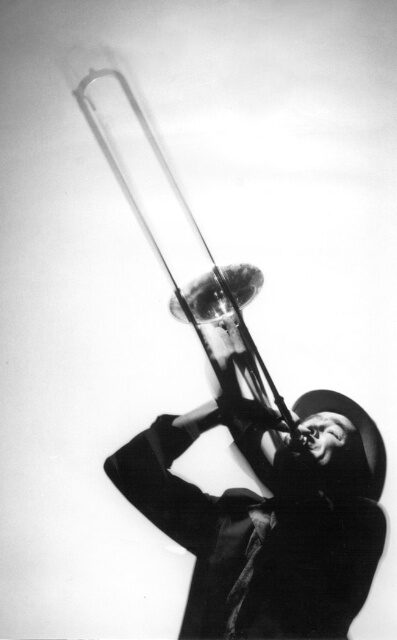
(1957) is regarded as one of the best trombonists in the world. Wierbos is self-taught, he once started as a player of a wind instrument in a drum band. The unique sound he manages to get out of his trombone can be heard on more than 100 CD’s which earned him various prizes. The highlight in his career was the Boy Edgar award in 1996. Jazz is one of his main passions, but he also likes to play contemporary and improvised music and makes excursions to post-punk. Wierbos toured with various formations throughout Europe, Canada, the US and Asia, but also performs solo. Under the name Wollo’s World he takes part in musical experiments, performing with a tapdancer, among others. His sound can also be heard in numerous theatre and dance performances and tv en film projects. Right now he plays with Misha Mengelberg’s ICP, the Gerry Hemingway Quintet, Franky Douglas Sunchild and Bik Bent Braam.
20091026144853

Esma Abouzahra

(Morocco, 1975) hosted the RTL4-programme Help, daddy's cooking. In it she gave cooking lessons to parents who couldn't cook. In 1999 Abouzahra together with Amar El-Ajjouri founded the first Moroccan cabaret duo in the Netherlands, PH Neutraal. One of their best-known productions was Noch kaas, noch couscous (Neither Cheese nor Couscous), making fun of Dutch society and the Moroccan community. She played in several theatrical productions, for instance in Garcia Lorca's Blood Wedding. She participated in productions of Theatergroep Wederzijds and Branoul Literair Theater. Abouzahra trained as a drama teacher in Zwolle.
20091112114438

Els Moors

(Belgium, 1976) in 2007 won the Herman de Coninck prize for best poetic debut. The jury called it a ‘dreamed debut’, especially because of the ease with which Moors ‘captures the reader with a strange kind of triviality’, from a gardener in a purple ski suit to rabbits making love. Again and again Moors manages to overturn everyday scenes, e.g. in the last poem in the anthology: ‘Then I came home/I got rid of my heavy bag/in the corridor/you stood there waiting/those were steps/I placed beside you on the floor/one by one/someone bombed a station. Her debut as a novelist, Het verlangen naar een eiland (Longing for an Island), was reviewed in Trouw as a ‘road novel, there's no stopping it’. It is a witty tale of love, sex, grief as well as longing for the other. Moors studied Germanic languages in Ghent and subsequently did the creative writing course at the Rietveldacademie in Amsterdam.
20091208133023

Joshua Samson

(1967) is a much sought-after percussionist who played with Anouk, Lois Lane and Hans and Candy Dulfer, among others. Meanwhile there are no less than thirty CDs and DVDs on which Samson can be heard. He did the percussion course at the conservatory in The Hague and a post-doctoral in New York. His style is characterised by a combination of various ethnic influences to which he adds his own professional background. In addition to the usual instruments he likes to play unique percussion instruments such as the recently developed Hang, which consists of two Tibetan scales placed on each other. Right now he tours the country with a children's show Kikker heeft de Blues (Kikker's got the blues) and plays the drums with DASH! and Last Tango in Paris. Together with college friend Tony Overwater he forms the duo the Sleutelbewaarders. Once a month they do a concert at a unique spot in the Netherlands with a special guest from varying musical disciplines.
20091116104759

Xue Xinran

(Beijing, 1958) was one of the most successful journalists in China before leaving for London in 1997 where she wrote her first book. The Good Women of China (2003) is a bestseller, which has been translated in over thirty languages. The stories in this book are based on thousands of interviews which she wrote from 1989-1997 as a radio journalist. Since 2003 Xinran has also written columns for the Guardian. A number of these were collected and appeared in 2006 entitled What the Chinese Don’t Eat. In it she deals with a great number of intercultural themes, from the experiences of British mothers with Chinese foster children to the question whether the Chinese are allowed to do Christmas shopping. Xinran's first novel, Miss Chopsticks (2007), is about Chinese country girls going to town to earn a living. Xinran advises the British media regularly on their relationships with China and is a welcome guest in British talk shows.
20091130160353

Iman Humaydan

(Libanon, 1956) broke through internationally in 2004 with her debut novel B as in Beirut. The story is told by four different women, who have to learn to cope with the consequences of the civil war. The most penetrating is the story of Warda, who goes crazy with grief and guilt-feelings because her father dies in a bomb attack and she loses her little daughter on top of that. In her second book Wild Mulberries (2008) Iman Humaydan describes life in a small Lebanese village in the 1930s. The main character Sarah is a young girl dreaming of a better future and a meeting with her mother, who fled the village and its patriarchal rules when Sarah was small. Iman Humaydan likewise grew up in a small Lebanese village, but in a tolerant family. Her third novel Hayawat Okhra (Other Lives) came out in 2010. It recounts the life of a woman coming back home after so many years of exile to rediscover her city and past. Hayawat Okhra will be published in English and French by the end of 2011. She studied sociology in Beirut and works as a researcher, journalist, and in launching and implementing development projects in Lebanese rural areas.
20091111113147

Frank Westerman

(Emmen, NL, 1964) studied tropical agricultural engineering and was a correspondent for the Volkskrant and NRC Handelsblad newspapers in Belgrade and Moskow. He wrote about his time there in 1994's De Brug over de Tara (The Bridge over the River Tara). Together with journalist Bart Rijs he wrote 1997's  Srebrenica, Het zwartste scenario (Srebrenica, the Blackest Scenario). Ingenieurs van de ziel (Engineers of the Soul) was published in 2002, an inquiry into the foundations of the Soviet system and the role of writers. De Graanrepubliek (The Grain Republic), about the struggle between rich gentlemen farmers and communist workers in Groningen, was published earlier. Westerman's novel El Negro en ik (El Negro and Me), inspired by a preserved South African in a Spanish museum, was published in 2004 and won the Gouden Uil prize. His revised and augmented 2015 edition of De Slag om Srebrenica (The Battle for Srebrenica) won the Prinsjes Book Prize for best political book. Een woord een woord (One Word One Word) appeared in 2016, in which he tests the strength of free speech under the pressure of terrorist threats. As a child, he experienced the Molukkan train hijacking at close quarters; as a correspondent, he witnessed Chechen terror in Russia. Drawing on these gripping experiences, he describes a series of hostage dramas. In Zeven dieren bijten terug (Seven Animals Bite Back), Frank Westerman encounters seven magnificent creatures in the wake of Willem Barentsz. Along the way, the reader becomes captivated by the wondrous tale of seven polar animals and what they have to tell us at our latitude.
20250218135334 1

Erik Lindner

(The Hague, 1968) began to recite poetry at age fourteen, often working together with musicians. Fourteen years later his first book of poems appeared, Tramontane. Two more anthologies were to follow: Tongen Trede (Tongues Stair 2000) and Tafel (Table, 2004). If he doesn't write, he organises literary meetings, teaches literature (among others at the Rietveldacademie) or makes travel or literary programmes for VPRO (among others from Poetry International and Crossing Border). In 2003 he collected a French anthology of 33 Dutch poets and in 2007 a book of poetry by himself appeared in a French translation, Terrain. Lindner reviews literature for several magazines and has a weekly poetry column on www.groene.nl/boeken.
20091130170741

H.J.A. Hofland

20050301215208

Hassnae Bouazza

(Morocco, 1973) is a journalist, columnist, translator, researcher and producer. She publishes in various media (including Dutch national daily newspaper NRC and women's magazine Linda); runs her own online magazine for culture lovers, Aicha Qandisha. She compiled a story collection about Arab women, Achter de sluier (Behind the Veil, 1999); 2013 saw the publication of her book Arabieren kijken (Looking at Arabs), about "ordinary" people in the Arab world. She made TV programs for various broadcasters, including the documentary series Seks en de Zonde (Sex and Sin). Together with Michelin-starred chef Soenil Bahadoer, she wrote the culinary books Spicy Chef (2020) and Streetfood (2022). She published two further books in 2022: Een koffer vol citroenen (A Suitcase Full of Lemons), a requiem for and portrait of her mother, and Arbeidsmigranten in Nederland (Migrant Labourers in the Netherlands).
20221215132224 2

Jan Donkers

(Amsterdam, 1943) his career as a writer and journalist is determined by two big passions: pop music and America. In the late 1960s Donkers belonged to the top of Dutch pop journalism. He was a critic for the Volkskrant and worked for Hitweek. In those days he started making programmes for VPRO radio. First mainly pop programmes but later he worked on the foreign desk as well. He left for America early 1970s to report the elections for VPRO and various magazines and newspapers. Those stories were later collected in Amerika, Amerika. In 1974 he and others formed the first editorial staff of the literary magazine Revisor. The next decade he wrote first and foremost travelogues from Africa, Asia and Latin America. In 2006 Mijn muziek (My music) appeared, an overview of his work as a pop journalist including a cd with recordings of his own.
20100201125914

Fatos Ipek-Demir

(1970, Izmir) is a daughter of Turkish immigrants from Greece. At the age of three she moved to Roosendaal, The Netherlands, with her parents. een dochter van Turkse migranten uit Griekenland. Op driejarige leeftijd verhuisde ze met haar ouders naar Roosendaal. She studied political science at the Institute for European Studies. From 2000 she works for E-Quality, a knowledge-center for emancipation, family and diversity. For years she has been fighting discrimination, and she is specialized in the area's of labour and care, social security and old age pensions. She has been involved in international projects (a.o. in the ILO) against women trade and European projects against age- gender- org ethnic discrimination. Since 2008 she is a manager at HOF, the organisation for the promotion of volunteer work in The Hague.
20091201100255

Frank Zichem

(Paramaribo, 1945) studied at the Dutch Film & Television School and made both documentaries and television drama. One of his first productions was a series of portraits on workers in the Dutch steel industry. Since then he has made a great number of programmes on social subjects, from the work pressure behind the scenes in the soap Goede Tijden Slechte Tijden, to a portrait of Louise de Montel, talking about her concentration camp past for the first time. From the beginning Zichem also made documentaries about his native Suriname. In 1990, 1994 en 1995 RVU and NPS broadcast several documentaries of his on the social, economic and political situation in Suriname. Since 1999 he has made a series of programmes on the slavery past of Suriname and Ghana for RVU and Teleac.
20091124130800

Bert Jansma

(Sassenheim, NL, 1942) initially wanted to be an actor but left theatre school after only one year. He then dedicated himself to studying Dutch and founded the literary youth magazine Fase. At the same time, he published his poetry in various other literary magazines and translated drama. He eventually ended up in arts journalism via various odd jobs that paid the bills. He worked (among others) for the newspapers AD, De Haagsche Courant and Het Binnenhof. He also created radio commentaries for Radio West. Although initially hired to cover film and theatre, another great passion became his specialty: jazz. Jansma retired in 2005 but remains active as a journalist for the websites jazzmasters, denhaagjazz and jazzpodium, among others.
20091130170914

Ghalia Benali

(Brussels, 1968) is rightly called a multitalent. She sings, acts, writes, dances and is a visual artist. Ghalia Benali grew up in Tunisia. At age 21 she came to Brussels to study graphic arts. She took with her the music from her youth and childhood days: from French chansons, Persian and Egyptian music to sung readings from the Koran. With her present theatrical tour she pays homage to the great Oum Kalthoum, assisted by Moufadhel Adhoum (üd), Vincent Noiret (double bass) and Azzedine Jazouli (Arabic percussion). The Egyption singer, who died in 1975 is still known today as the voice of the Arab world. ‘Oum Kalthoum was my first musical school’, says Ghalia. At age four she listened tirelessly to an LP record of ‘Al Atlal’, probably partly fascinated by the hypnotic spinning of the record. With her tour Ghalia Benali aims at bringing to life again the overwhelming emotion of the profound and authentic songs of the great Egyptian diva.
20091207155016

Maguaré

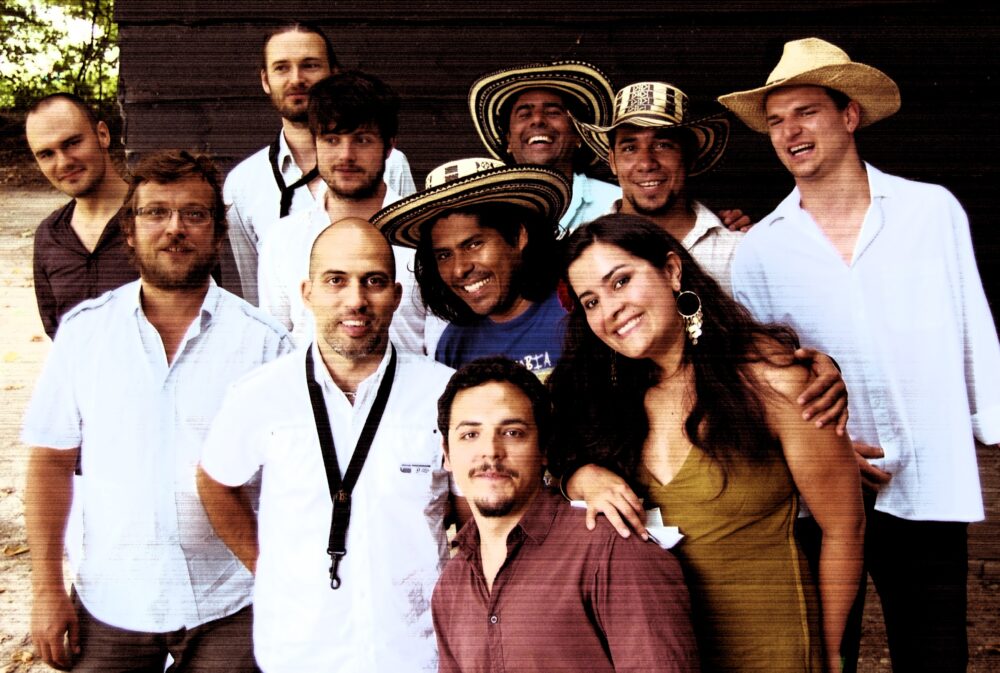
With her group Maguaré singer Paola Marquez returns to her Colombiaanse roots, and focusses on cumbia, porro, gaita and other afro-Colombian rhythms. The rhythm-section of the group is made by Colombian percussionists, Javier Cabrera en Core Pareja. They play traditional instruments like the tambora, tambor alegre, llamador, and the maracas. With a five men strongl brass section, double bass, piano, organ and accordion, the group plays a mix of Afro-Colombian rhythms in the fashion of Toto de La Momposina en 60's dancehall cumbia by Lucho Bermudez and Lito Barrientos.
20091130124423

DJ Miss World

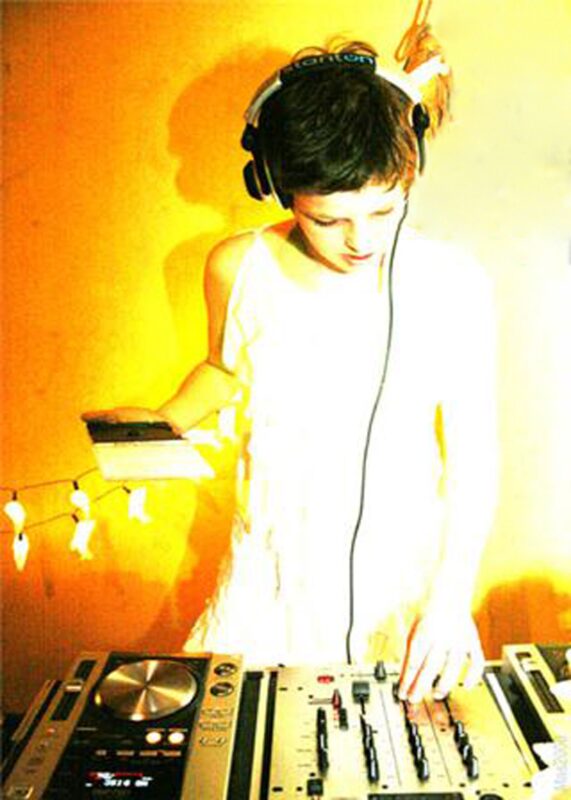
(alias Margreet Stol) was percussionist with a penchant for funky ethnic music before taking place behind the turntable in 2005, in Bar en Boos in Leyden. Since then she has been touring the entire country with her swinging mix of sounds from all over the world, from Afro, Balkan and Bollywood to Arabic, Latin and Ska. To make these musical styles accessible to a wider audience, she lavishes everything in a tasty western dance sauce. DJ Miss World has her own weekly radio show with the Amsterdam Concertzender, where she plays world dance for an hour. She performs solo and together with DJ PolyEsta.
20091130124224

DJ Polyesta

fuses ethnic music and modern electronics into a unique danceable cocktail. With her music Esta tries to break through the frontiers of various musical traditions. Her love for travel can be found in her musical choice, from funky hiphop from Cuba, via catchy African rhythms and Indian music to traditional klezmer from East Europe. Once a month, on Fridays, she plays for Amsterdam Concertzender in the Solta a Franga Show. She performed on Lowlands, the Amsterdam Roots Festival and Ruigoord Landjuweel as well as playing in the Melkweg, Paradiso and Noorderlicht.
20091130171510

Amsterdam Klezmer Band

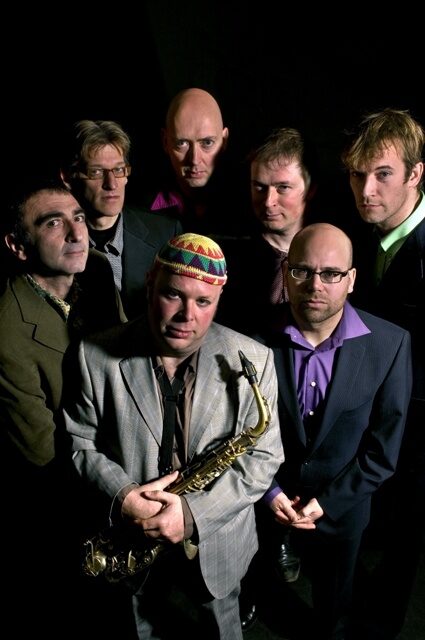
was founded in 1996 by alto-saxophonist Job Chajes, playing klezmer (Eastern European Jewish music) partly inspired on music from the Balkans. The band played among others at festivals such as Oerol and Lowlands. It also performs internationally. The greatest part of the repertoire has been written by the band members themselves. Gypsy and jazz influences make it difficult to pigeonhole their music. The often exuberant music of the band is buttressed by a live show. With Job Chajes - alto-saxophone and raps, Janfie Van Strien - clarinet, sopranino sax and backing vocals, Gijs Levelt - trumpet, Joop v.d. Linden - trombone, percussion and baritone-tuba, Theo Van Tol - accordion, Jasper de Beer - double bass and backing vocals and Alec Kopyt - percussion and singing.
20091109150427

Cabocubajazz

brings a surprising mix of Cuban rhythms and melancholic Cape Verde music, which arose from a mix of Portuguese fado and the music of descendants of West African slaves. Cabocubajazz is an initiative of Nils Fischer of Nueva Manteca who brought together two Cuban and two Cape Verde friends. Cape Verde Dina Medina and Carlos Matos respectively sing and play the piano, while Cubans Dennis Nicles and Armando Vidal play double bass and drums. Nils Fischer does percussion. Their music leads to a warm new sound, with jazzy influences.
20091110100116

Mehmet Polat

(Turkey, 1981) is a master ud player, composer, soloist and ensemble leader from his Mehmet Polat Quartet. He performs internationally from Africa to India, Persia to the Balkans, Contemporary to Jazz, and has been combining various musical genres with his Alevi Spiritual, Anatolian Folk and Ottoman classical music background. Through his improvisations, compositions and his own take on a variety of musical styles, Mehmet is constantly searching for new musical paths and inspiration. After many years of research, he invented his own technique to advance beyond the limitations of his traditional instrument. With this new left hand technique, he can play more advanced and modern pieces. He has also designed an ud with two extra bass strings to broaden the range and function of his instrument.
20241021120732 2

Alexander Rinnooy Kan

John Jansen van Galen

(Velp) studied political and social science. From 1968 to 1990 he worked for the Haagse Post, the last five years as editor in chief. Nowadays Jansen van Galen until 2015 was one of the regular presenters of a NOS current affairs radio programme. In 1970 he came to Surinam for the first time to work as a radio journalist and he soon became acknowledged as the Netherlands' expert on Surinam. In 2000 his book Hetenachtsdroom (Hotnight's dream) was published. This is about the influence of Surinam's nationalism. In 2004 his book De toekomst van het koninkrijk (The future of the Kingdom) appeared, about the decolonisation of the Dutch Antilles and Aruba. Jansen van Galen also writes books about hiking. In 2016 his book De gouden jaren van het linkse levensgevoel: Het verhaal van Vrij Nederland, a history of the left wing weekly Vrij Nederland.
20190107113900 1

Theo Para

Nelleke Noordervliet

(Netherlands, 1945) writes novels, stories, essays, lectures and columns with a strong historical bent. She debuted with 1987's Tine of de dalen waar het leven woont (Tine, or the Valleys Where Life Lives), a fictitious biography of 19th-century Dutch writer Multatuli's first wife. Her book De naam van de vader (The Name of the Father) won the 1994 Multatuli Prize. In 2002 she wrote Pelican Bay, about slavery in the Caribbean and the Netherlands. Her essay collection Schatplicht (Tribute) appeared in 2013, and her 2016 novel Aan het eind van de dag (At the End of the Day) is simultaneously a portrait of a career woman and a snapshot of the second half of the 20th century. De val van Thomas G. (The fall of Thomas G.) tells about the publisher of a controversial book. Noordervliet's body of work was awarded the 2018 Constantijn Huygens Prize.
20181203095828 1

Gustaaf Peek

(The Netherlands, 1975) is a writer of novels, poems, stories, essays, and screenplays. His work is characterized by the compelling way in which he brings characters involved in historical injustices to life. His debut novel Armin (2008) is about children adrift after World War II. In Ik was Amerika (I Was America, 2010), a Dutch prisoner of war in World War II befriends a farm worker in a camp in the US. Decades later, he seeks him out again. Peek received the BNG Literature Prize and the F. Bordewijk Prize for this work. Godin, held (Goddess, Hero, 2014) is a candid novel about the mysterious and all-too-human nature of love. In his pamphlet Verzet! Pleidooi voor communisme (Resistance! A Plea for Communism, 2015), he undermines decades of capitalist indoctrination. His novel A.D. (2021) tells about the events and hardships aboard one of the first seaships in the 16th century to present-day Indonesia and the arrival there. In 2025, his poetry collection Orang/oetan was published.
20251015150625 1

Cynthia Mc Leod

(Suriname, 1936) made her writer's debut with Hoe duur was de suiker? (How Costly Was the Sugar?, 1987), the novel that made her the most famous Surinamese writer overnight and was adapted for film in 2013. She was the first to describe the history, the slaving past and the colonization of her country from a Surinamese perspective. As an expert in the field, she lectures about the history of slavery at US and Canadian universities and organizes educational field and city trips. She has written historic novels, including De Vrije Negerin Elisabeth, gevangene van kleur (The Free Negress Elizabeth, Prisoner of Colour, 1992), as well as studies, children's books and children's musicals. Her No kwik in het bos (No Mercury in the Forest, 2017) is a YA novel about a ten-year-old girl and the dangers of mercury in the gold-mining process. McLeod is a daughter of Johan Ferrier, the first president of Suriname.
20141009112654 1

Gert Oostindie

Maikel van Hetten

20100201161838

Lucia Nankoe

Linda Polman

20090826132239

In search for the Golden Rule I: the Dutch and rules

Information

Date and time Friday 15 January 2010 20:00 tot 21:00 uur
Location Theater aan het Spui - grote zaal
20100117185258
In the search for the Golden Rule the first question that comes up is: what is our relationship with rules? In 1962 teenager Gerard Spong came from Surinam to the Netherlands. It was the beginning of a decade in which our country would change deeply in character. Religious rules, rules of life, sexual rules; everything was under review to make place for a new generation of those who tolerated and of fortune hunters. Young Spong saw it all happening and decided to study law; the profession preeminently dealing with rules. Eventually he became one of the most successful criminal law attorneys in the Netherlands. Now, looking back, he takes stock; how do the Dutch relate to rules? Have things run their course and are we experiencing the comeback of strict legislation? Or is there an element of truth in the myth that the Dutch won't be told what to do? After Spong's account writer Bas Heijne will talk with him. In Dutch Meer details bekijken

Indonesia, country of outsiders

Information

Date and time Friday 15 January 2010 20:00 tot 21:00 uur
Location Theater aan het Spui - kleine zaal
20100121141423
The Malaysian writer Tash Aw and the Indonesian journalist Andreas Harsono talk about Indonesia as a country of purely outsiders. The characters in Aw's latest novel, Map of the Invisible World, all belong in Indonesia, while being outsiders at the same time. Aw's first novel, The Harmony Silk Factory also was on outsider, but then it dealt with the position of the Chinese in Southeast Asia. Non-fiction writer Andreas Harsono works as a journalist in Indonesia, and in addition writes for a Malaysian paper. He is busy writing a book with the meaningful title A Nation in Name: Debunking the Myth of Indonesian Nationalism. In the discussion we take the year 1964 in Aw's novel as a starting-point, the year in which Indonesia balanced on the verge of civil war. From there the writers, travelling through time, look at the country with the eyes of outsiders. Who was an outsider, and when? How did they view Indonesia? What does it look like now: who are the outsiders today, and who is 'within'? Host: VPRO radio journalist Paul van der Gaag. In English Meer details bekijken

Wintercafé 1: Godless in Morocco

Information

Date and time Friday 15 January 2010 20:00 tot 21:00 uur
Location Filmhuis - zaal 7
20100121140215
A programme on rule breaking heart and soul: Berber writer Mohamed Choukri from Morocco. In his autobiographical novel For Bread Alone (1973) he wrote about everything God had forbidden; his youth as a vagabond in Tangier, where he survived in a world of violence, prostitution, alcohol and drugs. When in 1973 For Bread Alone appeared in English, Tennessee Williams called it ‘a true document of human desperation, shattering in its impact.' Morocco banned the book until 2000, three years before Choukri's death. Three Moroccan writers talk about the meaning of Choukri for them today: the poet Ali Amazigh, who learned to write in later life, just like Choukri, and who is now writing a confession novel; Naima Albdiouni whose debut novel Voyeur (2008) is also set in Tangier, and columnist Mohammed Benzakour, who, like Choukri, seeks controversy and pursues it. Host: Asis Aynan. Meer details bekijken

Film: The Yes Men Fix the World

Information

Date and time Friday 15 January 2010 20:00 tot 21:30 uur
Location Filmhuis - zaal 6
20091210173157
In advance of the programme Rules for Radicals in the Wintercafé there's a showing of the film The Yes Men Fix the World (2009), about Andy Bichlbaum and Mike Baronno. The two, the Yes Men, have the peculiar and effective hobby to act as CEO's (chief executive officers) of companies they loathe. Lying and bluffing they make their way into business conferences, act as spokespeople of multinationals and have themselves interviewed as such. All with the aim to open the eyes of the public at large for the abject intentions of those companies. Their biggest success came when Bichlbaum, acting as spokesperson of Dow Chemical, made it to a live broadcast of BBC-world tv, declaring that the company, twenty years after the eco-catastrophe in Bhopal, would clear the territory. ENG/NL subtitles Meer details bekijken

Foyerprogramma: music by DJ Miss World - booksigning sessions in the bookshop

Information

Date and time Friday 15 January 2010 20:00 tot 23:50 uur
Location Theater aan het Spui - foyer
20100126150049
For DJ Miss World it's not about outer beauty but about inspiring music. She travels the world to pick up beats and grooves from all four corners and work them in her sets. The result is a mix of ethnic, traditional music and western dance beats.


WRITERS SIGN THEIR BOOKS IN THE BOOKSHOP
21.05 - 21.25 Naima Albdioun, Ali Amazigh and Tash Aw
22.05 - 22.25 Bas Heijne and Tarun Tejpal
23.05 - 23.25 Xue Xinran
23.55 - 00.20 Saskia de Coster and Shahriar Mandanipour Meer details bekijken

In search of the Golden Rule II

Information

Date and time Friday 15 January 2010 21:05 tot 22:00 uur
Location Theater aan het Spui - grote zaal
20100126115751
Is there such a thing a A Golden Social Rule to connect people of different cultures? Indian writer Tarun Tejpal and Dutch writer Bas Heijne try to find it. Which rules have become obsolete because of the worldwide economic crisis and the change of the power-balance in the world? What kind of rules were they? And what should take their place. Maybe it is impossible to create shared rules for a world that is changing so fast. Or isn't it? What kind of rules would they be? How would they come into being in the dazzling mix of religions and social diversity in India, Tejpals fatherland? Tarun Tejpal does not only write novels, but, like Bas Heijne, publishes articles and essays in newspapers and magazines. Host: Markha Valenta. In English Meer details bekijken

The tone and the Music

Information

Date and time Friday 15 January 2010 21:05 tot 22:00 uur
Location Theater aan het Spui - kleine zaal
20100126114239
The Lebanese Iman Humaydan is a sociologist, writer, journalist, conservationist and human rights activist. In her novels there is not much explicit that reminds one of her activism. Her commitment is packed in stories about people trying to save themselves against the backdrop of her troubled fatherland. But as a journalist she lets loose, distancing herself easily from her poetic, sometimes dreamy style. What's behind that? Does she think literature is not meant to change the world? And what does The Dutch writer Gustaaf Peek think about that? He shows his commitment by writing about current affairs in his novels. In English Meer details bekijken

Wintercafé 2: Who is afraid of Youth?

Information

Date and time Friday 15 January 2010 21:05 tot 22:00 uur
Location Filmhuis - zaal 7
20100121143106
Pupils of two secondary schools in The Hague climb the stage and recite poems they've written. In the last few months poet Els Moors came to their classes and read poetry with them. Tonight Moors reads with pupils from the Rijswijks Lyceum and Scholengroep Johan de Witt. Host: Soundos. In Dutch Meer details bekijken

In search of the Golden Rule III

Information

Date and time Friday 15 January 2010 22:05 tot 23:00 uur
Location Theater aan het Spui - grote zaal
20100126125415
What if you have to work in a country that puts you under all kinds of legal restrictions? Shahriar Mandanipour, expelled from Iran, wrote about the censorship that he had to deal with as a writer. Xue Xinran worked as a radio journalist in China from 1980, until she moved to London in 1997. She wrote books in which she gives a voice to the memories of Mao's contemporaries; people who still find it hard to tell openly about his matter. What to do as a writer if you have to work under circumstances that make it difficult or even impossible to write what you want? Is there a Golden Rule that guides you through this, a principle? Host: Markha Valenta. In English. Meer details bekijken

Music: Ghalia Benali

Information

Date and time Friday 15 January 2010 22:05 tot 23:00 uur
Location Theater aan het Spui - kleine zaal
20100126123507
The Tunisian Ghalia Benali was raised in an artistic family, and she got acquainted early on with music and poetry from all parts of the world. French chansons, Indian musicals, and sung readings from the Koran determined her development as a grown-up singer. Her migration from Tunisia to Belgium was of a big influence to her. Her music takes the audience back to the sweet melancholy of her childhood. Meer details bekijken

Wintercafé 3: Istanbul and the Cosmopolitan Future

Information

Date and time Friday 15 January 2010 22:05 tot 23:00 uur
Location Filmhuis - zaal 7
20100126121247
Where borders disappear, people draw new lines. Cosmopolitan cities, where many different people and cultures meet, give fertile ground to new artistic twilight zones. In an exchange programme between Amsterdam, Antwerp and Istanbul, writers look for the similarities, differences and developments of urban cultures. The Turkish writers Şeray Sahiner and Uğur Ziya Şimşek are now ‘in residence’ in Amsterdam. They will talk about Istanbul as a cosmopolitan transition area, about new borders, old laws and about which cultural dimensions they discover in The Netherlands. In Dutch Meer details bekijken

Film: Je Veux Voir

Information

Date and time Friday 15 January 2010 22:05 tot 23:20 uur
Location Filmhuis - zaal 6
20091210173454
For those who have seen the Lebanese conservationist Iman Humaydan in the kleine zaal and want to see the problems with pollution in Lebanon with their own eyes, Je Veux Voir is a must-see. A road movie in which the Lebanese actor Rabih Mroué in the company of Catherine Deneuve journeys by car past the destroyed parts of Lebanon. This results in a poignant portrait of a country that has retained a sense of beauty and hope despite al the destruction. ’Je veux voir', says Catherine Deneuve early on in the film. She is in Lebanon for a gala, and does not object to making a trip past the ruins of bomb-shelled villages with Rabih Mroué. As the film progresses Deneuve says less and less, there in the back of the car. Outside a devastated world files past. French/English subtitles Meer details bekijken

Love's Golden Rules

Information

Date and time Friday 15 January 2010 23:05 tot 23:50 uur
Location Theater aan het Spui - grote zaal
20100126132759
At the end of the evening writers Ramsey Nasr and Marja Pruis will go in search of Love's Golden Rules in the grote zaal. What are the most important and sincerest rules in love? And who has written about it in the most beautiful terms? Writing about love is an art because it's such a great and sweeping emotion. Because it's either over the top, or too sweet. How to prevent that from happening? And are there any writers who show this well? The writers read the most beautiful love lines. Dutch. Meer details bekijken

I speak your language

Information

Date and time Friday 15 January 2010 23:05 tot 23:50 uur
Location Theater aan het Spui - kleine zaal
20100126144147
The new generation of poets Ronelda Kamfer (South Africa), Alfred Schaffer (Aruba/the Netherlands) and Hagar Peeters (the Netherlands) recite from their work and talk to Stephan Sanders about their language and poetry. Ronelda Kamfer writes in Afrikaans. Is that language in her country still symbolic of the language of the Apartheid regime? Is Afrikaans beyond guilt, or is there a job to do here for Afrikaans poets like her? Alfred Schaffer, the son of an Aruban mother and a father from Limburg, writes his poems in Dutch and lived in South Africa for a while. In her poetry Hagar Peeters explores modern specimens of suppression in the Netherlands. How do these three young poets look at the guilt or innocence of the language they write in? And how does that language relate to the reality they seek to capture in their poems?
Dutch/Afrikaans. Meer details bekijken

Wintercafé 4: Rules for Radicals 2.0

Information

Date and time Friday 15 January 2010 23:05 tot 23:50 uur
Location Filmhuis - zaal 7
20100126144551
Nowadays, where does an angry artist leave his rage and criticism? In 'Rules for Radicals' we search for a pragmatic manual for the making of harmful literature, street noise and bombs for the national canon. Which are the new strategies for today's artists? In this programme we propose a new form of radicalism. The artist should penetrate the system as a sheep in wolves' clothes in order to eat the codes and replace them with others. No overt opposition, but infiltration. The good example: The Yes Men, with their 'identity correction'. The Yes Men disguise themselves as big criminals with the objective to humiliate them publicly. And who are these criminals? CEOs and representatives of big companies who put profit above everything else. In Dutch. See also the movie that is shown in advance of this programme: The Yes Men Fix the World. In English (Dutch subtitles). Meer details bekijken

Dancing into the night: Amsterdam Klezmer Band

Information

Date and time Friday 15 January 2010 23:50 tot 01:30 uur
Location Theater aan het Spui - foyer
20100128113725
'With their joyful approach they take the music out of the conservatory corridors and onto the street,' NRC writes about the Amsterdam Klezmer Band. The words ‘vibrant’ and ‘attractive’ characterise the songs of the Amsterdam septet the best. Combining traditional ‘klezmer basis’ with jazz, funk and Latin influences the Amsterdam Klezmer band leaves an ineradicable impression. Meer details bekijken

Discover
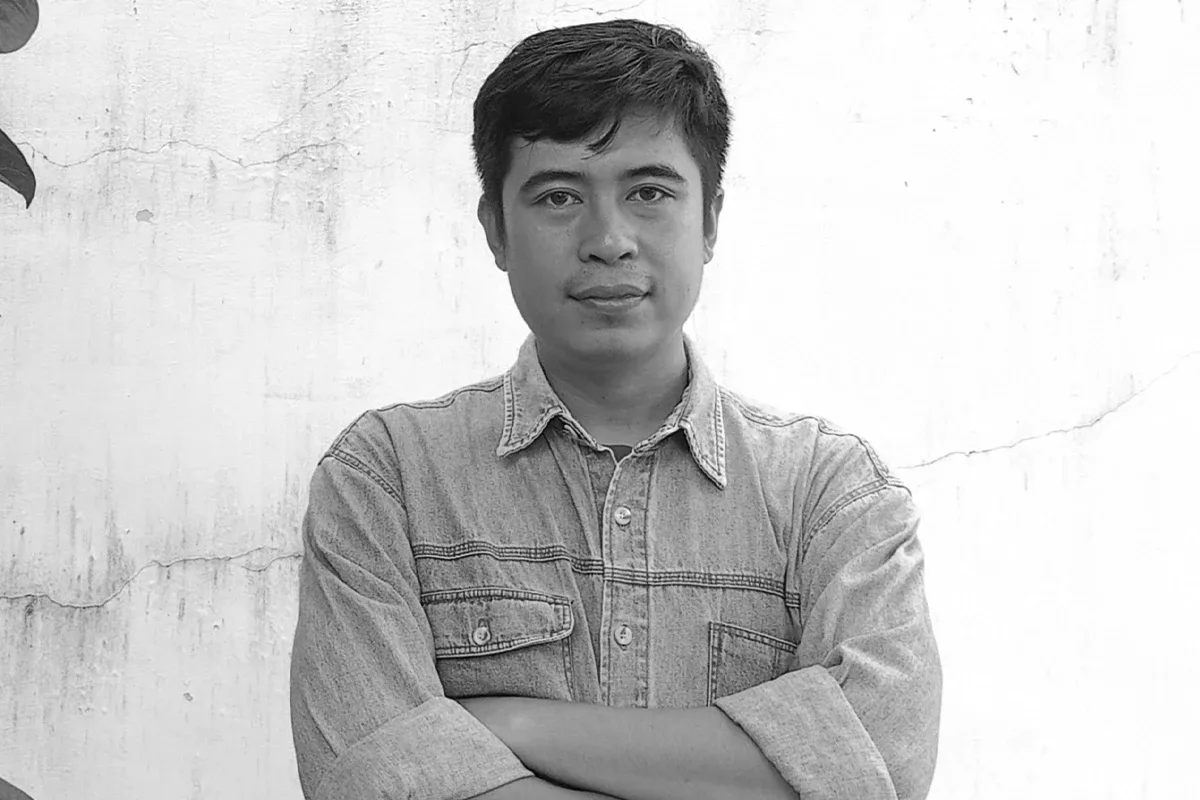
20 May 2026

Get your 2027 tickets!

Get your Early Bird tickets for the big festival nights, Friday & Saturday Night Unlimited!