Winternacht 1

20060123215427

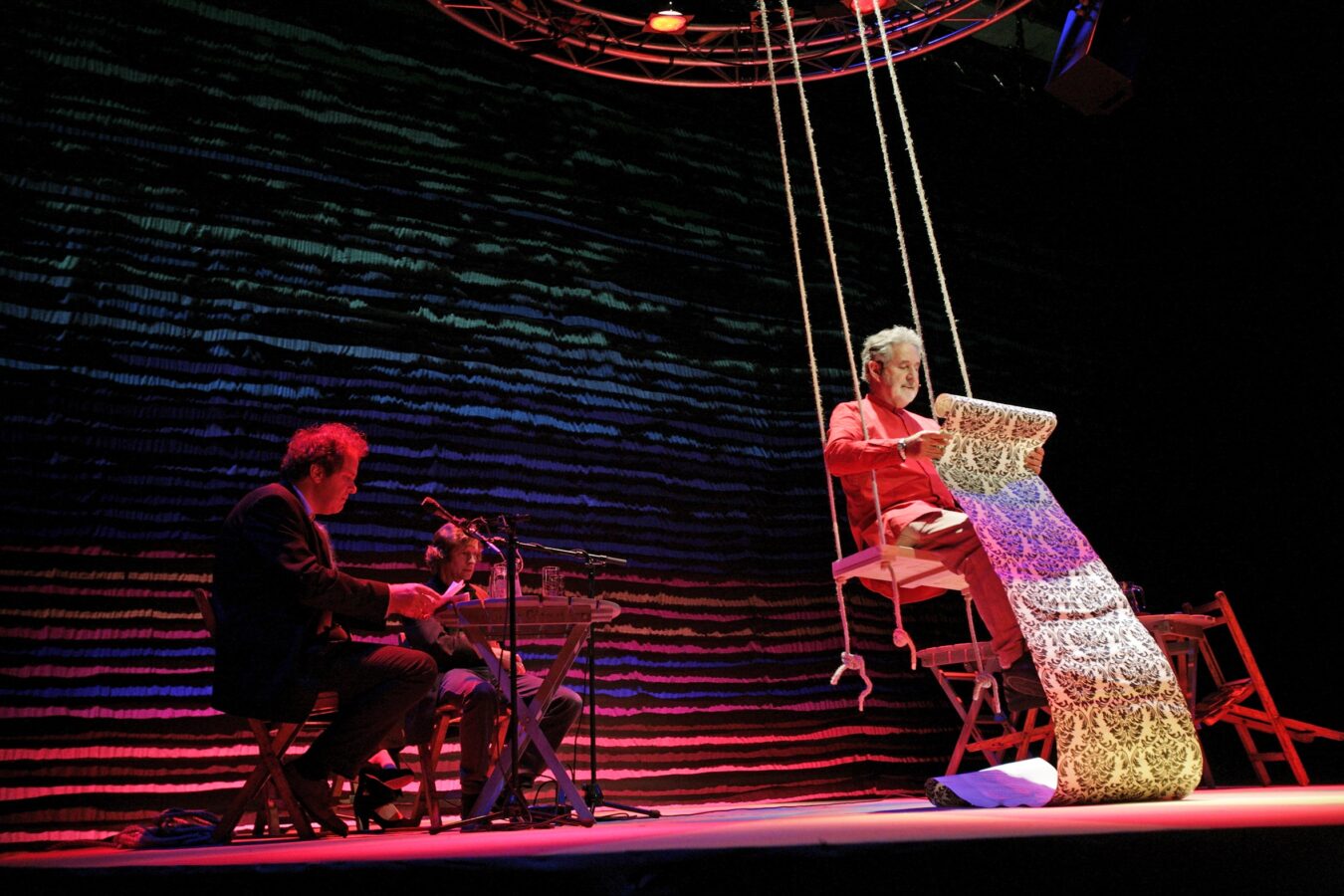
The South African writer Breyten Breytenbach opens the first evening of Winternachten, which consists of an extensive programme of literature, film and music performed on five stages in the one theatre.

Breytenbach will open the evening with his 'Manual for the Independent Mind'. With the help of others such as artist Marlene Dumas and biologist Tijs Goldschmidt, he will try and answer the question whether independent thought and creation is (still) possible.

Furthermore in this hot Winternight: young Indonesian writing talent, traditional music from Iran and Curaçao, writers and their favourite films, the secret of Jan Blokker's columns revealed, and a remake of Uncle Tom's Cabin. Finall, to bring an end to this first evening of Winternachten by dancing the night away with Brazilian music from Electo Côco.

Read all about the different programmed activities of Winternacht 1 on this web page.

Your entrance ticket is valid for all the halls in the building of Theater aan het Spui and the Haags Filmhuis

Information

Date and time Friday 20 January 2006 from 20:00 to 01:30 hrs
Location Theater aan het Spui & Filmhuis Den Haag

Tijdschema 20 January

Filter by location:
Filter by spoken language:
Time Location
20:00 - 23:45 Theater aan het Spui - foyer Foyer programme: poetry doctor, DJ and bookshop
20:15 - 21:15 Theater aan het Spui - grote zaal In search of the independent mind - part 1
20:15 - 21:10 Theater aan het Spui - kleine zaal Indonesia: from censorship to unprecedented freedom
20:15 - 21:01 Filmhuis - zaal 5 The remake of Uncle Tom's cabin
20:15 - 20:30 Filmhuis - zaal 4 Film: Jamila
20:30 - 20:40 Filmhuis - zaal 4 Film: Reimerswaal
20:40 - 21:05 Filmhuis - zaal 4 Film: Untertage
21:10 - 21:35 Theater aan het Spui - kleine zaal Chopin on Curaçao - a journey to the sources of Antillean music
21:35 - 22:01 Theater aan het Spui - kleine zaal Candid Indonesian
21:35 - 22:35 Theater aan het Spui - grote zaal In search of the independent mind - part 2
21:35 - 22:00 Filmhuis - zaal 5 Presentation of the schoolchildren's poetry contest
21:35 - 22:01 Filmhuis - zaal 4 The film choice of Deborah Jack
22:00 - 22:20 Filmhuis - zaal 5 Moved - cinematic poems in sign language
22:01 - 22:55 Theater aan het Spui - kleine zaal Chopin on Curaçao - a journey to the sources of Antillean music
22:01 - 23:45 Filmhuis - zaal 4 Film: Alias Kurban Saïd
22:20 - 22:55 Filmhuis - zaal 5 Film: It's my turn now
22:55 - 23:45 Theater aan het Spui - kleine zaal Colonial history of the East and West
22:55 - 23:45 Theater aan het Spui - grote zaal In search of the independent mind - part 3
22:55 - 23:45 Filmhuis - zaal 5 Mr Blokker, how do you do that?
23:45 - 01:30 Theater aan het Spui - foyer Electro Côco - Brazilian dance music

Henna Goudzand

(Henna Goudzand Nahar, Surinam, 1953) studied in Surinam, The Netherlands and Belgium. She felt attracted to the political changes in 1980 in Surinam, but realised that it went off the rails. In 1988 she published the story De goede verwachting (The hopefull expectation), about an election campaign in the interior of Surinam. She contributed to the Surinam edition of the literary magazine De Gids. With Fré Meyer she edited a collection about myths in womens art, entitled Contrapunten: mythen in kunst van vrouwen: een impressie (Counterpoints, myths surrounding women's art: an impression), published by In de Knipscheer. In 1994 and 1996 she published (under pseudonym Amber Nahar) two childrenbooks. Henna Goudzand Nahar lives in Amsterdam and is teacher and freelance journalist. In 2005 she published her novel Hele dagen in de regen.
20051011150229

Michaël Zeeman

(Marken, 1958-2009) was a poet, a writer and a commentator, with a regular column on the Forum page and the book pages of the Volkskrant. Zeeman was the editor of the arts section of the Volkskrant and from 2006-2007 its Rome correspondent. In 2006 he and the writer Abdelkader Benali published an exchange of letters, exchanging ideas on politics, life, love and literature. In 2002 Zeeman received the Gouden Ganzenveer (Golden Goose Quill) for his merits for Dutch literature. Zeeman became well-known in the 1990s as the host of his monthly book programme 'Late at night after a short walk', later to be renamed 'Zeeman with books'. In 1991 he published his first volume of poetry, Beeldenstorm (Iconoclasm), winning him the C. Buddingh Prize. His second volume Verhoudingen (Relationships) appeared in 1995. In the same year he published short stories entitled De Verduistering (The Darkening). He died in 2009.
20080206143715

Ruben Severina

(Curaçao, 1956) For years was the face of the Antillean community in the Netherlands. He came to the country in 1989 to study and wanted to return afterwards. However, he stayed because of his young family and found a new mission: taking care of the interests of Arubans and Antilleans in the Netherlands. With the Splika foundation he dedicated himself to the promotion of Papiamentu, the language that he also teaches. Subsequently he chaired MAAPP (Movimentu Antiano i Arubano pa Partisipashon Politiko), the platform for the social participation of Antilleans and Arubans in the Netherlands. When he resigned on 1 March 2009 he received the MAAPP award Mi ta yuda, a new medal which will be awarded on Severina's birthday to people who have dedicated themselves to the Antillean and Aruban communities. For some time Severina served on the town council for the Dutch Labour Party in the town of Zoetermeer and now chairs HAAB (The Hague Antillean Aruban Board).
20050223215954

Paul van der Gaag

(Netherlands, 1958) has produced and presented the VPRO radio programme OVT since 2002, a two-hour show about the historical roots of current events as well as newly released historical books, films, commemorations, and anything else related to history. The show features live interviews, reportage, columns and a weekly documentary during the last half hour. He was already linked to OVT since 1992 as a programmer and previously freelanced for other national Dutch broadcasters such as VARA and IKON.
20120204162040

P.F. Thomése

(Doetinchem, NL, 1958) is a highly versatile writer who constantly changes up his work. Sometimes his tone is serious, as in Schaduwkind (Shadow Child, 2003), about the death of his young daughter. This bestseller was translated into more than fifteen languages. In 2009's  J. Kessels, The Novel he channels an altogether different voice. A semi-parody of the hard-boiled crime novel, it features one of Thomése’s favourite recurring characters, J. Kessels, living it up a he smokes cigarettes and devours deep-fried meatballs. The book was made into a film in 2015, starring Frank Lammers and Fedja van Huêt. De onderwaterzwemmer (The Underwater Swimmer, 2015) about the life Tin, who as a child loses his father on a dark night in wartime, shows that only man himself can alter his destiny. In 1991 Thomése won the AKO Literature Prize for Zuidland (Southland), and in 2012, the Bob den Uyl Prize for Grillroom Jeruzalem.

20131031162516 1

Joyce Roodnat

is a journalist and since 1980 writes for the newspaper NRC Handelsblad about her great passion: film. Since 1995 she is chief art editor of the same newspaper. In the popular feature 'Aan de wandel ' (Rambling) she describes trekking in the Netherlands and the rest of the world. Roodnat also writes literature. Her first novel 't Is zo weer nacht (It will soon be night again) was awarded the Geertjan Lubberhuizen prize and the Debutant prize in 2002. In 1995 she published De bergrede in het licht van de vedantaleer (The sermon on the mount seen from out the vedanta principles), about the most important Hinduistic beliefs and philosophy. This year her second novel was published, entitled Sterrenschot, which is loosely based on historical fragments of the family of her husband Erik van Zuylen.
20050225164058

Helon Habila

was born in Nigeria. He worked as a lecturer and journalist in Nigeria before he moved to England to become the African Writing Fellow at the University of East Anglia. In 2002 he published his first novel, Waiting for an Angel. His writing has won many prizes including the Caine Prize, 2001, and the Commonwealth Writers Prize, 2003. In 2005/2006 he became the Chinua Achebe Fellow at Bard College, New York.
In 2006 he co-edited the British Council's anthology, New Writing 14. His second novel, Measuring Time, was published in 2007, it won the Virginia Library Foundation Fiction Award, 2008. His third novel, Oil on Water, was published in the US in 2011. His anthology, The Granta Book of the African Short Story came out in September, 2011. Habila teaches Creative Writing at George Mason University in Fairfax, Virginia, where he lives with his wife and three children.
20060123154637

Breyten Breytenbach

(1939, Bonnievale) is a South-African writer and painter with French citizenship. He studied at the University of Cape Town. He became a committed opponent of apartheid and left South Africa for Paris in the early 1960s. On returning to South Africa in 1975 he was arrested and sentenced to nine years of imprisonment. In his work The True Confessions of an Albino Terrorist he describes aspects of his imprisonment. After his release in 1982 he returned to Paris. Breytenbach wrote poetry, novels, essays and plays. His poems are rich in metaphores and are a complex mixture of references to Buddhism, Afrikaans idiomatic speech, and memories of the South African landscape. Breytenbach is also known as a painter. Many of his paintings portray surreal human and animal figures, often shown in captivity. He has been honored with numerous literary and art awards. Breytenbach is active in different organizations for South-African political exiles.
20051116094751

Hossein Alizadeh en Madjid Khaladj

Two masters of the art of Iranian musical improvisation: Hossein Alizâdeh (tar, setar, tanbur) and Madjid Khaladj (daf, tombak). Alizâdeh (1951, Teheran, Iran) studied under various masters of the traditional Persian music, from whom he learned the Radif, the old melodies on which the classical music of Iran is based. He is considered as one of the most important figures in contemporary Persian music. Not only is he recognized as a virtuose lute player, but also as an accomplished accompanist to the best singers. Khaladj (1962, Ghazvin, Iran) has earned a place alongside the great masters of Persian classical music with the authenticity of his style and his knowledge of rhythms. He is one of the most distinguished figures in Eastern percussion music. The târ, the most important of the lute-like instruments in Iranian music, and the tombak-drum with its complicated shape, are able to produce an unbelievable musical intensity.
20050816152640

Merietza Haakmat en Hershel Rosario

The young singing talent Merietza Haakmat was born and raised on St. Martin. In 1989 she left St Martin for Curaçao, where she joined the Broche Company and the very popular Curaçao's Happy Peanuts Band. In August 2001 she left the band and, together with two collegues, started the band RHYDD'M. With guitarist Hershel Rosario they put together a repertoire of Curaçao's songs.
20050531163903

Niq Mhlongo

(Murhandziwa Nicholas Mhlongo) was born in 1973 in Midway-Chiawelo Soweto, South Africa. He studied African Literature and Political science at the University of the Witwatersrand in Johannesburg. In 1996 he began studying Law at the same university, and continued this study at the University of Cape Town in 1998. His first novel Dog Eat Dog was published in 2000. It is an evocative account of his experience as a young South African of the post-apartheid generation. As a writer he considers it to be his mission to reflect and discuss the changes within his world, brought about by the abolishment of apartheid and ten years of democracy. He takes it upon himself to deal with subjects such as AIDS, unemployment, poverty, xenophobia and homosexuality. According to Mhlongo these are matters which the South African youth of today can identify with.


20060124161821

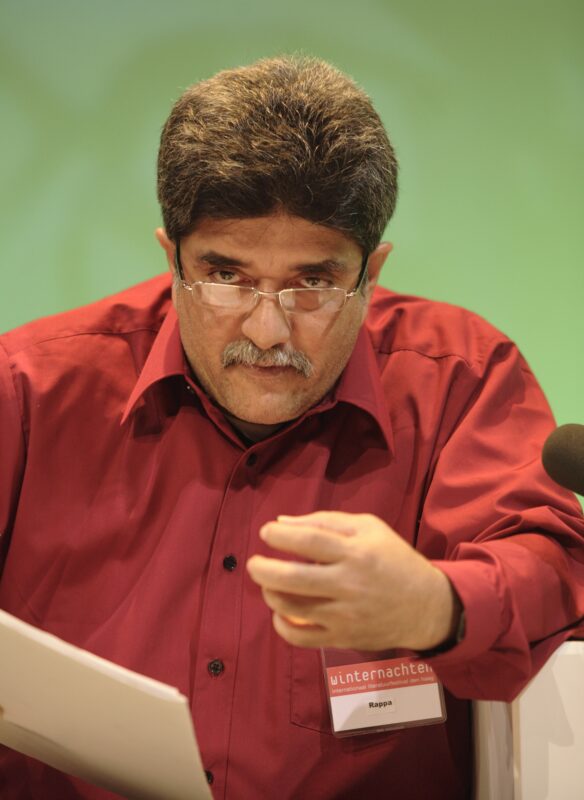
Rappa

is the pseudonym for Robby Jonathan Parabirsing (Paramaribo, 1954). He made his debut in 1980 with Friktie Tories, a collection of humorous and socially critical stories. Others works by him are Opa Djannie en andere verhalen (Granddad Djannie and other stories), Een vlek uit het verleden (A stain from the past) (1982), Silvy en Hexa en andere verhalen (Silvy and Hexa and other stories) (1983), Fromoe Archie (1984), De Tapoe (1995), Verdwaald in het bos (Lost in the woods) (1998) and the collection Nieuwe Friktie Tories (New Friktie Tories) (1999). Rappa's publishing house Ralicon acts as an excellent sounding board for many debutants. Ralicon published amongst others the first edition of the well known book Ter dood veroordeeld (Condemned to death) by John de Bye. To stimulate reading, Rappa publishes a reader, entitled De stripbieb (Strip Library) , which contains short stories and critical, humorous and cynical sayings. In daily life Rappa is a teacher of Dutch language and literature.
20060124140337

Tijs Goldschmidt

(Amsterdam, NL 1953) is an evolutionary biologist and a writer. In his essays he presents himself as the missing link between the arts and the sciences. Again and again he places science in a broader cultural framework. In his collections of essays Vis in Bad (Fish in the Bath, 2014) and Kloten van de engel (Angels' Balls; 2007) he shows that culture is often much more natural than we think. In september 2016 a collection of his essays, The Other Left Side will be published by Seven Stories Press in New York. After graduation Goldschmidt left for Tanzania for five years to study cichlids (Percidae) in Lake Victoria. That study resulted in a Ph.D. thesis and a book combining his scientific findings with personal experiences: Darwin's Dreampond (1994). This debut was translated in English, French, German, Japanese and Chinese, among others. In 1993 Goldschmidt decided to give up his academic career to become a fulltime writer. In 2007 he delivered the Huizinga Lecture in Leiden entitled Pretending to pretend. Since 2009, Tijs Goldschmidt is advisor to the State Academy of Fine Arts in Amsterdam.
20131107173641 1

Herman Franke

(1948-2010) studied sociology at the University of Amsterdam. After years of being a prominent criminologist, he turned to literature, which he considers to be a small step: 'Writers are criminals', wrote Franke in the newspaper Trouw (2000), referring to the moral freedom that writers permit themselves. In 1992 he made his debut with the novel Weg van loze dromen (Road of idle dreams). For his novel De verbeelding (The imagination) Franke was awarded the Generale Bank Literatuur prize, presently known as the AKO Literatuurprijs. He regularly writes for newspapers literary magazines, including a fortnightly column for the Dutch newspaper de Volkskrant. In 2004 a collection of his columns was published, entitled Waarom vrouwen betere lezers zijn (Why women are better readers). A year earlier he published his extensive novel Wolfstonen (Wolves tones) and in 2004 the collection of ultra-short stories Notulen (Minutes). Franke regularly exchanges the cherished solitude of his study with public appearances. Herman Franke died in 2010.
20050301215303

Bas Haring

(The Netherlands, 1968) is a philosopher, writer and professor of Public Understanding of Science at Leiden University where he lectures about artificial intelligence and ethics. His books deal with the interface between philosophy and science; like no other, he knows how to make complex subjects accessible to large groups of readers. His debut Kaas en de Evolutietheorie (Cheese and the Theory of Evolution), awarded the Golden Owl for children's literature, uses examples to explain the true meaning of the theory. Since then he published, among others, De ijzeren wil (The Iron Will, about the brain, consciousness and thinking machines), Voor een echt succesvol leven (For a Truly Successful Life), Plastic pandas about disappearing nature, Waarom cola duurder is dan melk (Why cola is more expensive than milk), with jargon-free answers to basic economic questions, and Kunstmatige intelligentie is niet eng (Artificial Intelligence Isn't Scary).
20240108162640 2

Austin Clarke

(1934) from a young age wanted to flee the Caribbean island of Barbados where he grew up. The British education he received was helpful in this. After finishing his education he taught at a country school, and then left for Canada to study economy and politics. As a freelance journalist he made documentaries about the black population of North America and England for the Caribbean Broadcasting Corporation. He was awarded the Commonwealth Writers Prize for his novel Mijn leven in schande (The Polished Hoe) (2005). In this novel the character Mary- Mathilda tells the story of her life as a mistress of a plantation owner and the collective experiences of a society that was formed by colonialism and slavery. In his work Clarke evokes the sensuality of the tropics and the tragic wealth of this island culture.
20060323202844

Noraly Beyer

(Curacao, 1946), born to Surinamese parents, was an editor/newsreader on Dutch TV (1985-2009) and the Dutch World Service (1983-2008). She had roles in theatre productions such as Ajax, Hemel boven Berlijn (Sky Above Berlin), MedeaThe Vagina Monologues and De Afscheidsmonologen (The Farewell Monologues) as well as writing plays herself. In addition, she regularly hosts debates and writes columns. In 2009 she received the Cosmic Award for her advocacy for more diversity in Dutch media. A memoir of her youth in Curaçao, De Antillen en ik (The Antilles and Me), was chronicled by John Leerdam. In 2018 she played the role of storyteller in The Passion.
20110124151412

Marlene Dumas

is a visual artist. An important part of her work consists of drawings and watercolours, predominantly figures and portraits. Through her work Marlene Dumas is able to deliver a sentient commentary on role patterns and social relations that have become habitual. With the "Black Drawings" (1991-92), which consist of 111 individual portraits, Dumas enters into a discourse about stereotyped racial classification and skin colour, that leaves no room for the appreciation of the individual. The series "Defining in the Negative" (1988) and "Strong Works" (1990) are a comment on traditional roles given to women, such as a model, muse or lover. Also the role of mother and sexuality are subjects for many of her drawings. The work of Marlene Dumas is often characterized by a combination of directness and intimacy. Her most recent work consist of a series of portraits of blindfolded Palestinian men and is a reaction to the situation in the Middle East.
20051108185557

Theo Loevendie

studied composition with Ernest W. Mulder and Leon Orthel and clarinet with Ru Otten at the Amsterdam Conservatory. As composer and improvisor (on soprano and alt saxophone) and as leader of the Boy Edgars Big Band and his own Theo Loevendie Consort, he became an internationally renowned jazzmusician. In 1968 he entered the world of the composed music with his composition Scaramuccia for clarinet and orchestra. Since then Loevendie has developed a varied oeuvre. Highlights are the song cyclus Six Turkish folkpoems (1977), the putting to sound of Andersens fairy-tale The Nightingale (1979) and an orchestra piece, Flexio (1979). In de eighties and nineties Loevendie developed more and more into a composer of opera. His first opera is Naima (1985). From 1970 up to 1988 Loevendie taught composition at the Rotterdam conservatory, and since then at the Royal conservatory in The Hague.
20060209102757

Frank Koenegracht

(Rotterdam, 1945) is a psychiatrist in Leiden. In 1970, acting on advice from Lucebert, he sent several poems to the publishing house De Bezige Bij. One year later he made his debut with the collection of poems Een gekke tweepersoonswesp (A crazy twin wasp). A few years later, in 1976, his second collection, entitled Camping De Vrijheid (Camping Freedom) was published. In 2003 appeared Vroege sneeuw (Early snow), a collection which includes a selection from his earlier works. Koenegracht was awarded twice for his complete oevre: in 1990 he received the Anna Blaman Prize, and in 2001 the Frans Erens Prize. In his poetry he resists again and again the established order. Since his debut he continues to show his disgust of the middle classes. Although a little bizarre, his poems remain yet familiar, maybe because delusion and reality often cross one another. The motto of his recent collection of poems is " Frank Koenegracht's world is not a happy one, however there is a lot to laugh about".
20060125142500

Gerrit Komrij

(Winterswijk, 1944) was the first Poet Laureate of the Netherlands. He is considered one of the best columnists in the country, a novelist, renowned translator, and an enhtusiastic reviewer of poetry. Komrij is a cat in a Strange Warehouse, as he called a book of collected essays that came out in 2001. The world is never a trusted or obvious place, but if you look good, there's always something surprising around. 'I don't think I'm a no-nonsense guy. There's too much noise inside of me'. Komrij, who has lived in Portugal since 1984, is one of the most productive Dutch writers. Since 1968 he has published several works annually. Recently Komrij's choice of the one-hundred best Dutch poems (2008) appeared, in addition to an anthology of Dutch children's poetry in over 1000 poems (2007) and Kakafonie (2006), an 'encyclopaedia of shit'. In 2005 he published Eendagsvliegen (Ephemera, literary diary entries) and a volume of poetry Fata Morgana.
20050226145252

Ilja Leonard Pfeijffer

(Netherlands, 1968) is a classicist and writer. He has more than 40 titles to his name, including poetry, novels, short stories, plays, scientific studies, translations and anthologies. His work has earned many nominations and prizes, including the 2014 Libris Literature Prize for his novel La Superba, an ode to the city of Genoa, where he lives and works. In 2016 he published Brieven uit Genua (Letters from Genoa), an autobiography in letter format and the counterpart to La Superba, which also discusses the publication of the novel. Grand Hotel Europa (2018), a book about love in times of mass tourism, nostalgia, European identity, and a part of the world that has become a museum, was nominated for the 2019 Libris Literature Prize and translated into 10 languages. Pfeijffer never eschews debate, expressing himself in essays, columns and TV programs.
20161024135611 1

Drisana Deborah Jack

(St. Martin, Netherlands Antilles) is a poet and visual artist. Her work currently deals with trans-cultural existence, memory, the effects of colonialism and mythology through re-memory. Salt, the sea and hurricanes reoccur as metaphors in her body of work. In her poetry and visual art she tries to go beyond the parameters of style and genres. Her literature is as much music, dance and art as it is text. For her artwork, which is an expression of a personal and cultural history, she uses paint, video, photography, sound and poetry. She has published two poetry collections, The Rainy Season (1997) and Skin (2006). Her visual art has been exhibited in museums and galleries internationally. Her poetry has appeared in The Caribbean Writer and Calabash and has recited her work in the Caribbean, United States, South Africa and the Netherlands. Deborah Jack is an Assistant Professor of Art at New Jersey City University.
20060123221334

Pieter-Dirk Uys

(Cape Town, 1945) is the most famous cabaret artist in South-Africa. He is a gifted story teller who in his succesful cabaret acts reveals a keen, critical vision on South African politics and society. Originally his critic was incorporated in his plays. However, in 1975 when the government banned all his plays, he fought on by means of his one-man shows. In his new performance ‘The end is naai’ he takes stock of ten years of democracy en equality in South Africa. A programme in which the razor sharp humour of Uys introduces you to the South Africa of today. This satirist attacks head on and speaks his truth about Mandela, Tutu and Mbeki. Even Dutch society cannot escape Uys' keen eye. Uys has involved himself with elections and supports a democratic South Africa and he focusses on the South African youth to try to arm them against HIV and the aids-epedemic.
20051109143010

Hans Verhagen

(Vlissingen, 1939) is a poet, journalist, programme maker and painter. He followed a musical and journalistic training and has worked since the age of seventien as a journalist for the daily and weekly press. From 1962 until 1966 he was editor of the magazines Gard Sivik and De Nieuwe Stijl. Not only is he well known as a writer, he also earned a reputation for his film and television programmes, such as 'Hoepla' (Whoops) en 'Het gat van Nederland' (the Dutch hole). In 1961 he made his debut with the collection of poems Anatomie van een Noorman (Anatomy of a Norseman), which he published on his own. Two years later his second collection Rozen & motoren (Roses & engines) was published by a recognized publisher. In 1968 appeared Sterren cirkels bellen (Stars circles bells) and in 1971 Duizenden zonsondergangen (Thousands of sunsets), which reveals Verhagen's capabilities as a romantic poet. Recently his latest work was published, entitled Moeder is een rover (Mother is a robber). For some years now he has been working as a succesful visual artist.
20060125142131

Maria Barnas

(Hoorn, NL, 1973) is a writer, poet, and visual artist. Both her writing and art explore how depictions of reality are shaped and distorted. In 2014 she won the Anna Bijns Prize for Jaja de oerknal (Yaya the Big Bang, 2013). The jury praised the "linguistic universe" of this third collection: "Barnas uses poetry as a way to throw a canvas of words over everything. Each poem is an attempt to capture something ethereal, to preserve, to document." Barnas studied at Amsterdam's Rietveld Academy and Rijks Academy. Her 2003 poetry debut Twee zonnen (Two Suns) won the C. Buddingh Prize in 2004. This was followed by the 2009 J.C. Bloem Prize for Er staat een stad op (A City Stands On It, 2007). Barnas also writes about art and literature for De Groene Amsterdammer and Vrij Nederland magazines, among others. Her NRC Handelsblad newspaper columns from 2007 to 2010 are anthologized in Fantastisch (Fantastic). She also published two novels, Engelen van ijs (Ice Angels, 2007) and De baadster (The Bather, 2000).


20141112170947 1

Margot Dijkgraaf

(The Netherlands, 1960) is a literary critic, writer, curator, interviewer, debate leader and "ambassador between France and the Netherlands in the field of literature", as a French ambassador once said. She has been writing about literature for some 30 years, mainly for the NRC daily. She published books on French and European literature, on Hella S. Haasse and Cees Nooteboom. Her In de voetsporen van mijn grootvader (2021) is an autobiographical search for her literary genes. Before that, she published Met Parijse pen. Literaire omzwervingen (in collaboration with photographer Bart Koetsier, 2020), which takes readers to Paris for walks in the footsteps of famous Dutch and French writers. She was joint artistic curator of the Netherlands' Guest of Honour role at the 2024 Leipzig Book Fair with German journalist Bettina Baltschev.

Go to the website of Margot Dijkgraaf
Instagram: @margotdijkgraaf
20231106160244 2

Bas Heijne

(Nijmegen, NL, 1960) writes essays, short stories and plays, and is a columnist with the daily newspaper NRC Handelsblad. He published the novels Laatste woorden (Last words) and Suez and received the Henriëtte Roland Holst Prize in 2005. In 2011's Moeten wij van elkaar houden, het populisme ontleed (Do We Have to Love One Another? Populism Dissected) Heijne shows how globalisation and individualism pave the way for populism. Angst en schoonheid (Fear and Beauty) was published in 2013, an essay about Dutch writer Louis Couperus, whom Heijne admires. In the same year his documentary about Couperus was broadcast. In 2015 he hosted the five-part documentary De volmaakte mens (The Perfect Human). In 2016 his essay Onbehagen – nieuw licht op de beschaafde mens (Discontent - new light on civilized man) was published. In 2017 Heijne received the P.C. Hooft Award for his essayistic works.
20131029170754 1

Ellen Ombre

(Paramaribo, Surinam, 1948) moved as a teenager, together with her family, to Amsterdam where she attended secondary school and afterwards studied social sciences. Working in mental healthcare provided her with inspiration for her books. At the age of 44 Ellen Ombre made her debut with the much praised book Maalstroom (Maelstrom) (1992). In this collection of short stories she reflects on her early years in the Netherlands. She also wrote Wie goed bedoelt (Who means well) (1996), an autobiographical travel journal, in which she sketches a picture of the triangular slave trading route between Surinam, the Netherlands and Benin. In 2000 she published the novel Valse verlangens (False desires), where she touches on the prejudices between the Surinamese and the Dutch. In 2004 she published Negerjood in Moederland (Negro-jew in the motherland). Ombre is a member of the international advice committee of the Prins Claus Fund. In 2005 she returned to Surinam.
20050226143637

Freek de Jonge

(Westernieland, 1944) became widely known in the seventies with the cabaret duo Neerlands Hoop (Dutch hope), that he formed together with Bram Vermeulen. After the breaking up of Neerlands Hoop in 1979, Freek de Jonge continued with a solo career. His first solo project, in 1980, was the theatre show De Komiek (The comedian). Over the years Freek de Jonge has grown to become one of the most famous cabaret artists in the Netherlands. Alongside his theatre shows De Jonge writes books and two films have been made under his name. In 1993 he played the jester in the play King Lear by Het Nationale Toneel (National Theatre). In 1997 he had a national hit with his song Leven na de Dood (Life after death). Freek de Jonge's most recent show is De Vergrijzing (The ageing), 2004. His most recent novel Door de knieën (Submitting) was published in the same year.
20050224123148

Frank Martinus Arion

(Curaçao, 1936) studied Dutch Language and Literature at Leyden University. He lectured at Amsterdam University and from 1975 to 1981 taught at a teacher training college in Surinam. After that he returned to Curaçao to be appointed head of the Instituto Lingkwistiko Antiano. He founded a Papiamento secondary school based on humanistic principles: the Kolegio Erasmo. He writes stories, essays, poetry and novels. His successful debut novel Dubbelspel (Double Play, 1973) is presently being adapted for the screen. Following Dubbelspel the novels Nobele wilden (Noble savages, 1979) and De laatste vrijheid (The last freedom 1995) appeared, which won him the Cola Debrot Prize in 2001. In November 2001 the collection of stories De eeuwige hond (The eternal dog) appeared. His latest novel De deserteurs (The deserters) was published in 2006.
20060123143953

Dinar Rahayu

(Indonesia, 1971) studied chemistry, mathematics, and physics at the Technical Institute in Bandung. Her novel Ode aan Leopold Von Sacher-Masoch (Ode to Leopold Von Sacher-Masoch) created quite a stir. As of page one, it's an explicit book full of strippers, child rape, and S&M. Some consider this book by the now-traditionally dressed Muslim woman to be pornography, although it also incorporates Greek and Nordic myths. In 2009 Rahayu published a collection of short stories, Lacrimosa, which combine ancient myths with science and technology. Her stories have also appeared in various Indonesian magazines. She works as a teacher.
20141117102358 1

Eka Kurniawan

(Tasikmalaya, Indonesia, 1975). He studied philosophy at the Gadjah Mada University in Yogyakarta. He works as a journalist, a graphic designer and makes comic books. He wrote Cantik itu Luka (That beauty is hurt, 2002), Lelaki Harimau (Tigerman, 2004), Gelak Sedih dan Cerita-cerita Lainnya (Sad laughter and other stories, 2005) and Cinta Tak Ada Mari dan Cerita-cerita Lainnya (Love has no cure and other stories) (2005). He is currently preparing his first story in pictures in collaboration with two other designers.
20060123155242

A.S. Laksana

(Semarang, 1968) studied Indonesian Language at IKIP (teacher training college) in Semarang and Communication at the Faculty of Political and Social Sciences of the Gadjah Mada University in Yogyakarta. He is one of the founders of the magazine Gorong Gorong Budaya and the tabloid DeTIK, which was banned in 1994. Laksana's columns from DeTIK were published in 1995 under the title Podium DeTIK.
20051121093801

Goenawan Mohamad

(Java, Indonesia, 1941) isn't only is a famous poet, he's also a journalist, essayist, editor and columnist. Mohamad contributed to the creation of the Indonesian language, Bahasa Indonesia. He took part in the struggle against Suharto's regime in many ways. He founded the succesful critical literary magazine Tempo, which was banned twice by the government. In 1995 Mohamad initiated the Institute for the Study of Free Information Flow. After Suharto's resignation in 1998, Tempo started publishing again. Mohamad has received various international awards for his readiness to resist. Several of his poetry collections were republished around his 70th birthday. His most recent collections are Don Quixote (2011) and 70 Puisi (70 Poems). In 1995, Mohamad was one of the participants of the first Winternachten festival, and has since returned to The Hague several times for the same purpose.
20191119094707 1

Christine Otten

(Deventer, NL, 1961) is a writer, performer and theatre producer. Her 2004 breakthrough came with De laatste dichters (The Last Poets), nominated for the Libris Literature Prize. This novel about the lives of four black Americans who became famous as "The Last Poets" was adapted for theatre. We hadden liefde, we hadden wapens (We Had Love, We Had Weapons), Otten's swirling 2016 novel, is about the life of the black citizen's rights activist Robert F. Williams in America, and about taking a stand for the right to be who you are, regardless of the consequences. Een van ons (One of Us, 2020), her novel about lifelong prisoner Luc was performed as a theatre monologue. In her novel Als ik je eenmaal mijn verhaal heb verteld (Once I told you my story, 2024), Anir tries to build a new life ‘outside’ after 12 years of detention. The Blocknotes Foundation, co-founded by Otten in 2020, uses creative writing for empowerment and talent development of people in prison.
20240923140124 2

Henk van Gelder

(1946) is a freelance journalist for newspapers such as NRC Handelsblad. He is particularly well known as a writer of variety artists biographies. He wrote amongst others De vriendelijkste kerel van de wereld: Jaap van de Merwe (The friendliest chap in the world: Jaap van de Merwe) (1994), in which, as a journalist, historian and critic, he explores the work of Van de Merwe. In Carmiggelt, het levensverhaal (Carmiggelt, the biography) (1999), Van Gelder succeeded, with the help of testimonies from friends and contemporaries, and by analysing thousands of unknown columns, to create a much more multi-faceted and fascinating image of Simon Carmiggelt than was known up to now. The biography De spookschrijver - het raadsel van Jacques van Tol (The ghost writer, the mystery of Jacques van Tol)(2001), is about the most succesful, and at the same time the most mysterious script writer of the Netherlands during the nineteen thirties. In March 2005 appeared De Schnabbeltour (The moonlight tour), about the lost episodes of the Dutch amusement industry during the post-war reconstruction years.
20060125132502

Lieve Joris

(Neerpelt, 1953), a Flemish prose writer, studied psychology in Leuven, Belgium, and journalism in the Netherlands. Her novel Een kamer in Cairo (A Room in Cairo) tells us about her stay in Cairo, and her awareness that she'll never be part of that strange world. In 1985 she made her first journey to the former Belgian colony the Congo. In Terug naar Kongo (Back to the Congo) (1987) she reflects upon her experiences and impressions there. Later she focused on the Middle East and wrote the book De poorten van Damascus (The Gates of Damascus) (1993). In her book Dans van de luipaard (Dance of the Leopard) (2001) she tells about her second stay in the Congo in 1997, a time of unrest and civil war. In her newest book Op de vleugels van de draak (On The Wings of The Dragon), Joris journeys between Africa and China. Lieve Joris is a committed observer and knows like no other how to portray a post-colonial Africa. Her work has been awarded repeatedly, both in Flanders and in France.
20071129153838

Electro Côco

combines the traditional Brazilian music style Côco with electronic dance groove without loosing the mellow Brazilian feeling and sensibility. In the Côco-style a singer is accompanied by rhythms from a pandeiro (tambourine). This extraordinary mix of traditional Brazilian Côco, jazz and drum ’n bass ensures a swinging live act. The band (initiated by the Brazilian vocalist Viviani Godoy) have recorded their first album: Côco do Mundo. Jeannine La Rose and Suzanne Lena: vocals, guitar and keyboard player: Alain Eskinasi, percussion: Roel Callister and acoustic bass player: Mischa Kool.
20051124101223

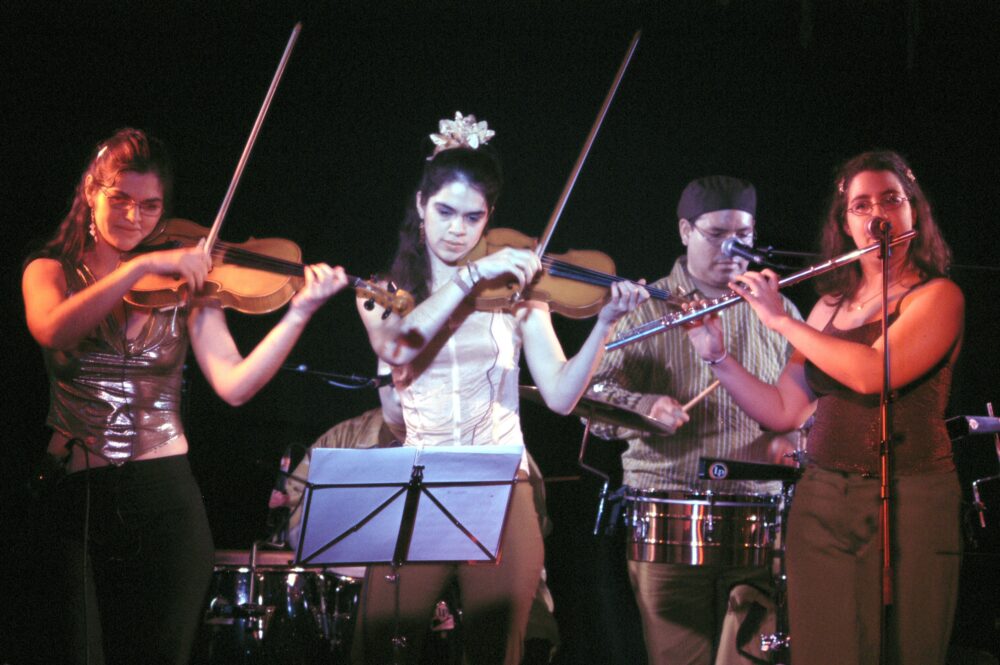
Charanga La Crisis

is a hommage to all big charanga orchestras and has been founded in order to keep alive and promote the tradition of this Cuban salsa music in Europe. Characteristic of this formation are the flute and violins replacing the brass section. The band plays a varied repertoire, including mambo, guarachas, son, cha cha cha and danzon. Gerardo Rosales, the founder of Charanga la Crisis, brought together musicians of a high standard, who are very familiar with the charanga style. This year they produced the cd Charaga la Crisis, Salsa Antigua.
20051108171146

Marja Brouwers

(Bergen op Zoom, 1948) is a Dutch prose writer. In 1984 she made her debut with Havinck, a novel about the lack of depth in relationships. The novel was favourably received. Her approach to prose is simple and realistic, describing reality in a businesslike and ironic style. This also applies to her novel De Feniks. Een familiekroniek (The phoenix. A family chronicle) (1985), however differing from Havinck, this story of three generations is not told in chronological order. In 1989 her novel De Lichtjager (The Lighthunter) was published. Her novels are about the inability to understand the nearest and dearest to us. In her most recent novel Casino (2004) Marja Brouwers illustrates the delusions of the consumer society of the last decennium, in which economic and sexual standards keep on shifting.
20051011145356

Vamba Sherif

(Liberia, 1973) is a novelist, essayist, journalist and film critic. His debut novel Land of the Fathers (1999) is partly based on his grandmother's stories and deals with the clash between slaves returning from the US and other Liberians. The novel The Black Napoleon (2015) portrays Samori Touré, who founded the Wasulu-empire in western Africa in the 19th century. His journalism, including film reviews, appears in publications such as The New York Times, Trouw and One World. Together with  Ebissé Rouw he compiled Zwart (Black, 2018), a collection of stories by Afro-European authors from the Low Countries. Ongekende liefde (Unprecedented Love), in which he tells his life story to his ten-year-old daughter Bendu, was published in 2021. Sherif's historical novel The Emperor’s Son (2023) follows Zaiwulo, a young prodigy who trains under sage Talata of the Haidarah family in Musadu. Entangled in the intrigues of Emperor Samori, the 'Black Napoleon,' Zaiwulo matures into a formidable soldier.
20240930103308 2

Ronald Severing

(1949) is director of the Fundashon pa Planifikashon di Idioma (Foundation for Language Planning) on Curaçao. Its goals is to promote the relevant languages of the community and to regulate the state of affairs of language. Severing studied Dutch in Nijmegen, sociolinguistics and applied linguistics in Tilburg, and obtained his doctorate with a thesis on literacy and successful teaching on Curaçao. For years he has been working at all levels of education, both in the Netherlands and in the Netherlands Antilles. He is editor of teaching methods of Papiamentu for primary schools on Curaçao, like Mosaiko, Trampolin and Cristal. In addition he wrote about the writers Cola Debrot and Frank Martinus Arion.
20060105153056

Gilbert Wawoe

(Curaçao, 1937) from 1994-2007 served as the Antillean representative on the Dutch Council of State. A chemical engineer, he held various top positions with Shell, but became particularly known for his dedication towards Antillean interests in the Netherlands and as an advisor to the Antillean government. He occupied a host of additional offices, including that of chair of the National Bureau to Combat Racial Discrimination and membership of the recommending committee for a national monument to commemorate slavery.
20091021144818

Abdelkader Benali

(Morocco, 1975) is an award-winning writer, poet, playwright and curator. His 1996 debut, Bruiloft aan zee (Wedding By the Sea), was an immediate success. His second novel, De langverwachte (The Long-awaited) won him the prestigious 2003 Libris Literature Award. Benali's subjects vary, but sports and the migrant who never really feels at home are recurring themes. He has written novels about his great passion of running, about his travels, and about migrants' cultural identity (Bad Boy). His work has been published internationally. Recent books include the novel Paradijsvogel boven Hoge Woerd (Bird of Paradise over Hoge Woerd, 2022) and Het andere verhaal (The Other Story, 2022), an essay about his research into 75 years of modern Moroccan art.
20231120143900 1

Elsbeth Etty

(Hulshorst, NL, 1951) received the Anne Vondeling Award for political journalism in 2008, owing to her sharp analyses of social problems. She is a journalist in the widest sense of the word. Besides being an editor and columnist with the NRC Handelsblad newspaper, she makes frequent appearances on radio and TV. In 2007 she debuted as a novelist with Maak jezelf maar klaar (Go Get Yourself Off), in which one of the characters from Harry Mulisch's The Discovery of Heaven figures as a main character. Etty obtained her Ph.D. with distinction from Utrecht University with a biography of Henriëtte Roland Holst, Liefde is heel het leven niet (Love Is Not All of Life, 1996). Her newspaper columns appeared in four different books. Her reviews were compiled in Dames gaan voor - Van Hella Haasse to Connie Palmen (Ladies First: From Hella Haasse to Connie Palmen, 1999). Etty is a special lecturer in Literary Criticism at the Free University in Amsterdam, and is now at work on a biography of the late Dutch poet and songwriter Willem Wilmink.
20100201124623

Pieter Steinz

(Rotterdam 1963 - Haarlem 2016) in 2010 published Grote Verwachtingen. Opgroeien in de letteren in 25 schema’s (Great Expectations. Growing up in Literature in 25 Charts). He did the same in Luisteren & cetera, (Listening etc) about 25 1970s pop albums. Somewhat earlier Macbet heeft echt geleefd (Macbeth Really Existed) appeared, on places where literary heroes used to live. In Verleden in verf (Past in Paint, 2011), Steinz sketches Dutch history in forty paintings. Steinz became an art editor with NRC Handelsblad in 1989. From 2005-2011 he headed the bookpages of that paper. Steinz studied ancient history and English. Earlier he wrote, among other books, Klein ABC van de wereldliteratuur (Concise ABC of world literature; 2008), Het web van de wereldliteratuur (The World Literature Web; 2007) and Lezen op locatie (Reading on Location; 2003), sixty maps on which he identifies where masterpieces of literature are set. In 2010 he published De Duivelskunstenaar (The wizard), a journey through Europe in search of Faust. Since 2012 Steinz has been head of the Dutch Literary Fund. He died in august 2016.
20111103145813

Chris Keulemans

(Tunisia, 1960) is a writer, essayist, traveller and popular panel moderator. He has published fiction and non-fiction; was the director of the debating platform and venue De Balie; and was founder of the literary bookshop Perdu and the cultural centre De Tolhuistuin (all in Amsterdam). He performed with Enkidu Khaled in their jointly created documentary play Bagdad. Due to his curiosity about how artists recreate their cities after a crisis, he travelled to Sarajevo, Beirut, Tirana, Algiers, New York, Kiev, Jakarta and Qamishlo. At the invitation of PAX, he wrote Srebrenica & PAX 1995-2020, an overview of 25 years of support to the Association of Women of Srebrenica by the IKV and PAX in response to the genocide in Bosnia. In 2021 he published Gastvrijheid (Hospitality), in which he explores the art of hospitality through a mix of travel stories, observations, memories and imagery.
20211110133423 1

Jan Blokker

(1927-2010, Amsterdam) was a publicist. For a while he studied Dutch and history. In 1951 his novella Séjour appeared, for which he was awarded the Reina Prinsen Geerlings prize. He worked as an apprentice journalist for the newspaper Het Parool, became film editor for the Algemeen Handelsblad and then head of television for the VPRO. He wrote book reviews, of which some have been collected in Het eeuwige examen (The eternal exam) (1977). Blokker is well known for his contributions to the television programme ‘Zo is het...’ (1963-1964), and for his columns in the Volkskrant. His columns are characterized by a sharp and satirical handling of current affairs. In 1960 Blokker's first children's book appeared: Op zoek naar een oom (Looking for an uncle), which was crowned by the CPNB. He wrote film scripts (Fanfare by Bert Haanstra) and the libretto for the opera Esmée (1995) by Theo Loevendie. In 1992 Blokker was appointed as extraordinary professor of journalism at Rotterdam University. He died in 2010.
20051108162126

Liesbeth Koenen

(1958) studied Dutch and Linguistics in Amsterdam and spent a half year in Florence studying Italian. She works as a freelance journalist and published a few interviews with linguists, which were collected and published as Het vermogen te verlangen (The capability to long). She wrote for many years the feature 'Zeggen en schrijven' (Saying and writing) on the back page of the NRC Handelsblad newspaper. Koenen also worked for radio and television. Together with Rik Smits she published Handboek Nederlands (Handbook of the Dutch language)en E-mail etiquette (E-mail etiquette). They publish a weekly column on their website Peptalks.
20051109100155

Afshin Ellian

(Teheran, 1966) in 1983 fled Iran and the regime of Ayatolla Khomeiny. After six years in Kabul, where he studied medicine, he was invited to come to the Netherlands in 1989. He studied criminal law, international law and philosophy at the Catholic University in Tilburg. In June 2003 he obtained his doctorate with research and a thesis on the Truth- and Reconciliation committee in South Africa. He has published two collections of poems: Mensenherfst (Human autumn), in which he illustrates aspects of a culture in exile, and Verrijzenis van woorden (Resurrection of words). He is a columnist for the NRC Handelsblad en regularly writes articles for several newspapers. Since June 1st 2005 he has become professor of Social cohesion, citizenship and multi culture at the faculty of Jurisprudence at the University of Leiden. Alongside his scientific work he is often found at the forefront of the debate about the multi cultural society. This year he published Hoe nog verder? 42 visies over de toekomst, (Where do we go from here? 42 visions of the future), Dialoog met Mohammed (Dialogue with Mohammed) and Brieven van een Pers (Letters from a Persian).
20050226125551

Sybrand van Haersma Buma

(Workum, 1965) studied law at the Rijksuniversiteit in Groningen. Since May 2002 he is a CDA member of the Lower House faction . He was policy staff member for the justice department and substitute civil secretary for the CDA Lower House faction. In the Lower House he is concerned mainly with judicial matters and internal affairs. It is his ambition in the Lower House to contribute to a safe and committed society, in which people have respect for one another and take responsibility.
20051027145214

De Woorddansers

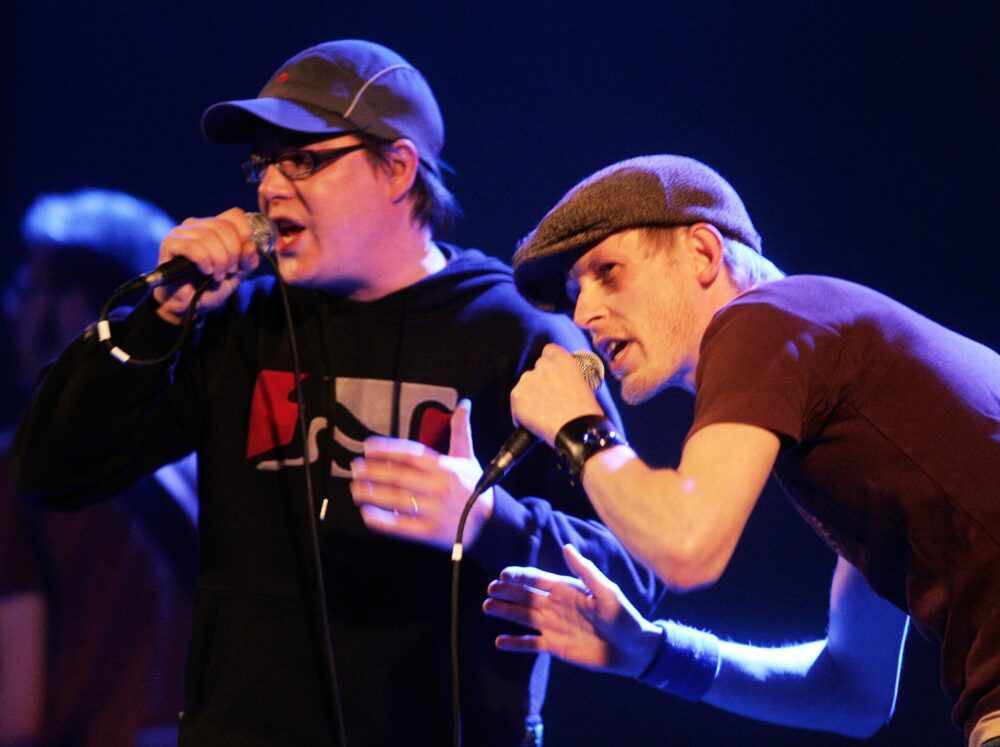
Jeroen Naaktgeboren and Arie Hordijk enact with two voices the spoken word, accompanied by beats and punkrock riffs. They made the phenomena Poetry Slam widely known in the Netherlands. Since 2002 they are continuously on tour in halls, pubs, theatres and festivals. In May 2003 they won the national Poetry Slam final, in June 2004 the Woorddansers finished second after Buddy Wakefield (VS) during the first World Slam championship. The Woorddansers, together with dj Evol D and punckrock guitarist Rudy can’t Fail, form the Woordenaars, and make a total theatre of beats and poetry. In June 2005 appeared POETRY SLAM, THE FESTIVAL, including the CD WOORDENAARS, released by publisher Douane. A literary experience designed by Saskia Dorsman with poetry, sound recordings and stories.
20051104094355

Jan Brokken

(Leyden, 1949) is one of the most prominent figures in Dutch literary non-fiction. He has also gained international recognition with works such as Baltische zielen (Baltic Souls) en De rechtvaardigen (The Righteous). His writings have been translated into 23 languages, among which English, German, French, Italian, Spanish, Danish, Swedish, Chinese and Russian. His two most recent books are set in former Dutch East Indies, where both of his parents lived and were held captive in Japanese internment camps during the war: De tuinen van Buitenzorg (The Gardens of Buitenzorg, 2021) and De Kampschilders (The Camp Painters, 2022). In September 2023, Brokken was honored with the Golden Quill Award for his entire body of work. Brokken studied journalism in Utrecht and political science in Bordeaux. After a career in journalism (including roles at Trouw and HP/De Tijd), Brokken decided to dedicate himself fully to his writing in 1986. His debut, the adapted novel De provincie (The province, 1984), had already been published by that time. He has since produced over thirty-five titles - a mix of fiction and non-fiction - in which he unveils the histories of countries he has visited, from Africa and the Caribbean to Indonesia.
20230823193019 1

Maxim Februari

(Coevorden, NL, 1963) was born as Marjolijn Drenth. Besides being a writer, he is an ethicist, an art historian, and a lawyer. Februari understands the art of turning moral dilemmas and legal issues into elegant prose. "It's got to be exciting and entertaining. If you write a pamphlet, no one will read it," he commented. His novel De literaire kring (The Book Club, 2007), on the morals of the Dutch cultural elite, got a very positive reception. From 2001 to 2010 Februari wrote columns for the Volkskrant newspaper. Some of these columns were published in Park Welgelegen - Notities over Morele Verwarring (Welgelegen Park: Notes on Moral Confusion, 2004). In his PhD thesis Een Pruik van Paardenhaar & Over het Lezen van een Boek (A Wig of Horse's Hair & On Reading a Book, 2000), nominated for the Golden Owl Award, he examines the relationship between economics and ethics. Currently he writes a weekly column for opinion page of NRC Handelsblad. Some of these, together with some Volkskrant columns, have been anthologised in Ons soort mensen (Our Kind of People, 2011). De maakbare man (The Makeable Man), notes on transsexuality, was published in 2013.
20121213162959

Randal Corsen en Konjunto Antiyano

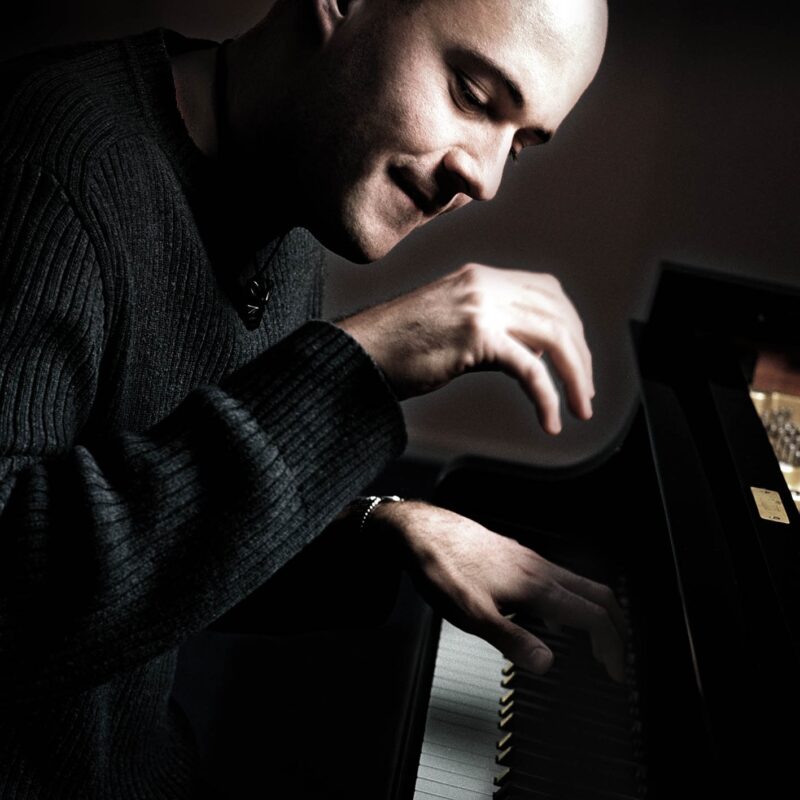
Randal Corsen (1972, Curaçao), pianist, composer and arranger, is known for his combination of jazz and Antillian and Latin-American classical music. He studied piano in the conservatory of Tilburg in the Netherlands. For his cd 'Evolushon' he received the Edison Jazz Award 2004. Currently he is allied to the conservatories of Tilburg and Amsterdam. With Konjunto Antiyano, a traditional Antillean quartet, he made a repertoire that travels between Chopin, Antillean classical music and Antillean folklore. The quartet also plays classical compositions by the great great grandfather of Randal Corsen, the poet and componist Joseph Sickman Corsen. The author of 'Atardi', the first and the most well known poem in Papiamento literature. With Eric Calmes on double bass, Ulrich de Jesus on kwarta and guitar and Eric Brigitha percussion.
20060104100552

Dirk Vlasblom

(Rotterdam, 1952) studied anthropology, planning and management at Utrecht University. Since then he works mainly as a journalist and writer. In 1990 he became NRC Handelsblad’s foreign correspondent in Jakarta. In 1997 he was awarded the Prize for Daily Paper Journalism for his articles on the Papua’s in Irian Jaya. In 2004 his book Papoea, een geschiedenis (Papua, a history) was published, the first integral historical look at West New Guinea. Other books that Vlasblom has had published about Indonesia are Jakarta, Jakarta – Reportages uit Indonesië (1993) (Jakarta, Jakarta - reports form Indonesia) and In een warung aan de Zuidzee – Verhalen uit Indonesië (In a snackstall by the South Sea, stories from Indonesia) (1998). In these books he describes his experiences of everyday life there, and especially the last book gives a glimpse behind the scenes of being a foreign correspondent. In 2005 he returned to The Netherlands, and now works as a journalist for NRC Handelsblad.
20050302123804

Olga Orman

(Aruba) is a poet and writer of children's books. She wrote two fairytale-like (picture) books about the spider Anansi and is a storyteller in heart and soul and introduced the kamishibai, a portable story-theatre, originally from Japan.
20051208142724

DJ Edo Salgado

is twenty one years old and has already shown his dj skills at several of the most famous locations in the Netherlands. His style can be described as a mixture of jazz, dance, techno and world music. He knows how to mix these diverse styles in a convincing and sensitive way, and places the different musical genres in the right perspective. The result is a powerful, modern style of music, that is warm, rhythmic and easy to dance to. In cooperation with Kareem Raïhani he started a record label, Moving World Recordings. Recently they have started with a new concept called Spirit. They take digital pulses and sounds from the western dance, and mix them with analogue rhythms of life and organic sounds from other cultures and continents.
20060123224804

DJ Gringo

is originally a salsa dj. He has earned his reputation as Resident DJ in the Tropen Theater in Amsterdam with the nights Dansen in Marmer (Dancing in marble). He performed in Club Qbanas in Istanbul, Club Arena in Amsterdam, at the Amsterdam Roots Festival, in the Melkweg and many more international parties. With salsa you can expect to hear Arabic and Latin sounds coming from his turntable.

Ruben van Gogh

(Dokkum, the Netherlands, 1967) who used to call himself The Man of Language, is a performing poet, anthologist and host. His poetry has taken him from stages all over Holland to the far corners of Europe - Albania, among others. His voice is unique within Dutch poetry, combining clarity and wit with metaphysical aspirations. His work is available in the collection Aan het eind van het begin (At the End of the Beginning, 2001) and Zoekmachines (Search Engines, 2002). In January 2006, his collection Klein Oera Linda (Oera Linda Minor) appeared, a collection in experimental lay-out reflecting contemporary society and culture.
Van Gogh has been very active the last couple of years, all over the world: in 2003 he contributed to the Taipei International Poetry Festival in Taiwan, Dichter aan Huis in The Hague and the Stockholms Poesifestival. 2004 saw him performing in Milan and Biddinghuizen (Lowlands Festival). He presented at the Rotterdam Poetry International and performed in Germany. For Yo! Opera Festival he wrote two libretti for so-called ‘Bus Opera’s’, as well as an ode to water..

20050221153644

Quito Nicolaas

(Aruba, 1955) studied political science and law at the University of Amsterdam. In 1980 his poem E Dia di Mañan appeared, followed by many publications such as the poetry collection Politico (1990), Illucion Optico (1995) and the poem Ser Nihilo (1998). His collection of poems Destino appeared in 2000. In 2001 his first short story, Un Pasco Tristo, was published. Another poetry collection, Gerede Twijfels (Certain Doubts), appeared in 2002. In 2003 his novel Sentencia sin Proceso appeared. Nicolaas - who sees himself first and foremost as an Aruban writer - is chairman of the board of the Antillean and Aruban literary organisation Simia Literario. Since April 2001 he has been attached as a reviewer to the weekly publication Contrast. He mostly comments on novels and poetry collections written by mainly non-indigenous writers.
20050301220936

Igma van Putte

is a poet and translator. Together with Florimon van Putte she compiled the Complete Papiamento-Dutch Dictionary, published in September 2005, followed in 2006 by the Dutch-Papiamento volume.
20071129131953

Mathijs Deen

(Hengelo, NL 1962) is a radio journalist and a writer. His most recently published book is De Wadden (The Frisian islands; 2013), a poetic history of the Frisian islands. His book of short stories Brutus heeft honger (Brutus is hungry, 2011) was nominated for the AKO Literature Prize. Eating being the leitmotiv, Deen jumps through world history. The forty-four historical stories are fine miniatures of scarcely one and a half page long. After having studied Dutch in Groningen Deen worked for Radio Noord for some years. His radio columns from those days were collected in two publications. Since 2001 Deen has been programme maker with VPRO radio, hosting the historical radio programme OVT. A number of historical documentaries which he made for VPRO radio has been published as an audiobook. The radio series De lange weg naar Darwin (Long road to Darwin) appeared on cd and as a podcast. Deen was programme coordinator of the Winternachten Festival between 2009 and 2011.
20091203105902

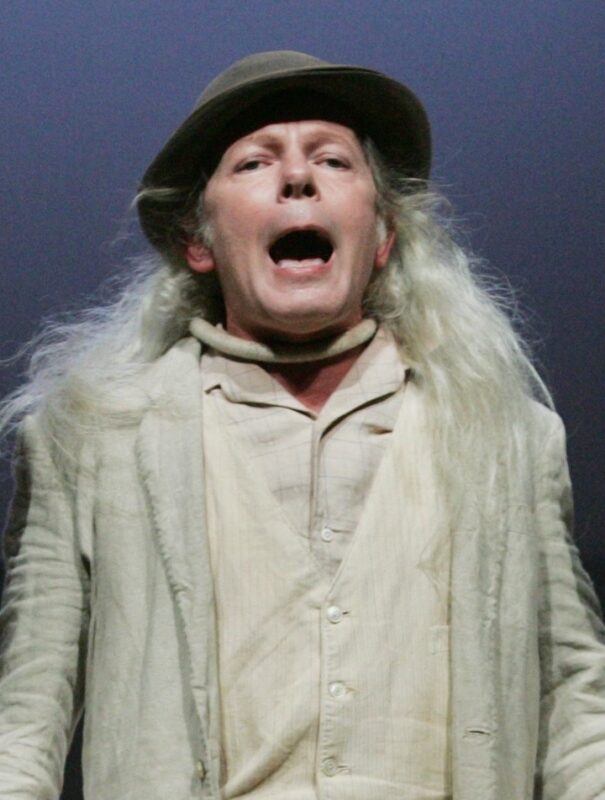
Paul Röttger

finished his studies at the Arnhem Theatre School in 1976. During the first two years he acted regularly in film and television productions, but afterwards chose the stage. He worked for the Ro theatre company for ten years and acted under director Franz Marijnen in amongst others Tartuffe and Pinokkio, under Karst Woudstra in De opera van Smyrna and under Jos Thie and Antoine Uitdehaag Mordred in Merlijn . After this he stepped over as freelancer and acted in amongst others Amadeus and de Wijze Kater (The wise tomcat) . He teaches, directs and is head of the Rotterdam Centre for Theatre. In 2005, together with Peter Tuinman, Karel de Rooij and Peter de Jong, he acted in Samuel Beckett's Wachten op Godot (Waiting for Godot).
20051201214007

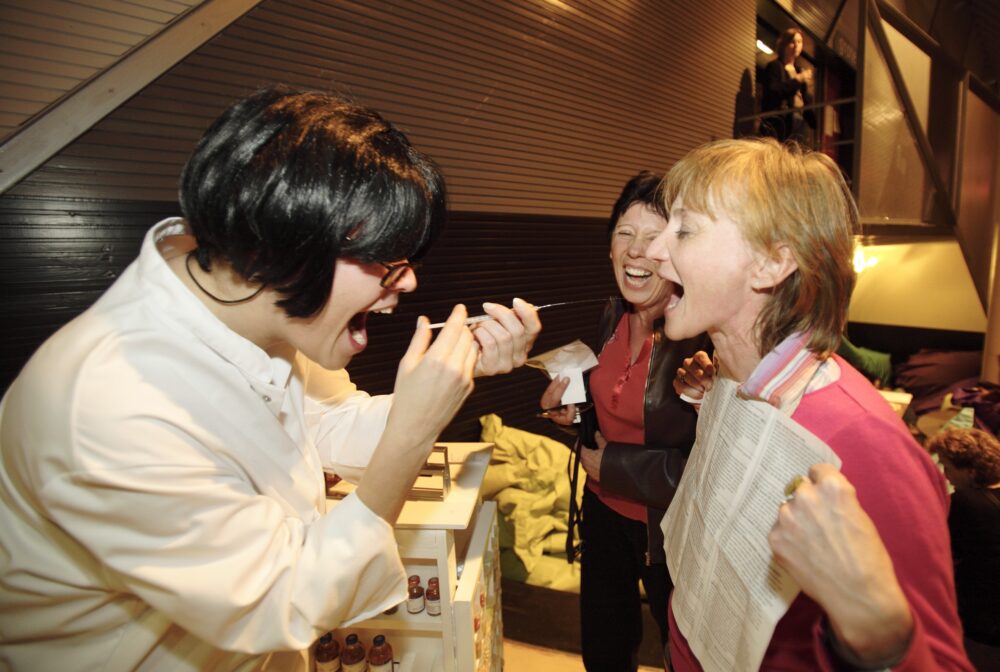
Dichtdokter

Miranda Poel (1972, Appingedam) finished her studied at the Academy of Art in Tilburg in 2001. She is a photographer, director, author of filmscripts and a appears in various acts, performed at different locations for many different occasions. there was a lot of attention for her act 'sighs of relief', in which she catches peoples laments and the accompanying messages in a bag. As poetry doctor she is available for consultation, armed with a pen, and convinced that words can heal. "Utter one word and you will become healthy". She uses that word to write an epigram.
20060123225723

Asli Erdogan

(Istanbul, 1967) studied computer science and physics at the university of Bogazici. Up until 1992 she worked as a physicist at the European Nuclear Research Centre (CERN). She has also taught English for two years in South America, writes for the magazine Atlas and from 1998 to 2000 had a weekly column in the newspaper Radikal. In 1994 Erdogan made her debut with the novel Kabuk Adam. After that her collection of stories Mucizevi Mandarin (1996) and her very succesful second novel Kirmizi Pelerinli Kent ( City in a red cape) (1998) were published. This stifling novel is situated in Rio de Janeiro. In 1990 Erdogan was awarded the Deutsche Welle Preis for one of her unpublished short stories. The main themes in her works are: violence against women, the situation in prisons and Kurdish rights.
20050223212156

Rudy Kousbroek

(Pematang Siantar, 1929 - Leiden, 2010) came to the Netherlands in 1946. In 1951 he published his first collection of poems Tien variaties op het bestiale (Ten variations on bestiality). He has a varied oevre to his name, consisting of many essay collections concerned with diverse subjects. One of which was Het Oostindisch kampsyndroom. Terug naar Negri Pan Erkoms (1995) (The East-Indies Camp syndrome. Back to country of origin), about our colonial past. It offers a refreshing insight on the how and the why of Kousbroek's unique vision of the colonial past. As part of a 400 years Netherlands-Japan relationship Kousbroek, together with film-maker Hans Keller, made the royal journey again. This resulted in an unparalleled journey through time, full of revelations and discoveries. The book In de tijdmachine door Japan (In the time machine through Japan) (2000) forms the background of the film that Hans Keller made for the VPRO. Kousbroek died in 2010.
20050301172504

Sidney Joubert

(Curaçao, 1939) got his degree in Spanish at the University of Amsterdam. He fololowed a course in Papiamentu by drs Raúl Römer. From 1965 to 1985 he was a teacher of Spanish at a secondary school in Curaçao. For some years he worked at the Sede di Papiamentu, later the Curaçao language-institute Fundashon di Planifikashon di Idioma. Hij was a teacher at the first course of Papiamentu on Curaçao in the early seventies; secretary of the spelling-committee Maduro en Jonis en chairperson of the subcommission Curaçao of the Standardisationcommikttee of Papiamentu; he is the chairperson of the Stichting Raúl Römer, that last year - in co-operation with Zirkoon Publishers - published the bilingual book Kon Nanzi a nèk Shon Arei.../ Hoe Nanzi de koning beetnam... . His most important works are Papiaments op Reis, written with his wife Debbie Joubert; Stemmen uit het verleden (Indian words in Papiamentu) with drs. G. van Buurt and a Dutch-Papiementu dictionary, published both in print and electronically.
20060109101645

To Trigono

plays traditional Greek music. With Takis Sideris, Jan Verdonk & Hugo Strötbaum.

A. Munandar

leeft sinds 1965 in ballangschap. Toen hij dat jaar voor studie van zijn geboorteland Indonesië naar de DDR vertrok, en dat najaar Soeharto de macht greep, kon hij niet meer terug. Munandar sympathiseerde met de communistische partij PKI. De Culturele Revolutie was voor hem en meer Indonesische ballingen reden om China te ontvluchten. Zo kwam hij in 1985 in Nederland terecht. Hij was een van de makers van een krantje met Indonesisch nieuws, dat de ballingen overal in Europa ontvingen. Na een scheiding van bijna dertig jaar van vrouw en kinderen, reisde Munandar in 1994 voor het eerst naar Indonesië, maar hij besloot om in Nederland te blijven wonen.
20060123220225

Foyer programme: poetry doctor, DJ and bookshop

Information

Date and time Friday 20 January 2006 20:00 tot 23:45 uur
Location Theater aan het Spui - foyer
20060123225723
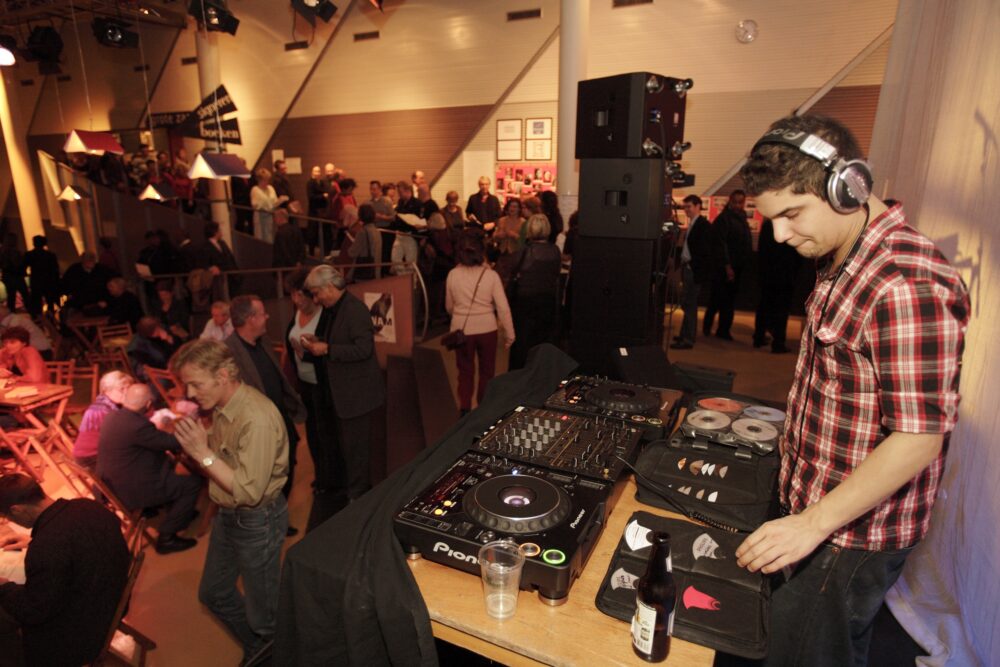
Looking for a book of the writer you discoverd this evening, have a chat with other visitors? This you can find in the foyer of the Theater aan het Spui. D.J. Edo Salgado plays a quiet mixture of jazz, dance and world music, writers sign their books in the bookshop and the Dichtdokter (poetry-doctor) writes her healing prescriptions. The bar is open for drinks and snacks. Meer details bekijken

In search of the independent mind - part 1

Information

Date and time Friday 20 January 2006 20:15 tot 21:15 uur
Location Theater aan het Spui - grote zaal
20060123215701
Do they still exist, the independent thinkers, the non-conformists? Are they still given some elbow-room in our shrinking world? The South African writer Breyten Breytenbach provides us with a manual of do's and don'ts to help us preserve our independent mind. Together with the writers Herman Franke and Marja Brouwers he goes in search of our present day heroes of the mind. Michaël Zeeman chairs this search. Dutch spoken. Meer details bekijken

Indonesia: from censorship to unprecedented freedom

Information

Date and time Friday 20 January 2006 20:15 tot 21:10 uur
Location Theater aan het Spui - kleine zaal
20060123221804
For years journalist/writer Goenawan Mohamad fought for the freedom of speech in Indonesia. There are no better witnessess of the history of censorship in Indonesia. Also former NRC correspondent Dirk Vlasblom talks about his experiences with the Indonesian censor. Paul van der Gaag chairs the discussion. Writer and journalist Goenawan Mohamad is the founder of the leading newsmagazine Tempo . For his pugnaciousness Mohamad received several awards, amongst others the first Professor Teeuw Award from the University of Leiden. Mohamad received the Wertheim award in December 2005. For this programme we earlier announced teh participation of Joesoef Isak, journalist and publisher from Indonesië. For reasons of ill health he cannot make the trip to the Netherlands. He is replaced by A. Munandar, an Indonesian exile living in The Netherlands. English spoken. Meer details bekijken

The remake of Uncle Tom's cabin

Information

Date and time Friday 20 January 2006 20:15 tot 21:01 uur
Location Filmhuis - zaal 5
20060123220518
"Aha, you must be the lady who started the civil war and has abolished slavery", said president Lincoln at the time to Harriet Beecher Stowe, author of Uncle Tom's cabin. Can literature have such an important role? When history has overtaken fiction, as is the case in this novel, must a novel be adapted to make it more relevant? Writers Frank Martinus Arion, Vamba Sherif and Christine Otten attempt this. They rewrite parts of Uncle Tom's cabin and explain why their version is better suited to the modern reader than the original. Panel chairman is Pieter Steinz. Dutch spoken. Meer details bekijken

Film: Jamila

Information

Date and time Friday 20 January 2006 20:15 tot 20:30 uur
Location Filmhuis - zaal 4
20051108152801
A heart warming portrait of an exceptional teenager and the struggle she has with her father. Jamila Aitboubker's appearance and behaviour are somewhat extreme: football boots and a head scarf. However, her talent and passion for football and her faith do not contradict one another. She is outspoken and persistant in both. But between head and feet are her naked knees, a bane of contention for her father and possibly for others within the Islamic community. This short film by Ingeborg Jansen had its premiere during the last Dutch Film Festival. Dutch spoken. Meer details bekijken

Film: Reimerswaal

Information

Date and time Friday 20 January 2006 20:30 tot 20:40 uur
Location Filmhuis - zaal 4
20051108161140
Een die zichzelf niet meer bezit,
Is aan de mist geschonken.
Klokken zijn meeverdronken
En luiden dit
Ononderbroken.
Maar niemand weet of ziet
De plaats waar alles ligt gezonken.

(A person who has lost himself/is offered to the mist/bells have drowned as well/and chime/continuously/but no one knows or sees/the place where everything lays/sunken). This poem by Gerrit Achterberg is the startingpoint of a short film by Clara van Gool, about a crime passionel: a young man and a young woman dance a fatal duet in and under water. Dutch spoken
Meer details bekijken

Film: Untertage

Information

Date and time Friday 20 January 2006 20:40 tot 21:05 uur
Location Filmhuis - zaal 4
20051107153249
An impressionistic documentary by Jiska Rickels, that carries you into a world where colours disappear, sounds are distorted and machines make music. A world full of dangers, where the life of every coalminer is put into the hands of Saint Barbara to ensure a safe return. The coalmine is both heaven and hell. Its beauty and comradeship are not easy to put into words; one has to go through the journey oneself in order to catch a glimpse of this world that is about to disappear. German spoken, English subtitled. Meer details bekijken

Chopin on Curaçao - a journey to the sources of Antillean music

Information

Date and time Friday 20 January 2006 21:10 tot 21:35 uur
Location Theater aan het Spui - kleine zaal
20060123220713
In 1993 writer Jan Brokken settled on Curaçao. He rented a house which had a piano and he spent his first night playing some of Chopin's mazurka's. The following morning he was embraced by his neighbour who exclaimed "I heared you play the piano last night and you were playing our music." That was the beginning of a fascination that led Brokken from Curaçao to Aruba, Cuba, Martinique, Guadeloupe and Trinidad, where he found the same musical patterns everywhere. He collected and took with him a wealth of stories and anecdotes from unique musicians . In Waarom elf Antillianen knielden voor het hart van Chopin (Why eleven Antilleans kneeled before the heart of Chopin), Jan Brokken's latest book, he illuminates one and a half century of Caribbean music. 'In the Caribbean music', he writes, 'I found what I was looking for in my travel stories: that is how different cultures merge into one another.' Using this music as a guideline Jan Brokken offers an unique insight into Antillean history, its way of life and the mentality. This evening you can listen to the story of Jan Brokken and to the music of the Konjunto Antyano quartet, directed by Randal Corsen. Dutch spoken. Meer details bekijken

Candid Indonesian

Information

Date and time Friday 20 January 2006 21:35 tot 22:01 uur
Location Theater aan het Spui - kleine zaal
20060123225031
In her sensational debut novel Ode aan Leopold Von Sacher-Masoch ( Ode to Leopold von Sacher-Masoch) (2002), about sadomasochism and transsexualism, Dinar Rahayu discovers "a surrealistic view on life and fate, mixed with the delusions, dreams and experiences of the characters". In his short stories writer and columnist A.S. Laksana lives on the fringes of society, together with vagrant childeren, glue sniffers and prostitutes. Two young Indonesian writers discuss with Chris Keulemans their innovative and candid style of writing. English spoken. Meer details bekijken

In search of the independent mind - part 2

Information

Date and time Friday 20 January 2006 21:35 tot 22:35 uur
Location Theater aan het Spui - grote zaal
20060123225639
In the second part of the search visual artist Marlene Dumas, biologist Tijs Goldschmidt and composer Theo Loevendie discuss the (im)possibility of autonomous creation. Maybe we should take our lead from such eminant autonomous creators as the painting ape Congo and the carefree composing birds around us? Michaël Zeeman chairs the discussion. Dutch spoken. Meer details bekijken

Presentation of the schoolchildren's poetry contest

Information

Date and time Friday 20 January 2006 21:35 tot 22:00 uur
Location Filmhuis - zaal 5
20060123223850
The Woorddansers present the results of a project from Huis van Gedichten: pupils of the Johan de Witt College in The Hague were asked to write poetry about 'heroes of the mind'. They will recite their own work. Dutch spoken. Meer details bekijken

The film choice of Deborah Jack

Information

Date and time Friday 20 January 2006 21:35 tot 22:01 uur
Location Filmhuis - zaal 4
20060123221334
The fickleness of memory is an important theme in the work of Drisana Deborah Jack, a poet and artist from St Martin. What do our memories mean? Why do we remember one thing and forget the other? She not only investigates personal memory but also collective cultural memory and the loss of memory. She compiled a programme of fragments of films for Winternachten, in which memory and time are depicted as a non-linear experience. With amongst others fragments from Daughters of the Dust by Julie Dash (1991), Beloved by Jonathan Demme with Oprah Winfrey (1998), and Memento by Christopher Nolan (2000). English spoken.
Meer details bekijken

Moved - cinematic poems in sign language

Information

Date and time Friday 20 January 2006 22:00 tot 22:20 uur
Location Filmhuis - zaal 5
20051108115457
Just as spoken languages have sign languages also have a poetic form. Hand positions, movements, unique transitions, but also the rythm and cadance of the recitation turn a text in sign language into a poetic text, a ballet of hands. Two sign language poets, Wim Emmerik and Giselle Meyer, present their poems in several beautiful films, made by Anja Hiddinga and Leendert Pot. The literary translation into Dutch is by Erik Bindervoet and Robert-Jan Henkes. Dutch spoken. Meer details bekijken

Chopin on Curaçao - a journey to the sources of Antillean music

Information

Date and time Friday 20 January 2006 22:01 tot 22:55 uur
Location Theater aan het Spui - kleine zaal
20060123220713
In 1993 writer Jan Brokken settled on Curaçao. He rented a house which had a piano and he spent his first night playing some of Chopin's mazurka's. The following morning he was embraced by his neighbour who exclaimed "I heared you play the piano last night and you were playing our music." That was the beginning of a fascination that led Brokken from Curaçao to Aruba, Cuba, Martinique, Guadeloupe and Trinidad, where he found the same musical patterns everywhere. He collected and took with him a wealth of stories and anecdotes from unique musicians . In Waarom elf Antillianen knielden voor het hart van Chopin (Why eleven Antilleans kneeled before the heart of Chopin), Jan Brokken's latest book, he illuminates one and a half century of Caribbean music. 'In the Caribbean music', he writes, 'I found what I was looking for in my travel stories: that is how different cultures merge into one another.' Using this music as a guideline Jan Brokken offers an unique insight into Antillean history, its way of life and the mentality. This evening you can listen to the story of Jan Brokken and to the music of the Konjunto Antyano quartet, directed by Randal Corsen. Dutch spoken. Meer details bekijken

Film: Alias Kurban Saïd

Information

Date and time Friday 20 January 2006 22:01 tot 23:45 uur
Location Filmhuis - zaal 4
20051107171025
(2004, 80 min) Documentary maker Jos de Putter tries to unravel the mystery around the identity of Kurban Saïd, the author of the well known book Ali and Nino. This book appeared in 1937 and became known as the Romeo and Juliet of the Caucasus: a love story about a Muslim boy and a Christian girl in the Azerbaijani port of Bakoe. It was years before the book came to the public's attention and still nothing is known about the author, except for the alias Kurban Saïd. De Putter visited witnesses and places where the mysterious author might have been. Dutch subtitled. Meer details bekijken

Film: It's my turn now

Information

Date and time Friday 20 January 2006 22:20 tot 22:55 uur
Location Filmhuis - zaal 5
20051119113453
In this personal documentary the filmmaker Wout Conijn, student at the film academy, struggles with the dominant influence of his elder brother Joost, the well known artist. He puts himself in the endless emptiness of the Moroccan Sahara and travels to the icy slopes of the Himalaya. Dutch spoken. Meer details bekijken

Colonial history of the East and West

Information

Date and time Friday 20 January 2006 22:55 tot 23:45 uur
Location Theater aan het Spui - kleine zaal
20060123230507
Frank Martinus Arion (1936, Curacao) en Eka Kurniawan (1975, Indonesia) met each other last summer during the Winternachten tour of Indonesia. Despite different generations and continents they found in each other a common interest, that of colonial history. Chaired by Chris Keulemans, they talk about the way they give the history a place in their work by using fact and fiction in a playful, ironic way. Frank Martinus Arion reads from his new novel De deserteurs (The deserters), about the struggle against slavery. Eka Kurniawan acquaints us with his historical novel Cantik itu luka (The wounded beauty), a story that takes place in the declining days of the Dutch East Indies and up to the recent past of Indonesia. English spoken. Meer details bekijken

In search of the independent mind - part 3

Information

Date and time Friday 20 January 2006 22:55 tot 23:45 uur
Location Theater aan het Spui - grote zaal
20060123230551
The evening closes with a discussion between all the participants of the search. Perhaps from this they can come to some conclusions as to how independent thinking can be protected. And last but not least Samuel Beckett's vision on human thinking: actor Paul Röttger plays Lucky's monologue from Samuel Beckett's play Waiting for Godot. Michaël Zeeman chairs the discussion. Dutch spoken. Meer details bekijken

Mr Blokker, how do you do that?

Information

Date and time Friday 20 January 2006 22:55 tot 23:45 uur
Location Filmhuis - zaal 5
20060123225812
'There is not one square meter of Dutch earth that does not have an education centre, a youth club, a cultural centre, or a shelter with a staff led by somebody called Dick, John or Arnold, wearing a beard and talking the whole day about communication patterns and tolerance limits'. There are very few columnists in the Netherlands that are able to pinpoint the Dutch character and give a twist to events so well as columnist Jan Blokker. How does he do that? Writer Abdelkader Benali questions him thoroughly on this. Dutch spoken. Meer details bekijken

Electro Côco - Brazilian dance music

Information

Date and time Friday 20 January 2006 23:45 tot 01:30 uur
Location Theater aan het Spui - foyer
20060123230235
Dance the night away with an exceptional mix of traditional Brazilian Côco, electronic dance, jazz, drum 'n bass and reggae.
Meer details bekijken

Discover
20 May 2026

Get your 2027 tickets!

Get your Early Bird tickets for the big festival nights, Friday & Saturday Night Unlimited!