Winternachten Friday Night

20090126150602

‘Fake: or the manipulation of truth’: on five different stages fake was represented and criticised, revealed and revered. In literature, film and music it appeared in many shapes.
With a State of the Novel, Connie Palmen opened on Friday night. In 'Fake it till you make it' she gave her vision on the role of fiction in everyday live. Also performances by the Indian author Amitav Ghosh; with Alain de Botton; with the Asian, satirical writer Nury Vittachi; with an evening programme full of readings, short conversations, and music in the new and succesfull Wintercafe; with Herman Koch and Gerrit Komrij; and with unknown, surprising authors like Laksmi Pamuntjak (Indonesia), Youssouf Amine Elalamy (Morocco) and Jose Eduardo Agualusa (Angola).

Information

Date and time Friday 16 January 2009 from 20:00 to 01:30 hrs
Location Theater aan het Spui & Filmhuis Den Haag

Tijdschema 16 January

Filter by location:
Filter by spoken language:
Time Location
00:00 - 01:30 Theater aan het Spui - foyer Dance the night away: Tierra Caliente
20:00 - 00:00 Theater aan het Spui - foyer Foyer: Books, Art and Music
20:00 - 21:00 Filmhuis - zaal 6 Film: The Fake Trade
20:10 - 21:00 Filmhuis - zaal 7 Wintercafé 1: Herman Koch
20:10 - 21:00 Theater aan het Spui - grote zaal Connie Palmen's State of the Novel: 'Fake it till you make it'
20:10 - 21:00 Theater aan het Spui - kleine zaal 'Travellers' Tales'
21:10 - 22:00 Filmhuis - zaal 7 Wintercafé 2: Masquerades
21:10 - 22:00 Theater aan het Spui - grote zaal True Fiction - conversation with Amitav Ghosh
21:10 - 22:00 Theater aan het Spui - kleine zaal Music: Palio-Paréa
21:10 - 22:00 Filmhuis - zaal 6 Jan Baeke's Fake film choice
22:10 - 23:00 Filmhuis - zaal 7 Wintercafé 3: Metamorphoses
22:10 - 23:00 Theater aan het Spui - grote zaal Tibetan music: Namgyal Lhamo
22:10 - 23:00 Theater aan het Spui - kleine zaal How Illusions Can Change Your Life - with Alain de Botton
22:10 - 23:30 Filmhuis - zaal 6 Film: Orson Welles' F for Fake
23:10 - 00:00 Filmhuis - zaal 7 Wintercafé 4: You don't know what you see
23:10 - 00:00 Theater aan het Spui - grote zaal It really happened
23:10 - 00:00 Theater aan het Spui - kleine zaal The Fake Nation

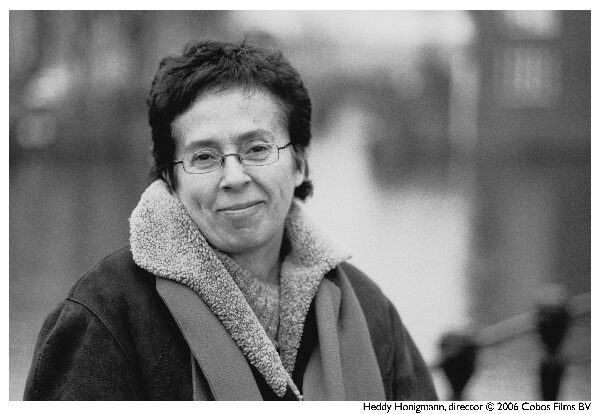
Heddy Honigmann

(Lima, 1951- Amsterdam 2022) is one of the best known documentary makers of the Netherlands. Her work is screened on many festivals around the world and among others MoMa in New York dedicated a retrospective to her. Honigmann puts outsiders first in her work, but also memory, music and love form constant elements. Her latest film, El Olvido, is about children, who run small businesses or work as waiters trying to survive in Lima. In Emoticons (2007) she focusses on 'wandering souls' roaming the Internet in the nightly hours seeking friendship and love. Forever (2006), a portrait of visitors to the Pere Lachaise cemetery in Paris, was awarded a Golden Calf at the Utrecht Film Festival. Previously she made dcumentaries on Cuban exiles in New Jersey (Dame la Mano, 2003) and on the traumatic experiences of UN soldiers (Crazy, 1999). Her power lies in the enormous empathy with which she approaches her subjects. 'I don't do interviews', she says about her style, 'I do conversations.'
20080916143354

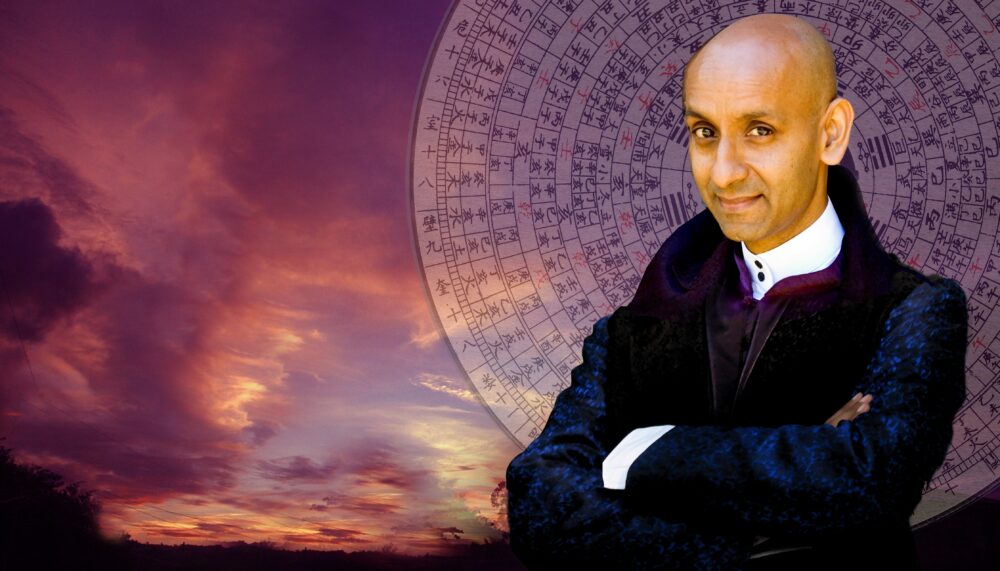
Nury Vittachi

(Sri Lanka, 1956) writes fiction and non-fiction for children and adults and is a well-liked journalist and columnist in Asia. In his best known book, the whodunit The Feng Shui Detective (2000, translated in 2005) he plays with the dialects of English in Asia. Also, he ridicules western bias about Asians and vice versa. Vittachi tries to improve the literary climate in Asia. He was the initiator of the Asia Literary Review and various literary festivals and prizes. Right now he is on the jury of the first great Asian literary prize, the Australia Asia Literary Award. Vittachi gives online writing lessons, visits schools and informs his audience daily through www.jam100.com. As a baby he had to flee his native country owing to death threats addressed at his father, who had written a book on the struggle between the Singalese majority and the Tamils. He grew up in Singapore, Kuala Lumpur and Londen and now lives in Hong Kong.
20080916105108

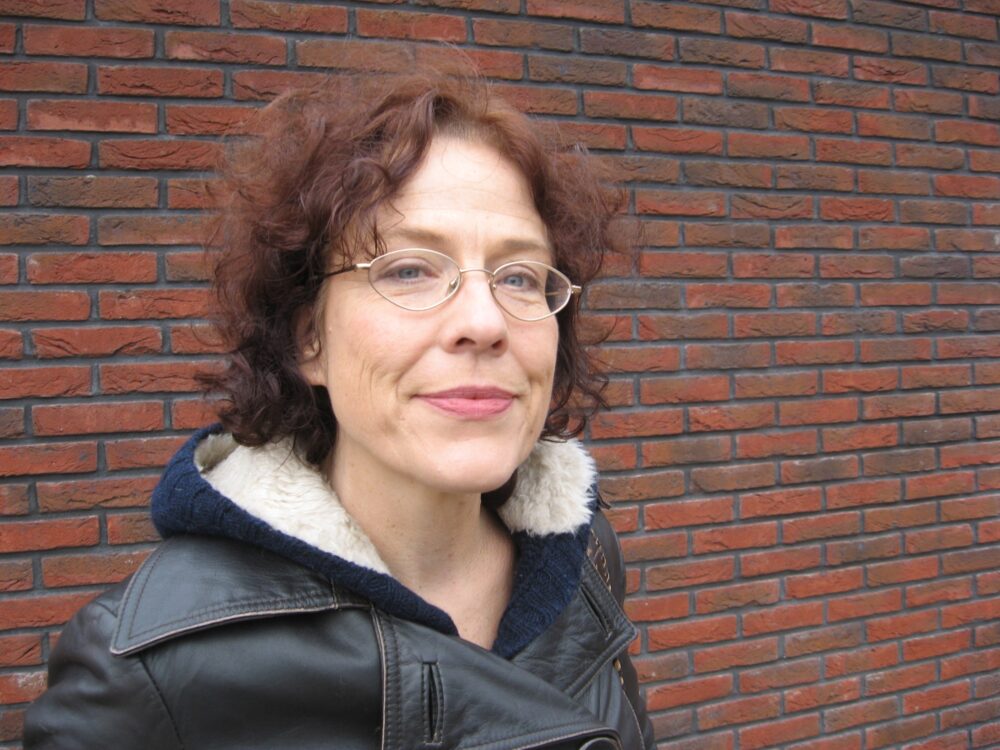
Margriet de Moor

(Noordwijk, 1941) in her latest book, the volume of essays Als een hond zijn blinde baas (Like a Dog Its Blind Boss; 2007), how she began her writing career. 'Let's see if I can write a story,' she thought one Monday morning. And writing she could. Her first volume of short stories, Op de rug gezien (Seen From the Back; 1988) won her a Gouden Ezelsoor (golden donkey-ear) and her novel debut Eerst grijs dan wit dan blauw (First Grey Then White Then Blue; 1991) won her the AKO Literature Prize. That opened the way to international fame. The book has been published in more than ten languages. Chance and its dramatic consequences and the 'mystery of the Other' play an important role in De Moor's work. History is also an important theme. She devoted a book to the haps and mishaps of the gypsies in 15th century Europe, De hertog van Egypte (The Duke of Egypt) and De Verdonkene (Drowned) deals with the great flood of 1953 in the Netherlands. De Moor studied piano, singing, art history and archeology and made videofilms before she started writing.
20080930102503

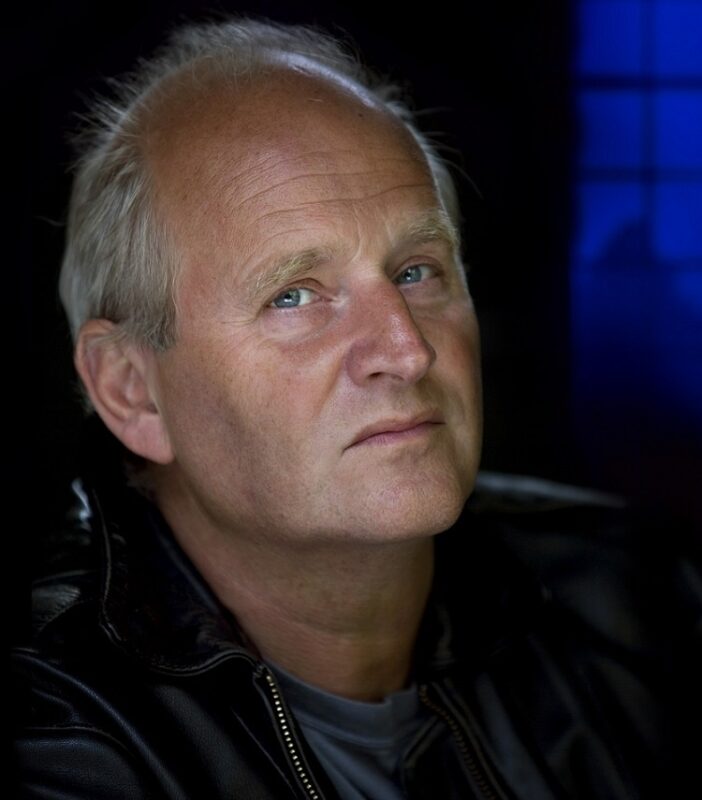
Laksmi Pamuntjak

(Indonesia, 1971) had her debut novel Amba published in 2012 in Indonesia. It has already been published in English, German and Dutch. The novel is a modern take on the story of Amba and Bhisma in the Mahabharata, set against the context of one of the 20th century's bloodiest Communist purges and the Buru penal colony in the Moluccas. In November 2014, Pamuntjak released her second novel, Aruna dan Lidahnya. By mid December, it had become a national bestseller and is now already in its 2nd edition. Pamuntjak, one of the few Indonesian writers to publish in English, made her breakthrough internationally in 2005 with her first volume of poetry, Ellipsis, proclaimed by the Herald UK as one of the best books of the year. Her latest volume, The Anagram, appeared in 2007. In addition to poetry Pamuntjak writes short stories. Recurring themes in her often sensual work are identity and tolerance, food as metaphor for culture, complex love relationships and the relationship between mother and daughter. Pamuntjak has also published articles on art, literature, classical music, politics, film and food in the weekly Tempo and The Jakarta Post, among others. Early 2008 she launched the gastronomical guide Jakarta Good Food Guide 2008-2009, which was well-received.
20150915095854 1

Joumana Haddad

(Lebanon, 1970) is a poet, journalist, translator, editor and consultant. In her work she focuses on eroticism and the liberation of Arab women from their paternalistic yoke. Hoe ik Sheherazade heb vermoord, bekentenissen van een boze Arabische vrouw (How I killed Scheherazade, confessions of an angry Arab woman) in 2010 attracted a great deal of international attention. In this autobiographical essay she stood up for the sexual liberation of Arab women - at the same time condemning western clichés. Haddad speaks seven languages and has translated various works of prose and poetry into and from Arabic. As head of the cultural pages of the Lebanese daily An Nahar she interviewed well-known writers such as Umberto Eco, Wole Soyinka and Paul Auster. By the end of 2008 she launched Jasad (Arabic for body), the first Arab erotic cultural magazine. The flamboyant writer now works on a Ph.D. at the Sorbonne on the translation of the Marquis de Sade in Arabic. A selection of her poetry can be read in English translation on www.joumanahaddad.com. Her work has been translated into many languages, including French, German, Spanish, Polish, English and Italian, and she has won numerous international literary prizes.
20080916104425

Bas Heijne

(Nijmegen, NL, 1960) writes essays, short stories and plays, and is a columnist with the daily newspaper NRC Handelsblad. He published the novels Laatste woorden (Last words) and Suez and received the Henriëtte Roland Holst Prize in 2005. In 2011's Moeten wij van elkaar houden, het populisme ontleed (Do We Have to Love One Another? Populism Dissected) Heijne shows how globalisation and individualism pave the way for populism. Angst en schoonheid (Fear and Beauty) was published in 2013, an essay about Dutch writer Louis Couperus, whom Heijne admires. In the same year his documentary about Couperus was broadcast. In 2015 he hosted the five-part documentary De volmaakte mens (The Perfect Human). In 2016 his essay Onbehagen – nieuw licht op de beschaafde mens (Discontent - new light on civilized man) was published. In 2017 Heijne received the P.C. Hooft Award for his essayistic works.
20131029170754 1

Kristien Hemmerechts

(Belgium, 1955) writes widely on wide-ranging topics, from poetry about her late husband Herman de Coninck in Taal zonder mij (Language without Me, 1998) to the struggle of an anorexia patient in her book Ann (2008). The human condition is always central to her extensive oeuvre. Her work also pays a noticeable amount of attention to the female sexual experience. In her novel De waar gebeurde geschiedenis van Victor en Clara Rooze (The True History of Victor and Clara Rooze), Hemmerechts plays with fact and fiction: a writer with writer's block tackles a story of incest to give free reign to her thoughts about writing and literature. Haar Bloed (Her Blood) appeared in 2012, for which she spent time in a hematology ward. In 2014 she caused an uproar with De vrouw die de honden eten gaf (The Woman Who Fed the Dogs), a novel inspired by the Dutroux case. Her latest novel Alles verandert (Everything Changes) closely follows the plot of J.M. Coetzee's In Ongenade (Disgrace), but with a female protagonist. How much does the gender of literary characters determine our view of their actions?
20150923122708 1

Ilija Trojanow

(Bulgaria, 1965). German author. In his novel The Collector of Worlds tells about the sojourns of the British adventurer Richard Burton. But more than about Burton this novel is about the way in which others see Europe. It is the leitmotiv in Trojanow's work: he wants to show the West how the rest of the world feels and thinks. Like Burton Trojanow saw a lot of the world. In 1971 he fled to Germany with his family and moved to Nairobi. Back in Germany, he studied law and international law, interrupting his study to found two publishing houses specialised in African literature. Then he followed in the footsteps of the hero of his youth, Burton, and journeyed through India and the Middle East. He made his debut in 1996 with the novel The World is Big and Salvation Lurks Everywhere, adapted for film in 2007. Meanwhile he has written fifteen titles (fiction and non-fiction), three of which have been translated into Dutch.
20080918105625

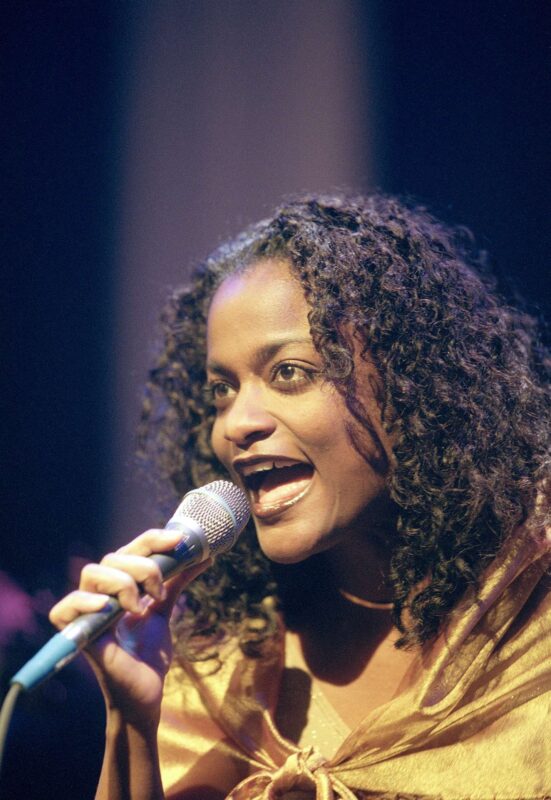
Izaline Calister

(Curaçao, 1969) is a singer-songwriter as well as a composer. In her compositions she intertwines the traditional music of her island of birth, Curaçao, with jazz. A speciality of Calister is that she is recognized internationally, while singing jazz in a minority language, Papiamento. On Curaçao she scored two number one hits with it. Calister came to the Netherlands when she was eighteen and studied singing at a conservatory. She performs with her own band, but frequently works with other groups and theatrical companies. Commissioned by Winternachten, she collected stories on the Dutch Antilles, Aruba, in South Africa, Indonesia, Suriname and the Netherlands, adapting them to music. Thus giving rise to a repertoire of sung stories about the spider Anansi, the legend of Borobudur and The Saleswoman of Stavoren, among others.
20050302171733

Youssouf Amine Elalamy

(1961, Morocco) acquired fame with his novel Les Clandestins (The Clandestines; (2000), which was translated into Dutch. In this story he gives a face to the Moroccans who in a last desperate effort try to reach Europe and lose their lives. Elalamy belongs to the new crop of young writers who grew up after Moroccan independence from France. The Moroccan identity forms an important leitmotiv in his work. His collection of short stories Tqarqib Ennab (Rumours) from 2004 is the first book fully written in darija, the Moroccan dialect of Arabic. ‘To show it is a real language, alive and creative,’ he said about it in an interview with Trouw. Elalamy has three novels to his name, of which Les Clandestins was awarded the Grand Prix Atlas 2001. In 2004 he published a series of portraits of Moroccans in Morocco (Miniatures). Apart from being a writer Elalamy is a visual artist and a teacher of style and media at the university of Kenitra. In 2009 he made the literary installation Nomad. In Morocco sharp analyses of his literary collages have led to censorship of his visual art. His novels have been translated into Dutch, Arabic, English, Spanish and Italian.
20080908143303

Michaël Zeeman

(Marken, 1958-2009) was a poet, a writer and a commentator, with a regular column on the Forum page and the book pages of the Volkskrant. Zeeman was the editor of the arts section of the Volkskrant and from 2006-2007 its Rome correspondent. In 2006 he and the writer Abdelkader Benali published an exchange of letters, exchanging ideas on politics, life, love and literature. In 2002 Zeeman received the Gouden Ganzenveer (Golden Goose Quill) for his merits for Dutch literature. Zeeman became well-known in the 1990s as the host of his monthly book programme 'Late at night after a short walk', later to be renamed 'Zeeman with books'. In 1991 he published his first volume of poetry, Beeldenstorm (Iconoclasm), winning him the C. Buddingh Prize. His second volume Verhoudingen (Relationships) appeared in 1995. In the same year he published short stories entitled De Verduistering (The Darkening). He died in 2009.
20080206143715

Ahmed Essadki

Ahmed Essadki was born in Ait Bouayach in the Moroccan Rif in 1959. He studied political science at the Universtity of Fez. Owing to the political, social and economic circumstances in Morocco he could not make a living and left for western Europe like many of his compatriots. Right now he works as a cultural worker in The Hague. By the end of the 1980s Essadki began writing poetry in Tamazight (Berber). In 1997 he published his first volume, The Battle Cry of the Earth with thirteen stories, translated into Dutch by Roel Otten. His second volume The Depth of Life is ready for publication. His poetry is characterised by a critical relationship with life, and deals with themes like oppression, abuse of power, migration, uprootedness and the value of one's own culture. In recent years Essadki has taken part in various cultural events both in the Netherlands and abroad. In the spring of 2008 a festive programme was organised in Antwerp as a tribute to the poet.
20080918110332

Nese Yasin

(Cyprus, 1959) in her poetry not only tries to build a bridge between the Greek and Turkish part of Cyprus, but also in daily life. Her most famous poem ‘Which part' she wrote in 1974 but it is still important to her: ‘My father says: Do you love your fatherland? My fatherland has been split in half, which part must I love?’. The division of Cyprus remains an important theme in her work, but she also writes about youth traumas and love. The daughter of the Turkish poet Ozker Yasin, Yasin was born on the Turkish part of Cyprus, but lives in the Greek southern part. In 2006 she was the first Turkish Cypriot since 1963 to enter the parliamentary election on the Greek part. Yasin teaches Turkish-Cypriot literature at the Greek-speaking University of Cyprus. She also works as a radio journalist. She has published five books of poetry and a novel and has won several literary prizes. Her work has been translated into Greek, Hungarian, German and English. In the Netherlands a number of her poems were published in an anthology of Cypriot literature Wij wonen in een taal (We Live in a Language; 2004).
20080929102855

Asis Aynan

(Haarlem, NL, 1980) studied philosophy at the University of Amsterdam. Aynan, the son of Moroccan immigrants, is an active advocate of Berber culture. His debut Veldslag en Andere Herinneringen (Battle and Other Memories) was published in 2007, about his youth or, as he calls it, his "Catholic-Islamic-Berber background". Aynan is the creator of the Berber Library, a series of classics from Berber countries translated into Dutch. He further wrote Ik, Driss  (I, Driss, together with Hassan Bahara), the short-story collection Gebed zonder eind (Endless Prayer, 2014) and Linoleumkoorts (Linoleum Fever, 2019). Aynan works as a teacher at Hogeschool van Amsterdam; his articles have appeared in the NRC, Het ParoolFolia and Trouw.
20080131132856

Perihan Magden

(Turkey, 1960) was praised by Orhan Pamuk as 'one of the most inventive and outspoken writers of our age'. In June her 1991 debut was published by Athenaeum-Polak & Van Gennep: The Errand-Boys Murders. A hallucinating tale about a bizarre city where mysterious murders take place. Her second novel, Two Girls (2002), was a best-seller in Turkey and has been made into a film and translated in English. Magden is known in Turkey as a columnist. In 2006 she was charged allegedly for inciting the Turkish population against the army. She was jeered at by an angry mob in court but finally acquitted. This frightful period was an inspiriation for her latest novel Biz Kimden Kaciyorduk Anne (Who Are We Fleeing for, Mother?; 2007), describing the mortal fear of a woman and her daughter.
20080929105405

El-Mahdi Acherchour

(Algeria, 1973) was invited to come to the Netherlands by Stichting Amsterdam Vluchtstad in 2005. The Dutch translation of his second novel Pays d’aucun mal (2008), will appear in January 2009. Pays d’aucun mal is a subdued chronicle of an exile returning to the village of his birth. There he returns to the people he used to know, with their 1001 stories, some of which can only be told from behind a door. Acherchour's prose is poetic and mysterious; his characters often live in a dreamworld in which absurd and mythical things happen. Acherchour lives in the Netherlands and has written two volumes of poetry and two novels.
20081016111554

Sana Valiulina

(Estonia, 1964) grew up in Tallinn in a family of non-religious Islamic Tatars. She studied Norwegian language and literature in Moscow and moved to Amsterdam in 1989. In 2000 her debut the novel Het Kruis (The Cross) appeared, about life in a student flat in Moscow. In 2002 it was followed by the anthology of novellas Vanuit nergens met liefde (From Nowhere with Love). For her monumental epos Didar en Faroek (2006), about WOII and its aftermath in the Soviet Union she was nominated for the Libris Literatuur Prijs. This love story about two people who are separated by war and terror but eventually succeed in finding each other again, is partly based on her own family history. ‘The novel is reminiscent of the great Russian narrative tradition (...) a monument’, wrote the weekly De Groene Amsterdammer. Following it she aimed her arrows at Dutch society writing Honderd jaar gezelligheid (Hundred Years of Cosiness; 2010). In this novel she wonders what it means to be young in a country where cosiness has become a national obsession. Recently, she published the acclaimed Kinderen van Brezjnev (2014) followed by Winterse Buien of ben ik wel geïntegreerd genoeg (2016).
20131016101743 1

Nuruddin Farah

Nuruddin Farah (Somalia, 1945) is regarded by many as the most important African candidate for the Nobel Prize for literature. Although he left Somalia in 1970, his native country occupies center stage in all his books. Except for the lengthy dictatorship and bloody civil war which destroyed the country, he writes about women’s rights, the relationship between Islam and pre-Islamic traditions. The core of his oeuvre is formed by his novel trilogies: ‘Variations on the theme of an African Dictatorship’, consisting of Sweet and Sour Milk (1979), Sardines (1981) and Close Sesame (1982); and ‘Blood in the Sun’, formed by Maps (86), Gifts (1990) and Secrets (1998). Right now he is working on the final part of his third trilogy, already consisting of Links (2007) and Knots (2008). In his recent work exiles return to a warstricken Mogadishu. Farah also wrote a non-fiction book with testimonies of Somali refugees: Yesterday, Tomorrow: Voices from the Somali Diaspora (2000). In 1998 he was recipient of the Neustadt International Prize for Literature. His work has been translated in seventeen languages and seven of his books have appeared in Dutch, among others Secrets and Maps. The translation of Links will appear in 2009. Farah lives in Cape Town, South Africa.

20081006142731

José Eduardo Agualusa

(Angola, 1960) has published an extensive body of work comprising novels (15 titles), short stories and novellas (7 collections) and numerous journalistic pieces (including for the Brazilian newspaper O Globo). As an important literary voice and a leading author of the Portuguese-speaking world, his at times magical-realist narratives, often rich in historical context, humor and references to Angola, also appeals to many readers outside that world: his work has been translated into at least 25 languages. In A General Theory of Oblivion (2016), a woman with agoraphobia barricades herself in her flat in Luanda. She remains there for thirty years while her country goes through various political stages, from colony to socialist republic and from civil war to peace and capitalism. His latest novel is Mestre dos batuques (2024, Master of Drums). In it, Agualusa rewrites history and describes how drums played an important role in the resistance against the Portuguese colonisers. He also collaborated with Mia Couto on the screenplay for José Miguel Ribeiro's magical realist animated feature film Nayola (2022), which explores this theme.

Watch the trailer of the film Nayola on YouTube
Instagram: @jose_eduardo_agualusa
20251029130638 2

Tsead Bruinja

(Rinsumageest, 1974) made his debut in 2000 with Frisian volume of poetry De wizers yn it read (The Needles in the Red). In 2008 a bilingual anthology appeared of his Frisian poetry, De Berte fan it swarte hynder (The Birth of the Black Horse). Bruinja translated the poems himself, and in many instances revised them. In this volume he evokes his youth in the Frisian countryside, whereby the illness and death of his mother plays a prominent role. Bruinja edited various anthologies, among others Droom in blauwe regenjas (Dream in a Blue Raincoat; 2004), a compilation of Frisian poems, Klotengedichten (Bollocks Poems; 2005, poetry about the scrotum) and Kutgedichten (Cunt Poems; 2005, on the female genitals). In 2007 the volume Bang voor de bal (Fear of the Ball) appeared. Tsead Bruinja wrote poetry reviews for newspapers, magazines, and radio. He combines his poetry readings with live music, such as flamenco, trance and hiphop and frequently interviews other poets before an audience.
20081202104718

Esther Jansma

(Amsterdam, 1958) made her debut in 1988 with the book of poetry Stem onder mijn bed (Voice Underneath My Bed), followed by a new volume every two years. The press was instantly positive, but real recognition followed only eleven years later with the VSB Poetry Prize for Hier is de tijd (Here is the Time). In 2006 she was recipient of the prestigious A. Roland Holst medal for her entire oeuvre and in the same year she received the Jan Campert Prize for Alles is nieuw (Everything is New). Her collected proze and poetry appeared in 2006 entitled Altijd vandaag (Always Today). Striking elements in her work are the musicality and the evocative language. According to her, her poems are strongly determined by her unsafe youth. Her father died when she was six and she remained behind with a heartless mother. The death of her unborn daughter and newly born son have marked her work, respectively Bloem, steen (Flower, Stone; 1990) and Hier is de tijd (1998). In addition to being a poet Ms Jansma is a translator and a professor of dendrochronology.
20081204174057

Juli Zeh

(Bonn, 1974), according to a Dutch newspaper she is 'the most exciting German writer around, and an expert in international law, in addition to being a writer, which appears from the topics of her books but also from the detailed description of the criminal investigation in her latest novel Schilf (2007), a philosophical whodunit about two friends, rival phycisists, faced with a kidnapping and a murder. In her second novel Spieltrieb (2004), in which two grammar school pupils torment a teacher to extremes, moral responsibility plays an important part. When their game gets out of hand, the judge has to decide. Zeh also writes nonfiction, essays and plays. Her most recent work, Das land der Menschen (Land of the People, 2008), is a children's book, in which she playfully deals with themes like prosecution and tolerance. Her novels have been published in more than twenty-five countries.
20080916110908

Chris Marnewick

(South Africa, 1948) kicked up a lot of dust in South Africa with his debut Shepherds & Butchers (2008) about the death penalty. Marnewick, a lawyer by profession and a lecturer in law, ingeniously succeeds in interweaving fact and fiction. He bases his novel on real murders and executions in 1987. The death penalty was abolished in South Africa at the close of the 1980s, but many of Marnewick's compatriots plead for its reintroduction in order to curb the violence in te country. With his detailed and factual description of the executions and their emotional consequences Marnewick shows his readers the moral objections attached to the death penalty. In addition, Shepherds & Butchers has led to a discussion on the boundaries between fact and fiction, which are often completely vague in the book.
20081202170251

Gerrit Komrij

(Winterswijk, 1944) was the first Poet Laureate of the Netherlands. He is considered one of the best columnists in the country, a novelist, renowned translator, and an enhtusiastic reviewer of poetry. Komrij is a cat in a Strange Warehouse, as he called a book of collected essays that came out in 2001. The world is never a trusted or obvious place, but if you look good, there's always something surprising around. 'I don't think I'm a no-nonsense guy. There's too much noise inside of me'. Komrij, who has lived in Portugal since 1984, is one of the most productive Dutch writers. Since 1968 he has published several works annually. Recently Komrij's choice of the one-hundred best Dutch poems (2008) appeared, in addition to an anthology of Dutch children's poetry in over 1000 poems (2007) and Kakafonie (2006), an 'encyclopaedia of shit'. In 2005 he published Eendagsvliegen (Ephemera, literary diary entries) and a volume of poetry Fata Morgana.
20050226145252

Amitav Ghosh

(India, 1956) is one of India’s most renowned writers. Ghosh debuted in 1986 with the novel The Circle of Reason, in which he explores the extent to which Western rational ideas can be integrated into traditional Indian thought. His work centers on the (post-)colonial issues of Asia. In 2023, the Dutch translation of The Nutmeg’s Curse (De vloek van de nootmuskaat, translated by Menno Grootveld) was published by Atlas Contact. He has received numerous awards worldwide, and his work has appeared in The New Yorker, The New Republic, and The New York Times. End of 2024, the Dutch translation of Smoke and ashes (Rook en as, translated by Menno Grootveld) will be published by Atlas Contact. In 2024, Ghosh will receive the Erasmus Prize for his body of work.
20241030183142 1

Kamran Nazirli

(Azerbaijan, 1958) is known in Azerbaijan as a writer and a translator of English literature in Azeri, a language closely related to Turkish. Since 1997 Nazirli has written several novels and short stories. Society is a Mirror of Politics (1999) was awarded the prestigious Azerbaijan Hassan Zardabi Prize, named after the founder of the first newspaper in Azeri, appearing in 1875. One of Nazirli's short stories to have been translated into English is The Old Baby, about an Azerbaijani refugee family trying to survive. Kamran Nazirli has translated works by English and American writers into Azeri, among them novels and poems by Edgar Allan Poe, Lord Byron and Oscar Wilde.
20081006110351

Gündüz Vassaf

(Turkey, 1946) has been called 'the spokesperson of our phantasies, the freest spirit of our prose' by none other than Orhan Pamuk. In his penetrating work Vassaf deals with varying themes like migrant labour, historiography, the falsification of history and the failure of capitalism. Vassaf, a writer in addition to being an internationally respected psychologist, mixes stories with essay-like passages and philosophy with literature. Vassaf is a leading figure in the public debate in Turkey. He has had a weekly column in de newspaper Radikal since 1997. These columns were put together in a book in 2008, entitled Turkey, where are you?. Hell Be Praised (1992), on the result of totalitarianism in daily life was a best-seller in Turkey and published in English. In 2008 the book was translated into Russian. We Still Need to Be Heard (1983) was re-issued in 2003 and translated into French and German. It is pioneering work with keen observations of Turkish workers' children in Western Europa. His latest book, from 2013 is titled Mostari: A Bridge Keeper’s Diary, around his stay in Mostar, and the bridge that was demolished in the war, and was recently rebuilt. As Vassaf indicates "It is a novel, an epic poem, the love story of a passerby who becomes enamoured by the bridge."
20090122125123

Raj Mohan

(Suriname, 1962) published his first volume of poetry, Bapauti/Erfenis (Bapauti/Heritage) in 2008an elaboration of the songs on his album Kantráki/Contract Labourer. The collection Tihá/Troost (Tihá/Comfort) followed in 2011 with lyrics from his pop album Daayra. The singer, poet and composer -- with parental roots in India, born in Suriname, and living in The Netherlands -- deals with societal themes and with subjects that are taboo within Hindustani and Indian circles. Mohan writes in Sarnámi, the mother tongue of the Hindustani in Suriname and the Netherlands. He is founder and artistic director of musical groups like the Raj Mohan Ensemble, Vistar and Shai'rana, with which he tours at home and abroad. He plays and sings compositions based on his own lyrics and on poems by contemporary Urdu poets in the (lightly) classical tradition of Northern India.
20231018171345 2

Shrinivási

(Suriname, 1926) has been called the 'poet of the encounter' as he brings together cultures and people in his work. Born Martinus Haridat Lutchman, the teacher at a young age acquainted himself with his Indian roots. He was one of the first poets to write in Sarnami, the mother tongue of the Hindustani in Suriname and the Netherlands. He published some poets in Hindi too, but the larger part of his work is in Dutch. His first poems appeared in 1952 under the pen-name Fernando, but later he adopted the Hindi name for 'citizen of Suriname': Shrinivási. The poet in his work sings the praise of the multicultural population, the climate and nature of his native country. Since his debut Pratiksha (1968) Shrinivási has published various books of poetry and short stories, which stand out for their quality and musical and metaphorical language use. He collaborated in assembling various anthologies of Surinamese literature, including Diversity is power (2007). In 1984 Geert Koefoed collected a major anthology of Shrinavasi's work: Een weinig van het andere (A little of the other). In 2007 he moved back to Curaçao, where he died in 2019.
20060810113155

Gilda Dannarag

(Suriname, 1951) is an elocutionist, singer, poet and actress. She moved to the Netherlands in 1968 when she was seventeen, only to begin writing poetry when she was forty-four. She frequently performs her poetry in front of an audience. On 15 november 2008 the show Nobody Like Gilda, Bang, Bang had its premiere. It is a poetic and musical story about her own journey through life with various musical influences, on Surinamese sounds and jazz to classical music. The passing of time and the insights it brings is one of the themes in her work, like in Adem (Breath): ‘At a slow pace, dissecting setbacks reflectively, there where wisdom and candour flow together, truth will enter, ripples of life will speak’.
20081021160927

Philip Rademaker

(Curaçao, 1944) is poet, actor, elocutionist, director and painter. His poems stand out because of their imaginative and ornate use of Papiamento. Philip (a.k.a Fifi) Rademaker published poetry and wrote several essays and short stories. In 2000 he published Bos di Buriku (Donkey Bray), with thirty-seven poems, again published in 2008 in a special edition for secondary schools in Curaçao. In 2006 he and Sinaya R. Wolfert made the photobook Otrabanda, a Timeless Poem of Curaçao, about a neighbourhood in Willemstad.
20050324094946

Tanja Fraai

(Bussum, 1971) is a radio and television producer with Radio Nederland Wereldomroep (the Dutch World Service). She studied Spanish language and literature and specialised in Caribbean literature. Fraai grew up in a multicultural family. Her father is Antillian and her mother was born in the Dutch East Indies.
20081202135935

Christiaan Weijts

(Leyden, 1976) his debut, Art. 285 (2006) was a resounding success, winning him three prestigious literary prizes, and a nomination for the AKO Literatuurprijs. Art. 285 is about a Dutch piano teacher and background pianist, Sebastiaan Steijn, who is charged with and condemned for stalking. Weijts intersperses his story with current affairs, modern day language use and trivia. He does so in his second novel, Via Capello 23 (2008). Here too the main character gets into legal trouble because of his contacts with women, but this time the scene of the crime is touristy Venice. In his novels Weijts likes to play with fact and fiction. ‘Writing a novel is a bit like disassembling reality and rebuilding it in a world of words,' he said. Weijts was editor and columnist of the University of Leyden weekly Mare and is currently a columnist with nrc.next and the Groene Amsterdammer. His Mare columns were pubished in Sluitingstijd (Closing Time; 2003). 'Het valse seizoen' (The false season) is the new novel of Christiaan Weijts and tells the story of three musicians, who all all confronted with the dark power of music, and are forced to radically change their livers.
20081110135842

Biguine Balade

plays swinging Latin music. Band leader Alain Anglionin was born on Martinique and learned music at his mother's knee. Anglionin has lived in the Netherlands for over twenty years but in his music the percussionist, singer, guitarist and composer remains loyal to the Caribbean. He conducts various musical groups and gives workshops. Over the years he has built a wide repertoire of compositions of his own and long-forgotten evergreens from the Caribbean. With his sextet Biguine Balade he brings irresistible celebratory music.
20081202112010

Blue Flamingo

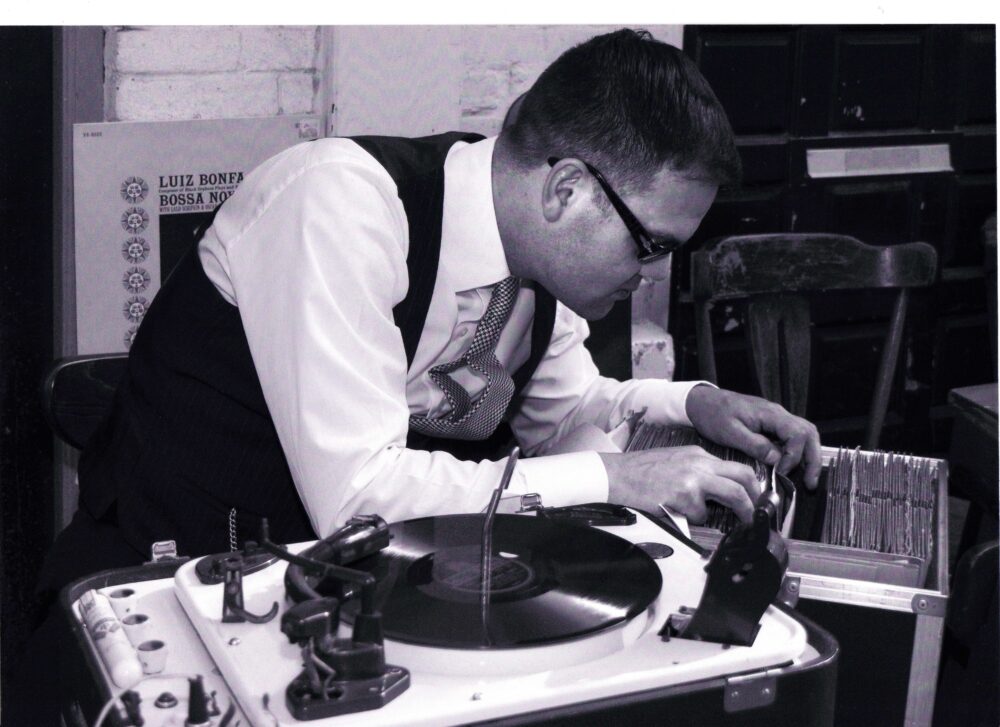
(Oss, 1969) a.k.a. Ziya Ertekin. Originally a fashion designer wanting to become an archeologist, he ended up a treasure hunter. Everywhere in the world he poaches markets looking for 78 records from the early 20th century: jazz exotica and Caribbean music from the 1930s and 40s, and mambos and rumbas from the 1950s. The first edition of his cd 78 r.p.m. of 2008 was sold out in no time. Listening to his music, you imagine yourself in a pre-war Cuban night club or on a French village square the next, or in a smoky jazz club in New Orleans. ‘Ultimate dance music, but just a bit older’, dj Blue Flamingo calls his own music.
20081008101220

Manar

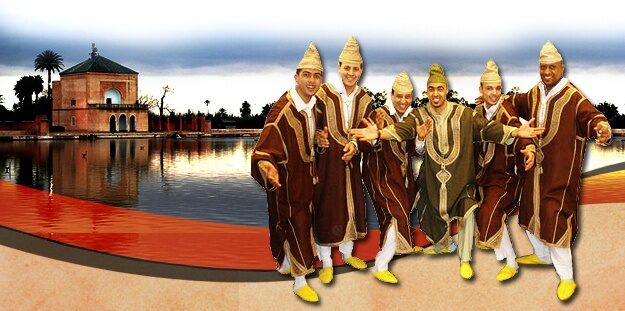
takes the audience to the markets of Marrakech where merchants, their business having been finished, get their drums out and improvise songs and raps about love and life. This traditional music, called Dekka el Marrakchia (literally: percussion from Marrakech) arose in towns like Taroudant and Ouarzate and was taken by traders to the economic heart of South Morocco, Marrakech. Manar's six members heard this music during their childhood in Morocco and introduced it in the Netherlands. In addition, Manar plays gnawa: sweeping ritual sufi music of the offspring of former slaves from West Africa, who had ended up in Morocco.
20081009102252

Connie Palmen

(The Netherlands, 1955) is always exploring the boundaries between fact and fiction. She shot to fame with her first novel De wetten (The Laws, 1991). Her two subsequent novels, De vriendschap (Friendship, 1995) and I.M. (1998), also became bestsellers. She went on to publish Geheel de uwe (Sincerely Yours, 2004), Lucifer (2007) and Logboek van een onbarmhartig jaar (Logbook of a Merciless Year, 2011). Palmen has written several collections of essays, such as Een kleine filosofie van de moord (A Brief Philosophy of Murder, 2004), Het geluk van de eenzaamheid (The Joy of Loneliness, 2009) and Het drama van de afhankelijkheid (The Drama of Dependence, 2017). Many of her novels are based on events in her own life; her essays are exceptionally narrative. In 2023, she published Voornamelijk vrouwen (Mainly Women), personal essays about eleven women and one man who shape their lives in idiosyncratic ways. Palmen engages with them, challenges them, and discovers differences and similarities with her own life. Her multi-award-winning work is also internationally successful and has been translated into twenty languages.
20230817092633 1

Namgyal Lhamo

(Nepal, 1956), a.k.a. The Nightingale of Tibet, is regarded one of the best singers of Tibet although she has never lived in this mountain country. The first Tibetan songs she learned from her mother. As an infant she was noticed for her special voice and at age eight she was admitted to the Tibetan Institute of Performing Arts (TIPA) in India, founded by the Dalai Lama. She specialised in classical song and folksong and soon became one of the most important opera singers of the institute. Namgyal Lhamo plays various traditional instruments, among them the dranyen (Tibetan lute) and the gumang (a Tibetan string instrument). She has recorded several cd's with compositions of her own. In 2008 Highland Supernova appeared, combining her unique voice with rock music. In 2007 she was chosen the best singer at a presentation of the Tibetan musical awards. Ms Lhamo has lived in the Netherlands since 1980.
20081202110314

Margreet Dorleijn

(1956) works as a linguist at the University of Amsterdam, specializing in Turkish literature, ethnic variaties of Dutch, bi-lingualism and language and identity. With Hanneke van der Heijden she translated among others My Name is Red and Snow by Nobel prize winner Orhan Pamuk and The Flea Palace by Elif Shafak. The two also edited a Dutch anthology of modern Turkish short stories.
20081110150256

Herman Koch

(Arnhem, NL 1953) had his international breakthrough with The Dinner, a novel that spent weeks on the New York Times bestseller list, has been published in 37 countries, and has been adapted for stage and screen. The dark story of boys from a good family who murder a drifter mainly addresses the question of how responsible parents are for the misdeeds of their children. Adolescent behaviour was also the theme of Koch's debut novel, Red ons, Maria Montanelli (Save Us, Maria Montanelli, 1989). In Zomerhuis met zwembad (Summer Cottage with Pool, 2011), he again showed how easily successful people can fall from grace. His characters inevitably say or do unexpected things, which is also the case in his short-story collection Korte geschiedenis van het bedrog (A Short History of Deception, 2013). In his latest novel, Geachte heer M. (Dear Mr. M.), he takes aim at Dutch writers. Koch is also a columnist and an actor, as well as the creator of Jiskefet, an absurdist public-television series.
20131029105103 1

Arthur Japin

(Haarlem, 1956) won the NS Publieksprijs in 2008 with his novel Overgave (Surrender, 2007), about the struggle between pioneers and Comanche Indians in 18th century Texas. His novel Vaslav (2010) is also inspired by a true story: the dramatic decision by the legendary ballet dancer Vaslav Nijinski to quit dancing. In 2008 Japins diaries 2000-2007 appeared in book form entitled Zoals dat gaat met wonderen (As it goes with miracles) and his short stories were reprinted as Singel Pocket. In 1997 Japin made his international breakthrough with The Two Hearts of Kwasi Boachi, a novel about two 19th century Ghanaian princes who were brought up as Dutchmen. It has been translated in over ten languages and adapted for opera, dance and the theatre. For Een schitterend gebrek (translated as In Lucia's Eyes, 2003) he recieved the Libris literature award. Japin studied at the Kleinkunstacademie and was an actor and singer before he started writing. Various of Japin's short stories have been adapted for the screen. Since April 2011 he is one of the makers of a satirical tv programme.
20111114143359

Rachida Lamrabet

(Morocco, 1970) is a fiction and theatre author, lawyer and teacher. She won the 2008 Flemish debut prize for her novel Vrouwland (Women's Country; 2007) about migrant youths dreaming of a better life. In 2006, her story Mercedes 207 was awarded the Kif Kif Literature Prize. Her short story collection Een kind van God (A Child of God) was published in 2008, followed by the novel De man die niet begraven wilde worden (The Man Who Didn't Want to be Buried), awarded with the Ultima, the Flemish state prize for culture. As in her debut, issues such as identity, religion, migration and the position of minorities play an important role. Her novel Vertel het iemand (Tell Somebody, 2018) deals with the life of a Berber boy and the deliberately concealed role played by Moroccan soldiers in the First World War. Lamrabet is a member of the writers' collective Fixdit, which aims to raise awareness of gender inequality in literature. She is a practice assistant in discrimination law at the Legal Clinic of the Law Faculty of the Ghent University and also teaches at the Odisee College in Brussels.
20211118161700 1

P.F. Thomése

(Doetinchem, NL, 1958) is a highly versatile writer who constantly changes up his work. Sometimes his tone is serious, as in Schaduwkind (Shadow Child, 2003), about the death of his young daughter. This bestseller was translated into more than fifteen languages. In 2009's  J. Kessels, The Novel he channels an altogether different voice. A semi-parody of the hard-boiled crime novel, it features one of Thomése’s favourite recurring characters, J. Kessels, living it up a he smokes cigarettes and devours deep-fried meatballs. The book was made into a film in 2015, starring Frank Lammers and Fedja van Huêt. De onderwaterzwemmer (The Underwater Swimmer, 2015) about the life Tin, who as a child loses his father on a dark night in wartime, shows that only man himself can alter his destiny. In 1991 Thomése won the AKO Literature Prize for Zuidland (Southland), and in 2012, the Bob den Uyl Prize for Grillroom Jeruzalem.
20131031162516 1

Koen Kleijn

(Harderwijk, 1963) is deputy editor-in-chief and heads the cultural desk of the Dutch weekly De Groene Amsterdammer. He studied art history and co-wrote a number of books on the architectural history of Amsterdam and the history of Dutch architecture. Right now he is busy writing a book on Soestdijk Palace and a book on cultural entrepreneurship in Amsterdam. For De Groene Amsterdammer he wrote among others articles on the globalisation of visual arts in Peking, Vilnius, Istanbul and Liverpool as well as film reviews. Kleijn used to work for IdtV and was responsible for documentaries and made programmes on 19th and 20th centruy classical music.
20090105165218

Naima el Bezaz

(Morocco, 1974) her motto is: ‘Taboos are there to be broken', and she managed just that with her latest novel Het Gelukssyndroom (The Happiness Syndrome; 2008). In this story the Moroccan Layla gives in to sombre feelings until she realizes that her dying friend, the blonde Marit, needs her. The novel is based on El Bezaz’s own experience. The writer suffered from a depression - often taboo in the Muslim community - after the death of a friend and threats as a result of her novel De Verstotene (The Outcast). This novel was dubbed by her publisher ‘the Lady Chatterley's Lover of the Muslim community', owing to the fierce social criticism and explicit sex. El Bezaz's books are highly popular at secondary schools. Her novel Minnares van de Duivel (The Devil's Lover) was a downright best-seller in 2002 after she had read an erotic passage in a satirical tv programme.
20050302144511

Tijs Goldschmidt

(Amsterdam, NL 1953) is an evolutionary biologist and a writer. In his essays he presents himself as the missing link between the arts and the sciences. Again and again he places science in a broader cultural framework. In his collections of essays Vis in Bad (Fish in the Bath, 2014) and Kloten van de engel (Angels' Balls; 2007) he shows that culture is often much more natural than we think. In september 2016 a collection of his essays, The Other Left Side will be published by Seven Stories Press in New York. After graduation Goldschmidt left for Tanzania for five years to study cichlids (Percidae) in Lake Victoria. That study resulted in a Ph.D. thesis and a book combining his scientific findings with personal experiences: Darwin's Dreampond (1994). This debut was translated in English, French, German, Japanese and Chinese, among others. In 1993 Goldschmidt decided to give up his academic career to become a fulltime writer. In 2007 he delivered the Huizinga Lecture in Leiden entitled Pretending to pretend. Since 2009, Tijs Goldschmidt is advisor to the State Academy of Fine Arts in Amsterdam.
20131107173641 1

Maxim Februari

(Coevorden, NL, 1963) was born as Marjolijn Drenth. Besides being a writer, he is an ethicist, an art historian, and a lawyer. Februari understands the art of turning moral dilemmas and legal issues into elegant prose. "It's got to be exciting and entertaining. If you write a pamphlet, no one will read it," he commented. His novel De literaire kring (The Book Club, 2007), on the morals of the Dutch cultural elite, got a very positive reception. From 2001 to 2010 Februari wrote columns for the Volkskrant newspaper. Some of these columns were published in Park Welgelegen - Notities over Morele Verwarring (Welgelegen Park: Notes on Moral Confusion, 2004). In his PhD thesis Een Pruik van Paardenhaar & Over het Lezen van een Boek (A Wig of Horse's Hair & On Reading a Book, 2000), nominated for the Golden Owl Award, he examines the relationship between economics and ethics. Currently he writes a weekly column for opinion page of NRC Handelsblad. Some of these, together with some Volkskrant columns, have been anthologised in Ons soort mensen (Our Kind of People, 2011). De maakbare man (The Makeable Man), notes on transsexuality, was published in 2013.
20121213162959

Funda Müjde

(Turkey, 1961) is an actress, comedienne, moderator, hostess and columnist. She is well-known due to her leading role in the film Julia’s Secret and roles in a number opf popular Dutch TV series. From 1999 to 2012 she wrote a weekly column in national Dutch newspaper De Telegraaf, providing a humourous and critical view of Dutch intercultural society. A selection of her columns was published in 2004, titled Algemeen Beschaafd Turks (Common Turkish Pronunciation). Following a car accident in 2007, she has had to use a wheelchair. Müjde writes, acts and presents as she is, with a personal perspective on political and societal themes, sometimes provocative and always with humour. In 2016 she returned to the theatre with Funda Draait Door, in which she tells about her life's journey.
20081208175852

Pieter Steinz

(Rotterdam 1963 - Haarlem 2016) in 2010 published Grote Verwachtingen. Opgroeien in de letteren in 25 schema’s (Great Expectations. Growing up in Literature in 25 Charts). He did the same in Luisteren & cetera, (Listening etc) about 25 1970s pop albums. Somewhat earlier Macbet heeft echt geleefd (Macbeth Really Existed) appeared, on places where literary heroes used to live. In Verleden in verf (Past in Paint, 2011), Steinz sketches Dutch history in forty paintings. Steinz became an art editor with NRC Handelsblad in 1989. From 2005-2011 he headed the bookpages of that paper. Steinz studied ancient history and English. Earlier he wrote, among other books, Klein ABC van de wereldliteratuur (Concise ABC of world literature; 2008), Het web van de wereldliteratuur (The World Literature Web; 2007) and Lezen op locatie (Reading on Location; 2003), sixty maps on which he identifies where masterpieces of literature are set. In 2010 he published De Duivelskunstenaar (The wizard), a journey through Europe in search of Faust. Since 2012 Steinz has been head of the Dutch Literary Fund. He died in august 2016.
20111103145813

Elsbeth Etty

(Hulshorst, NL, 1951) received the Anne Vondeling Award for political journalism in 2008, owing to her sharp analyses of social problems. She is a journalist in the widest sense of the word. Besides being an editor and columnist with the NRC Handelsblad newspaper, she makes frequent appearances on radio and TV. In 2007 she debuted as a novelist with Maak jezelf maar klaar (Go Get Yourself Off), in which one of the characters from Harry Mulisch's The Discovery of Heaven figures as a main character. Etty obtained her Ph.D. with distinction from Utrecht University with a biography of Henriëtte Roland Holst, Liefde is heel het leven niet (Love Is Not All of Life, 1996). Her newspaper columns appeared in four different books. Her reviews were compiled in Dames gaan voor - Van Hella Haasse to Connie Palmen (Ladies First: From Hella Haasse to Connie Palmen, 1999). Etty is a special lecturer in Literary Criticism at the Free University in Amsterdam, and is now at work on a biography of the late Dutch poet and songwriter Willem Wilmink.
20100201124623

Behsat Üvez

(Ankara, 1959) sings and plays traditional Turkish music, but likes to make outings to jazz and improvised music. In Turkey Üvez played for years with various dancing groups and orchestras, like the Ankara State Ensemble, before coming to the Netherland in 1989. He plays traditional Turkish string instruments like the baglama (or saz), cura, tar, cümbüs and ud, in addition to various percussion instruments. Üvez is not only a great expert in Turkish music, but also in other mediterranean rhythms like Balkan music. He plays in various ensembles and together with clarinettist Steven Kamperman founded the ensemble Barana & Co, mixing Turkish sounds with jazz, world music and improvisation. Üvez is a teacher of music in Groningen and Hoogezand and gives music workshops on a regular basis.
20081110115016

DJ mps PILOT

(Beek, NL 1968) a.k.a. Horst Timmers studied musicology in Amsterdam and became fascinated by world music during lectures in ethno-musicology. Since 2002 mps PILOT has been one of the Netherlands' best known Tropical/World DJs and producers. Due to his interest in groundbreaking dance, his many travels through Europe, West Africa, the Middle East and Asia mps PILOT plunged deep into contemporary global music. In all possible directions and between all kinds of different modern genres there is cross-fertilisation and split-offs, which he charts. He performed in many well-known clubs such as Paradiso and the Melkweg and at festivals like Mysteryland, Dancevalley, Oerol, Lowlands, North Sea Jazz and the Flemish Sfinks. His travels as a DJ took him among others to Le Festival au Desert in Mali, Les Nuits Atypiques de Koudougou in Burkina Faso, the Jaipur Festival in Rajasthan and Sziget in Hungary.
20131107123001 1

Tierra Caliente

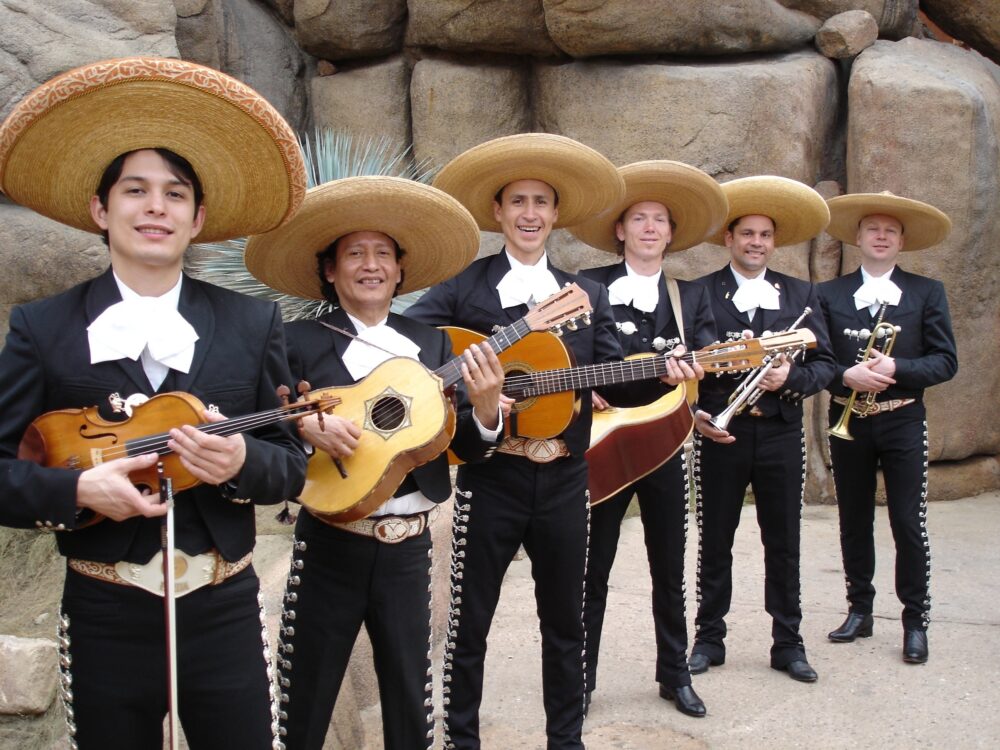
was called ‘the most authentic Mexican group in Europe’ by Mexican writer Carlos Fuentes. Tierra Caliente began in 1986, performing occasionally during the Queen's birthday. Initiator Ramón Balderas Sánchez had so much success with his sunny, festive sound of trumpets, violins and guitars that the group was instantly invited to radio and tv. Meanwhile the mariachi band has existed for over twenty-two years. Tierra Caliente still bases itself on traditional Mexican dance music (sones jalisciences), farmers' songs (rancheras) and romantic ballads (boleros) but the band makes regular outings to jazz and salsa. Pura alegria as it is called by Tierra Caliente, or 100% party, pure pleasure!
20081202171223

Palio-Parea

The music of Palio-Parea takes the audience to a small smoky Greek cafe where musicians play the bouzouki and the baglama. Palio-Paréa (literally ‘old friends together’) is a group of musicians from the Netherlands who have been making Greek music since 1992. Composer/adapter Loek Schrievers is especially inspired by rembetika, old Greek city songs on on the seamy side of life, and by the work of the Greek poet K.P. Kavafis. Their latest cd Nachten in Attarin (Nights in Attarin), in which music and song reinforce the nostalgia in Kavafis's poems, was received enthusiastically, in Greece too. With Margôt Schenk, Loek Schrievers, Carel van Rijn, Osama Abdulrasol and Azzedine Jazouli.
20081204110913

Hassnae Bouazza

(Morocco, 1973) is a journalist, columnist, translator, researcher and producer. She publishes in various media (including Dutch national daily newspaper NRC and women's magazine Linda); runs her own online magazine for culture lovers, Aicha Qandisha. She compiled a story collection about Arab women, Achter de sluier (Behind the Veil, 1999); 2013 saw the publication of her book Arabieren kijken (Looking at Arabs), about "ordinary" people in the Arab world. She made TV programs for various broadcasters, including the documentary series Seks en de Zonde (Sex and Sin). Together with Michelin-starred chef Soenil Bahadoer, she wrote the culinary books Spicy Chef (2020) and Streetfood (2022). She published two further books in 2022: Een koffer vol citroenen (A Suitcase Full of Lemons), a requiem for and portrait of her mother, and Arbeidsmigranten in Nederland (Migrant Labourers in the Netherlands).
20221215132224 2

Alain de Botton

(Zürich, 1969) writes books and makes tv programmes exposing everyday problems with the aid of the ideas of classical writers and philosophers. His latest exploit is the foundation of The School of Life in London in August 2008. De Botton's idea behind it is to reorganize existing university education and to aim it at life (…) and give people a sense of direction and wisdom with the aid of culture.’ De Botton's international breakthrough came in 1997 with the best-seller How Proust Can Save Your Life, followed by Consolations of Philosophy (2000). In both books De Botton looks at feelings such as love, friendship, jealousy and desire from the perspective of thinkers like Seneca, Nietzsche, Stendhal and Proust. De Botton moved to London when he was twelve and studied philosophy and history. He is a columnist for several English newspapers, the Independent on Sunday among others. All his books have been translated in Dutch.
20081204175010

Sams

(St Eustasius, 1955) is a singer, composer, percussionist and ngoni player. At first he played and sang only in reggae bands but in the 1980s he fell under the spell of djembé music. To improve his technique he travelled to Africa regularly to practise with the great masters of djembé music. During one of his first travels he heard the sound of the ngoni, and he learned to play this instrument as well. The ngoni is one of the oldest string instruments of Africa, made of a gourd, a piece of wood and fishing line. Sams subsequently founded his own ngoni band and concentrated on African music. In the meantime he has returned to his old love, reggae. Sams performs regularly at home and abroad with Sams Reggae band and Sams N’goni band. He also gives djembé workshops at schools.
During Winternachten 2009, on Saturday afternoon, he will perform together with his brother, the base player, and with the inseparable steelpan duo Cornel Brown and Leroy James, all from Statia.
20081111170520

Bernlef

(1937-2012) is the penname of Hendrik Jan Marsman. Since his debut in 1960 he has published novels, volumes of poetry, novellas and essays on an almost annual basis. In the obituary he recently wrote for In Memoriam for the Flemish House De Buren (The Neighbours) he admits he has a lot of respect for other writers, writing profound, bulky novels. “I myself am a composer of chamber music. Four part pieces is the best I can do", said Bernlef. In his latest novel De een zijn dood (One man's death) he explores a new genre: the thriller. In 2008 he wrote the book week's gift De Pianoman, a story resembling Hersenschimmen, (Out of Mind) his breakthrough of 1984. Both novels were written in a characteristic style: without ‘fuss and bother and hoo-ha’, but in a ‘clear and lucid style’. Out of Mind was adapted for the screen and the stage. In 1984 Bernlef was recipient of the Constantijn Huygens Award for his entrire oeuvre and in 1987 won the AKO Literature Prize for Publiek geheim (Public Secret). As a translator Bernlef introduced numerous American and Swedish poets in the Netherlands, among others the Swedish poet and Nobel Prize winner 2011 Tomas Tranströmer, whose complete works he translated. He died in October 2012.
20111215102423

Wim Brands

(Brummen, NL, 1959 - Amsterdam, 2016) was a poet, journalist, and media presenter. At a young age he debuted as a poet in the Dutch literary magazine Hollands Maandblad. Since then he has published books of poetry quite regularly, such as Neem me mee zei de hond (Take Me With You Said the Dog, 2010). After the publication of his first collection Inslag (Impact, 1985), he began working as an interviewer for the VPRO broadcasting company. Later he became head producer of the Radio 6 programme "De Avonden." Since 2005  he talked to writers on VPRO's book programme "Boeken" on both TV and radio. He put together Briefgeheimen (Postcard Secrets, 2007), a colourful compilation of postcards linked to a website where people can divulge their deepest secrets. Overkomst dringend gewenst (Return Voyage Urgently Requested), his anthology of the work of poet Jan Emmens, was published in 2012, and his most recent poetry collection, 's Middags zwem ik in de Noordzee (In the Afternoons I Swim in the North Sea) in 2014. Brands was one of the "Lonely Departure" poets who compose and present a final poetic tribute to people who pass away without friends or family.
20050225154109

Neske Beks

(Belgium, 1972) is a writer, transdisciplinary artist and a film and theatre maker. She debuted with De Kleenex Kronieken (The Kleenex Chronicles, 2014), a family and village chronicle featuring Priscilla, the daughter of a Flemish father and a Senegalese mother. She published the children's book Sala & Monk in 2020. In Echo - essays, speeches en brieven (Echo - essays, speeches and letters, 2021), named after the poem Echoes by Audre Lorde, she places her finger on a sore spot. Not only is the white gaze still dominant in our society, Black women are doubly disadvantaged: they aren't white and they aren't men. Beks shows how systematic is not to be seen or heard. Her essay De kleine Morrison: een wegwijzer in het lezen van haar werk vanuit Zwart perspectief (The Little Morrison: A Signpost to Reading Her Work from a Black Perspective, 2023) offers readers of Toni Morrison, the most famous female black writer and Nobel Prize for Literature winner who died in 2019, insight into her life and work. Beks shows that in everything she does, Morrison invites self-critical reflection on language, structure, power, gender, race, law and injustice, blackness, the white gaze and the meaning of oral and written narratives.
20230102170002 2

Mathijs Deen

(Hengelo, NL 1962) is a radio journalist and a writer. His most recently published book is De Wadden (The Frisian islands; 2013), a poetic history of the Frisian islands. His book of short stories Brutus heeft honger (Brutus is hungry, 2011) was nominated for the AKO Literature Prize. Eating being the leitmotiv, Deen jumps through world history. The forty-four historical stories are fine miniatures of scarcely one and a half page long. After having studied Dutch in Groningen Deen worked for Radio Noord for some years. His radio columns from those days were collected in two publications. Since 2001 Deen has been programme maker with VPRO radio, hosting the historical radio programme OVT. A number of historical documentaries which he made for VPRO radio has been published as an audiobook. The radio series De lange weg naar Darwin (Long road to Darwin) appeared on cd and as a podcast. Deen was programme coordinator of the Winternachten Festival between 2009 and 2011.
20091203105902

Pieter van den Blink

(Amsterdam, 1966) is a journalist and . From 2006-2008 he was deputy editor-in-chief with the weekly Vrij Nederland, but for some months now he has been working on a freelance basis for VN, Radio 1 and VPRO, among others. From 2000-2005 Van den Blink was a correspondent for various media in Paris. He writes particularly on France, the francophone world and literature, but now works with portrait photographer Koos Breukel on a book on Volendam. In 2007 121 rue de Lille appeared, a history of fifty years of the Institut Néerlandais in Paris.
20081202104145

Stine Jensen

(Denmark, 1972) is a Danish/Dutch philosopher, literary scholar and writer. Her initial work dealt with love and evil in person-to-animal and person-to-person relationships; now she turns her gaze inside with Go East, her quest for spirituality, and Mag ik je wat vragen over lust en liefde (Can I ask you something about lust and love), a workbook to increase happiness.Turkse Vlinders (Turkish Butterflies, 2005) explored her own experience with intercultural love affairs. Leugenaars (Liars, 2006) was a philosophical inquiry into Latin lovers, crooks and other shady characters. The cultural differences between East and West formed the leitmotif of her first novel, Dokter Jazz (Doctor Jazz, 2009). For television, she made a series about philosophy and Scandinavia. Her debut children's book, Lieve Stine, weet jij het? (Dear Stine, Do You Know?) won the 2015 Silveren Griffel award.
20081201175401

Yasmine Allas

(Somalia, 1967) fled her native country and settled in the Netherlands in 1987. First she wanted to become an actress, but now she has made a name for herself as a writer. In her novel Een nagelaten verhaal (A Bequeathed Story (2009), she describes a young woman who, invited by a documentary film maker, returns to her motherland for the first time after 23 years. It turns out to be an emotional journey, as she discovers that the country has been ruined, and little is left of her past. Yasmine Allas has been involved in the public debate in the Netherlands. Her book Ontheemd en toch thuis (Homeless Yet Home, 2006) is a collection of essays on life in the multicultural Netherlands, published in the Volkskrant. She calls a spade a spade and often touches sour spots. To her, religious fanaticism is a divisive element in society and must be battled. Social wrongs have played a role in her work from her debut, Idil, een meisje (Idil, a Girl, 1998), in which she describes the troubled life of a Somali girl and exposes the circumcision of women.
20121030153636

Paul van der Gaag

(Netherlands, 1958) has produced and presented the VPRO radio programme OVT since 2002, a two-hour show about the historical roots of current events as well as newly released historical books, films, commemorations, and anything else related to history. The show features live interviews, reportage, columns and a weekly documentary during the last half hour. He was already linked to OVT since 1992 as a programmer and previously freelanced for other national Dutch broadcasters such as VARA and IKON.
20120204162040

Jan Baeke

(Roosendaal, 1956) is a poet and translator. Baeke’s collection Groter dan de feiten (Bigger than the Facts), was reviewed positively and nominated for the VSB Poetry Prize. In this book he takes the reader via often ambiguous cinematic poems on a journey to a sunbaked but oppressive mediterranean provincial town where nostalgia, uneasiness and love lie in wait. Baeke made his debut in 1997 with the poetry book Nooit zonder paarden (Never without Horses). Baeke' s work is influenced by filmmakers like Luis Buñuel and Andrej Tarkovksy and poets such as Ingeborg Bachmann and Jaap Kaplinski. His work has been translated into English and French. Since 2009 Baeke works for Poetry International in Rotterdam.
Jan Baeke receives the Jan Campert Prize 2016 for his collection Seizoensroddel (Seasonal gossip). The jury states: "As obvious as the poems of Jan Baeke sound, as little flexible is the world he describes in his masterful collection. These uncomfortable poems offer little protection but do console with the awareness that we have all lost our way."
20151221151554 1

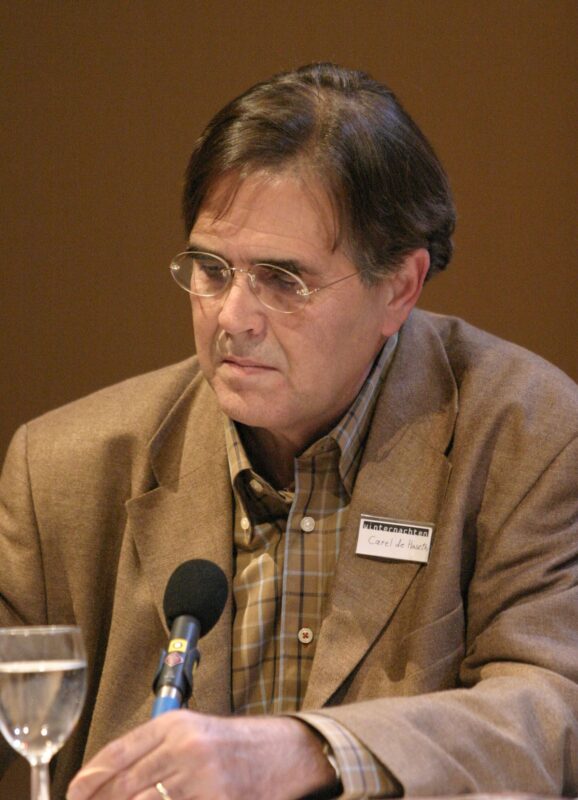
Carel de Haseth

(Curaçao, 1950) is a poet, pharmacist and politician. His most famous work Katibu di Shon (Slave and Master) appeared in 1988 in Papiamento, but came out in 2002 in Dutch and was translated into German in 2007. In this novel De Hasseth tells the story of the slave rebellion in Curaçao of 1795 from the perspective of a master and a slave who grew up together as friends. In 1989 the writer received the Cola Debrot Prize for this book, the highest cultural award of Curaçao. De Haseth made his debut in 1969 with the volume of poetry 3 dagen vóór Eva (3 Days before Eve) followed by several other books of poetry. De Haseth belonged to the group which in 1993 founded the Partido Antia Restruktura (PAR), the party of former prime minister Miguel Pourier. From 1994–2004 he was with several interruptions minister plenipotentiary of the Netherlands Antillea. Right now he is a council advisor of the Netherlands Antilles and a member of the jury of the 2009 Libris Literature Prize.
20050225203437

Selim Temo

(Turkey, 1972) was born in the south eastern Kurdish region of Batman. He gained a lot of praise with a two-part anthology of Kurdish poetry which appeared in 2007 and cost him years to complete. Temo not only selected the poems but translated them in Turkish as well. In addition to being a translator Temo is a poet and a novelist. Since 1995 he has published three books of poetry, winning him the Yasar Nabi Nayir prize in 1997. The three collections of poems, Ah! Tamara (1995), Ugultar (2000) and Kirgin Nehirler Meseli (1997) appeared in 2008 in a new edition. His 1998 novel Çiftlere Cinayet Dersleri (literally: Lessons in Killing for Couples) was awarded a prize. Temo made his debut in 1994 with a play and studied ethnology at the University of Ankara.
20081204130216

Kees 't Hart

(The Netherlands, 1944) is a writer and poet. His novel De Keizer en de astroloog (The Emperor and the Astrologer, 2008) sees apprentice psychiatrist Simon employed as an astrologer at the court of Emperor William II in Doorn, ending up in absurd situations. In 2000 he wins the Multatuli Prize for his novel The Revue (1999). In Teatro Olimpico (2014) Dutch theatre professionals try to stage their show in Italy. Wederzijds (Mutual, 2017) is a satire about neighbourhood help and in the historical and humorous De ziekte van Weimar (The Disease of Weimar, 2019), a man from Franeker travels to Weimar to meet Goethe. VICTORIEN, ik hou van je (2021) is a collection of 'stories and outpourings'; 2023 will see the publication of his third collection of poems, Vogelkerkhof.
20231106130723 1

Katinka van der Kooij

(1981) used to draw and write a lot at a very early age. She was only ten when she sent an illustrated story to Vrij Nederland, winning her a prize immediately. After the publication of various short stories in Hollands Maandblad her first anthology appeared in 2008 entitled Zonder uitgang (Without Exit). In the twelve stories in this volume she plays with the reader's perception by conjuring up a world through an imagery totally her own. Van der Kooij studied psychology when she was eighteen in order to penetrate the thinking of her characters better. During her study she got excited by the question how the brain translates the outer world into personal experiences. Right now she works as a Ph.D. student in Utrecht doing research on the influence of context on the perception of 3D-form.
20081202154139

Hélène Gelèns

(Bergschenhoek, 1967) made her debut in 2006 with the volume of poetry Niet beginnen bij het hoofd (Do Not Start with the Head), but she already had performed since 2000 at several literary festivals. In 2002 she took part in Poetry International in Rotterdam. Gelèns writes comical, graceful poems with serious undertones, with special emphasis on love and language and the writing of poetry itself. Her style is characterised by repetition and rhythm. Gelèns studied astronomy, Dutch, history and philosophy, only to complete the latter. Before her debut she already published poems and essays in literary magazines such as Krakatau and De Tweede Ronde, in anthologies and philosophical publications.
20081202110906

Petra Possel

(Harderwijk, 1963) hosts a Dutch public radio programme on art, culture and the media. Possel travels a lot, and one her favourite spots is Curaçao. There she became interested in the life of the Antillian writer Tip Marugg. In her book Niemand is een eiland; het leven van Tip Marugg in zestien gesprekken (No one Is An Island - the Life of Tip Marugg in Sixteen Conversations) she noted down the stories of people who used to know Marugg and investigated if the myths surroundig the writer are correct. In addition Possel has written several travel guides, such as the Wereldwijzer Curaçao. She is working on a travel guide of La Palma, La Gomera and Hierro. Before she began hosting the radio programme in 2001 Possel worked for various Dutch cultural radio programmes. She also wrote book reviews for the Dutch newspaper Het Parool.
20151223183440 1

Chantal Mouffe

(Charleroi, 1943) is a political scientist specialising in political theory. In her work Mouffe critisises the present Western consensus democraty. Her book On politics (2008) shows how dangerous it is to sweep all political diffences under the carpet. Eventually everyone who doesn't feel at home in the new ‘post-traditional era’ will raise his voice, which will lead to extreme excesses, she claims. As an example she takes the rise of Haider in Austria and the success of Fortuyn in liberal cum social democratic Netherlands in the 1990s, but also the war in Iraq. In the 1960s Mouffe was active in the student and feminist movements. In 1985 she and Ernesto Laclau published Hegemony and Socialist Strategy, an influential book in which she stood up for a radical pluralist democracy. Mouffe is a professor at the University of Westminster and lectured at other European, US and Latin America universities.
20081209153721

Ashwani Saith

(India) has been a professor of rural economy at the Institute of Social Studies (ISS) in The Hague since 1981. He is also professor of development issues at the London School of Economics. Saith studied economics in the 1960s in Delhi and Cambridge and started in 1969 as junior researcher at the University of Delhi. In his academic career spanning forty years he has written an great number of books and articles on reform and development, focussing on agriculture in various Asian countries. He publishes regularly on international and domestic migration, notably in India and China. One of his latest books, written with two other scholars, is ICT’s and Indian Social Change (2008), in which he takes a closer look on the effects of the information technology on the development of India.
20081209103457

Aart G. Broek

(Maasland, 1954) lived on Curaçao from 1981-2001, exploring the culture of the Antilles and the often discordant relationship of the western world with the non-western world and the causes of violence. He published various books and articles on Antillian writers, Met liefde behandelen (Treat with Love) among others, a tribute to writer Boeli van Leeuwen. In January De hemel is van korte duur (Heaven is Short-Lived) appears, the collected works of Tip Marugg, in which he cooperated with G.W. Rutgers. In 2007 he published De terreur van schaamte, brandstof voor agressie, (The Terror of Shame, Fuel for Aggression) in which he makes critical marginal notes on the realisation of the cultus of violence and the lack of a human approach to aggression and violence. Broek is an independent advisor and researcher working parttime for the Koninklijk Instituut voor Taal-, Land- en Volkenkunde in Leyden on a research project on the history of the police in Suriname and the Dutch Antilles and Aruba.
20081202105734

Nelleke Noordervliet

(Netherlands, 1945) writes novels, stories, essays, lectures and columns with a strong historical bent. She debuted with 1987's Tine of de dalen waar het leven woont (Tine, or the Valleys Where Life Lives), a fictitious biography of 19th-century Dutch writer Multatuli's first wife. Her book De naam van de vader (The Name of the Father) won the 1994 Multatuli Prize. In 2002 she wrote Pelican Bay, about slavery in the Caribbean and the Netherlands. Her essay collection Schatplicht (Tribute) appeared in 2013, and her 2016 novel Aan het eind van de dag (At the End of the Day) is simultaneously a portrait of a career woman and a snapshot of the second half of the 20th century. De val van Thomas G. (The fall of Thomas G.) tells about the publisher of a controversial book. Noordervliet's body of work was awarded the 2018 Constantijn Huygens Prize.
20181203095828 1

Naema Tahir

(Great Britain, 1970) came to The Netherlands at age nine with her Pakistani parents. She read law and worked for various government ministries, the UNHCR and the Council of Europe in Strassbourg. In 2006, however, she decided to settle in the Netherlands and focus on her writer's career. In the fall of 2008 her book of Muslim fairy tales Little Green Ridinghood And the Converted Wolf appeared, in which she jocularly deals with the clash of civilizations. In Lonely Present (2008) a migrant child tells about its feeling of being uprooted. Tahir made her debut with the nonfiction anthology A Muslima Unveiled, dealing with themes such as Muslims' self-criticism and women's liberation. Her fiction debut Precious Property (2006), a book with candid erotic stories, was a great success. Tahir is a regular contributor to the public debate. Her articles have been published by Volkskrant en NRC-Handelsblad among others. In 2008 she was one of the guests in the VPRO television programme Zomergasten (Summer Guests).
20111024104557

Geert Mak

(Vlaardingen, NL, 1946) is a lawyer and writer. After a series of books on Dutch and world history he made his 1991 breakthrough with Hoe God verdween uit Jorwerd (How God Disappeared from Jorwerd), about the demise of European peasant culture. Eight years later he published De eeuw van mijn vader (My Father's Era), a 20th-century history of the Netherlands, partly based on his own family history. In 1999 Mak travelled across Europe, writing short daily reports for NRC Handelsblad newspaper. These travels formed the basis for his international best-seller In Europe, which was made into a 35-part TV series; a theatrical interpretation runs at the NTGent theatre until April 2016. In 2013's Reizen zonder John (In America: Travels with John Steinbeck), Mak follows in the late author's footprints to look for remaining bonds between Europe and the US. Mak was an acclaimed journalist, lecturer in constitutional and immigration law, and professor of urban issues. In 2015 he won the Golden Quill award for his engagement with national and international history and current events.
20131016135700 1

Dance the night away: Tierra Caliente

Information

Date and time Friday 16 January 2009 00:00 tot 01:30 uur
Location Theater aan het Spui - foyer
20090123125239
Swinging it out with the hot-blooded mariachi music of Tierra Caliente. The enthusiast performance of this group was highly appreciated by the remaining audience. With trumpets, violins and guitars - and beautifully matching outfits, Tierra Caliente brought a mixture of jazz, salsa mexicana and traditional music from Mexico, such as sones jaliciences (traditional dance music) and boleros (romantic songs). Meer details bekijken

Foyer: Books, Art and Music

Information

Date and time Friday 16 January 2009 20:00 tot 00:00 uur
Location Theater aan het Spui - foyer
20090122115457
Flamenco, Balkan beats, fullcream Afro-sounds and eastern sounds: DJ mps PILOT was weaving an inimitable musical worldwideweb.

Also in the foyer: artistic fake by thirdyear students of the Royal Arts Academy in The Hague, book stalls, autographing writers, drinks and (fake) snacks. Meer details bekijken

Film: The Fake Trade

Information

Date and time Friday 16 January 2009 20:00 tot 21:00 uur
Location Filmhuis - zaal 6
20081204164616
A cheap Rolex, Prada jeans for little, Ray Ban sunglasses for a trifle, it's all possible owing to the fast growing ‘fake’ industry. Producing fake is the fastest growing criminal industry in the world. Director Nick Hornby made the documentary The Fake Trade about this industry and its often frightening consequences, as not only luxury articles are forged, but medicines too. Meer details bekijken

Wintercafé 1: Herman Koch

Information

Date and time Friday 16 January 2009 20:10 tot 21:00 uur
Location Filmhuis - zaal 7
20050301215408
The newly introduced Wintercafé, was a succes. A place at the festival where there was ample space for readings and short, informal interviews. There was music, you could have a drink and the hosts provided an informal atmosphere. A four-part programme.
In part 1 Herman Koch got the mood going: especially for the Wintercafé he wrote a Short History of Deceit. In which he gave a historical account of how from infancy he conjured up a fictitious world. Sometimes it is just more fun to lie. And doesn't amount writing to telling lies? Do we want to believe Kochs lies? This programme was realized in cooperation with DeBuren in Brussels, whom includes Kochs story as a ‘radiobook’ and broadcasts it worldwide. In Dutch.
Singer, composer and percussionist Victor Sams played the ngoni. The peculiar sound of this old African string instrument, made of gourd, a piece of wood and fishing line, takes you to mysterious heigths. He was accompanied by Nathan Klumperbeek on acoustic bass. Meer details bekijken

Connie Palmen's State of the Novel: 'Fake it till you make it'

Information

Date and time Friday 16 January 2009 20:10 tot 21:00 uur
Location Theater aan het Spui - grote zaal
20090126152621
'The Truth is fiction', according to Connie Palmen in her opening performance at Winternachten. Especially for Winternachten she wrote a State of the Novel: ‘Fake it till you make it’. By now fiction influences important aspects of our daily life, Palmen posits. Classical twin concepts such as real-unreal and fiction-reality are up for reassessment. After her opening words she talked to Christiaan Weijts, who in his novels Art. 285b and Via Cappello 23 has proven himself a talented manipulator of words and truth. The programme was hosted by Kees ’t Hart. Meer details bekijken

'Travellers' Tales'

Information

Date and time Friday 16 January 2009 20:10 tot 21:00 uur
Location Theater aan het Spui - kleine zaal
20090126151354
In the satirical columns on his site ‘The Curious Diary of Mr Jam’ Nury Vittachi (Hongkong) plays with stereotype images of East and West. He discussed with Laksmi Pamuntjak on how westerners and Asians see each other. This Indonesian writer and poet is one of the few authors in her country to write in English. She typifies her position as ‘The Double Other’. The program was hosted by Mathijs Deen. In English. Meer details bekijken

Wintercafé 2: Masquerades

Information

Date and time Friday 16 January 2009 21:10 tot 22:00 uur
Location Filmhuis - zaal 7
20090118120410
Pupils from local secondary schools just did it: climbing the stage of the wintercafé and reading their poetry on the topic of ‘masquerades’. In Dutch. In preparation their class was visited by poet Jan Baeke, they read and analysed poetry and polished their own words. Not only Gerrit Komrij was impressed by the pupils: it was one of the highlights of Friday nights programming. Meer details bekijken

True Fiction - conversation with Amitav Ghosh

Information

Date and time Friday 16 January 2009 21:10 tot 22:00 uur
Location Theater aan het Spui - grote zaal
20090126154054
Amitav Ghosh is one of the best known writers from India. With his latest novel Sea of Poppies, the Dutch translation was launched at Winternachten, he pocketed a nomination for the Booker Prize. The first part of a trilogy, it tells the story of Asia's colonial past and is set on the eve of the first Opium war. In a full Main Hall, Bas Heijne talked to Ghosh about his literary work. Meer details bekijken

Music: Palio-Paréa

Information

Date and time Friday 16 January 2009 21:10 tot 22:00 uur
Location Theater aan het Spui - kleine zaal
20090126154118
The Dutch band Palio-Paréa played their Greek music with a penchant for the use of traditional instruments such as the bouzouki and baglamas. With Margôt Schenk, Loek Schrievers, Carel van Rijn and Azzedine Jazouli. Meer details bekijken

Jan Baeke's Fake film choice

Information

Date and time Friday 16 January 2009 21:10 tot 22:00 uur
Location Filmhuis - zaal 6
20151221151554 1
How feature films and documentaries are used for political manipulation: that's what it was about in this programme. Jan Baeke is a poet and programme maker with the Film Museum in Amsterdam. The word ‘faked’ led him to a choice of film fragments: from Kurt Gerron's forced positive Theresienstadt document and the work of Eisenstein to the modern satire Wag the dog and Michael More's films. Baeke talked about his film choice with Paul van der Gaag. Meer details bekijken

Wintercafé 3: Metamorphoses

Information

Date and time Friday 16 January 2009 22:10 tot 23:00 uur
Location Filmhuis - zaal 7
20090126154515
In the programme Metamorphoses three authors read about metamorphoses with gusto. Gündüz Vassaf (Turkey) made Istanbul speak. Nury Vittachi (Hongkong) gave satirical examples of East-West metamorphoses. And the Moroccan writer Youssouf Amine Elalamy told a story in which metamorphoses are rampant. Meer details bekijken

Tibetan music: Namgyal Lhamo

Information

Date and time Friday 16 January 2009 22:10 tot 23:00 uur
Location Theater aan het Spui - grote zaal
20090126154201
Tibetian singer Namgyal Lhamo is with reason famous in her birth country. From the age of eight she followed a course in classical song and dance at TIPA in India, with her special voice soon to become one of the most important opera singers of the institute. Namgyal plays various traditional instruments, among them the dranyen (lute) and the gumang (a string instrument). Her solo performance at Winternachten was striking beautifull. Meer details bekijken

How Illusions Can Change Your Life - with Alain de Botton

Information

Date and time Friday 16 January 2009 22:10 tot 23:00 uur
Location Theater aan het Spui - kleine zaal
20090126154235
Is illusion the source of happiness? This question philosopher and columnist Stine Jensen put to Alain de Botton. In his latest book The Pleasures and Sorrows of Work, launched at Winternachten, he finds happiness in work. ‘Our work will at any rate have formed a perfect bubble in order to project our urge for perfection.’ In his best-sellers How Proust Can Change Your Life and The Consolations of Philosophy De Botton provided clues how to enjoy life more with the aid of writers like Nietzsche, Stendhal and Proust. Meer details bekijken

Film: Orson Welles' F for Fake

Information

Date and time Friday 16 January 2009 22:10 tot 23:30 uur
Location Filmhuis - zaal 6
20081204170440
The last film Orson Welles completed is the classic F for Fake, a.k.a. Nothing But the Truth. This highly personal film essay about real and fake, about fake biographies and forgery in art proved not to have lost any of it's merits. F for Fake is the playful masterpiece of a filmmaker who himself became renowned by his 'fake’ radio documentary War of the Worlds, about an invasion by Martians, at the time (1938) resulting in thousands of people in de US taking to the streets. Meer details bekijken

Wintercafé 4: You don't know what you see

Information

Date and time Friday 16 January 2009 23:10 tot 00:00 uur
Location Filmhuis - zaal 7
20090123125010
Two scientists on the question ‘what is the function of our manipulative brain?’ Psychologist Katinka van der Kooij investigates how our brain falsifies reality nonstop. In her recently published book of short stories Without Exit she gratefully uses man's imaginative and interpretative capacity. Evolutionary biologist Tijs Goldschmidt in his latest book Angels' Balls writes the story ‘Koko en Kafka’, about manipulating reality in pseudo-scientific animal documentaries. Both writers werel reading from their work and busied themselves with the question if we can survive without manipulation. Meer details bekijken

It really happened

Information

Date and time Friday 16 January 2009 23:10 tot 00:00 uur
Location Theater aan het Spui - grote zaal
20090126154952
Contemporary readers yearn for true strories. In the bookstores there are piles of books with literary non-fiction and the jury of the AKO literature prize never nominated so much nonfiction. Why does the genre have such an appeal to readers and writers alike? And: how true is non-fiction really? How does the writer keep guard over the boundaris of pure fabrication? Gerrit Komrij, Kristien Hemmerechts, Naima el Bezaz and P.F. Thomése debated with practical instances from their own non-fiction. Komrij opened with the pamphlet Fake Buttocks, which was published in the weekly the Groene Amsterdammer the week after the festival. Host: Koen Kleijn. Meer details bekijken

The Fake Nation

Information

Date and time Friday 16 January 2009 23:10 tot 00:00 uur
Location Theater aan het Spui - kleine zaal
20090126154703
Three writers on national identity and nationalism and how to write in opposition to it. In an essay Margriet de Moor wrote about ‘a tawdry belief in the private myth ’ of ‘openness, tolerance and freethinking’. The Turkish writer and columnist Perihan Magden with her selfwilled language use ridicules the powers that be, such as the army, hoping to contribute to a further democratisation of her country. José Eduardo Agualusa in his work plays a sublime game with reality and fiction and so creates a new image of his native land Angola. His novel My Father's Women was launched during Winternachten. Host: Pieter van den Blink. Meer details bekijken

Discover
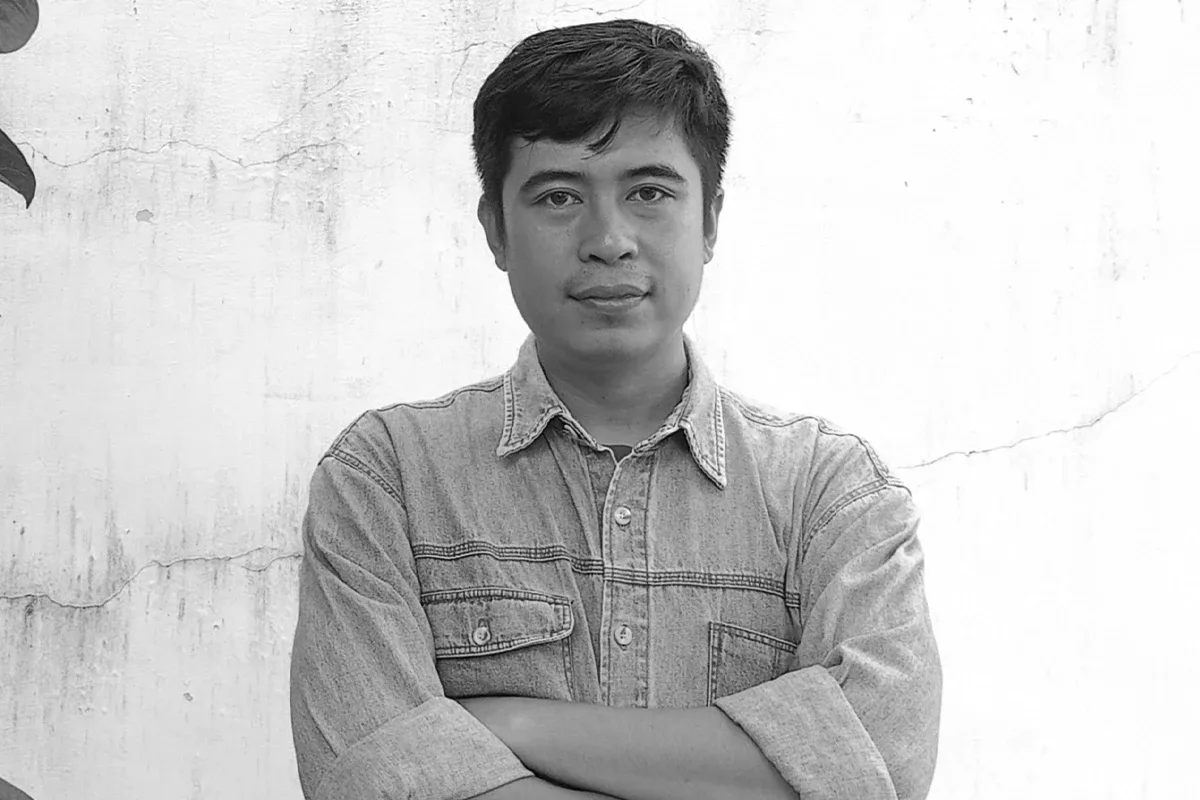
20 May 2026

Get your 2027 tickets!

Get your Early Bird tickets for the big festival nights, Friday & Saturday Night Unlimited!