
On being young, old and beyond
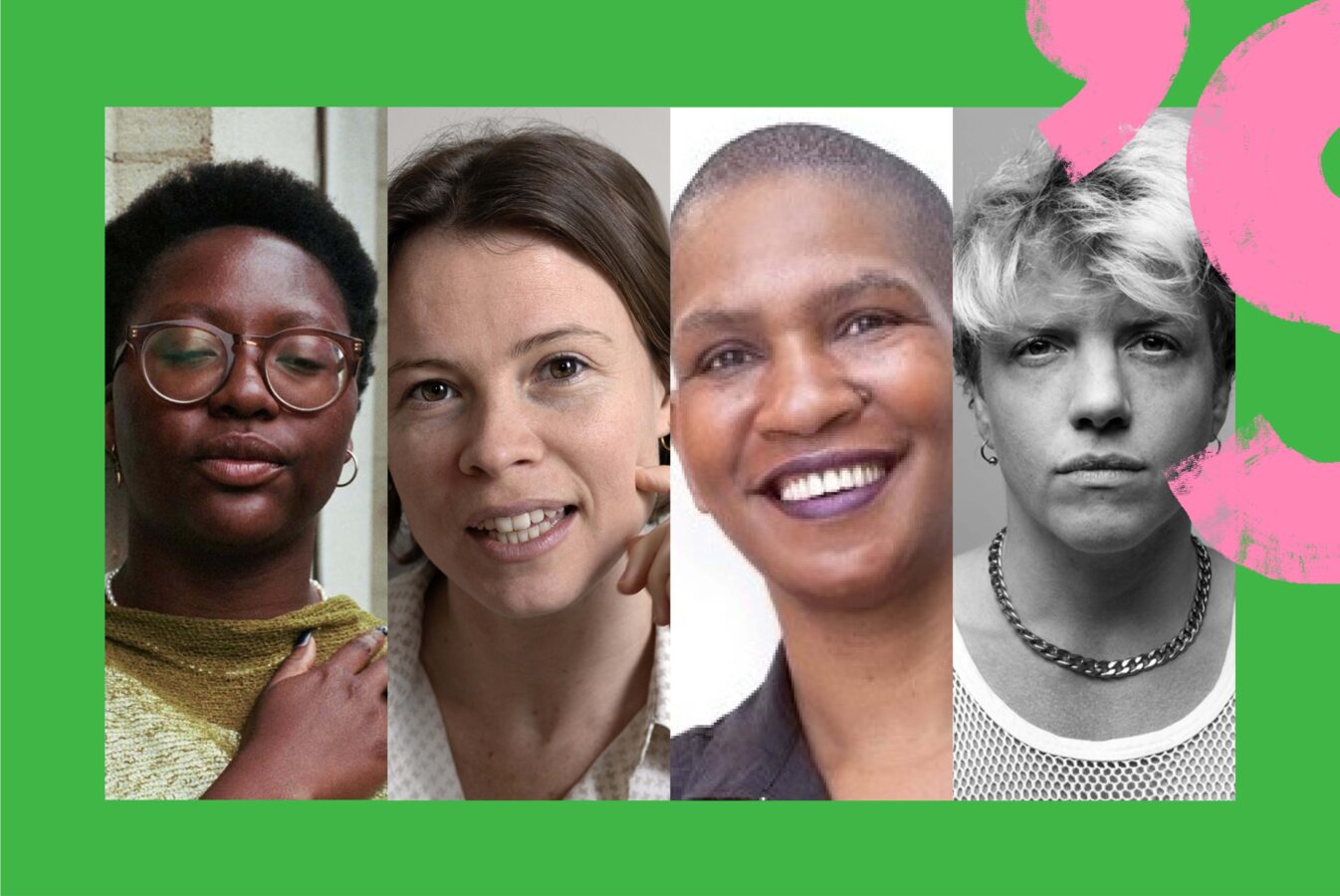
Writers, poets and performance artists on stereotypes about age.
Information
| Date and time | Saturday 24 January 2026 22:20 tot 23:20 uur |
|---|---|
| Location | Theater aan het Spui - Zaal 1 |
| Price |
15,- (up to 30 years or Ooievaarspas) 25,- (Early Bird, up to 26 December, thereafter 35,-) 32,50 (DenHaagPas). |
This Writers Unlimited program Old and New Stereotypes: Rewriting Aristotle’s Ageism brought together several authors who have been invited to rewrite a section of Aristotle’s rhetorics on age.
What stereotypes about age did they like to create or debunk? Given their own writing and positionality – inspired by disability experiences, sexual fantasies, coming of age narratives, queer and trans ancestral work –, what did they find exciting about the young, the old or the prime and why?
Was the categorization of life phases according to a linear timeline useful at all, or was it merely a bad habit to break? Following Aristotle’s confident and crass tone: what ageist stereotypes did they like to reproduce or erase and what experiences and ideas did they celebrate?
To start Old and New Stereotypes: Rewriting Aristotle’s Ageism, Simon(e) van Saarloos, author of the book Against Ageism - A Queer Manifesto, introduced the theme of ageism and explains the prompts of Aristotle and the importance and fun of rewriting an old text from 350 BCE. The invited contributors read or performed a newly written text.
In 350 BCE, Aristotle wrote on the characteristics of the young, the old, and those in the prime of their life. His writing is confident and full of stereotypes, defining with certainty what the young, the old, the prime offer and lack because of their age and life phase.
Stylistically, Aristotle wrote short statements, such as about the old: “And they are cowardly and fearful ahead of time about everything; for their disposition is the opposite of the young. They are chilled, but the young are hot, so old age has prepared the way for cowardice; for fear is a kind of chilling.”
Using age to categorize people and their behavior is a long-standing tradition. Age stereotypes get waged depending on one’s political and cultural context and the positionality of the speaker. At age 49, Aristotle declared that 49 is when someone (a man) reaches their mind’s prime. The years 30 to 35 are understood as a person’s physical prime.
On being young, old and beyond was curated for Writers Unlimited Festival by Simon(e) van Saarloos.



Discover

21 October 2026
Week van het Nederlands! Maud & Roan brengen taal in beweging
Een unieke dubbelvoorstelling van Maud Vanhauwaert en Roan Kasanmonadi tijdens de Week van het Nederlands (

13 October 2026
Week van het Nederlands! Maud & Roan brengen taal in beweging
Een unieke dubbelvoorstelling van Maud Vanhauwaert en Roan Kasanmonadi tijdens de Week van het Nederlands (

6 October 2026
Week van het Nederlands! Maud & Roan brengen taal in beweging
Een unieke dubbelvoorstelling van Maud Vanhauwaert en Roan Kasanmonadi tijdens de Week van het Nederlands (