Images of fear

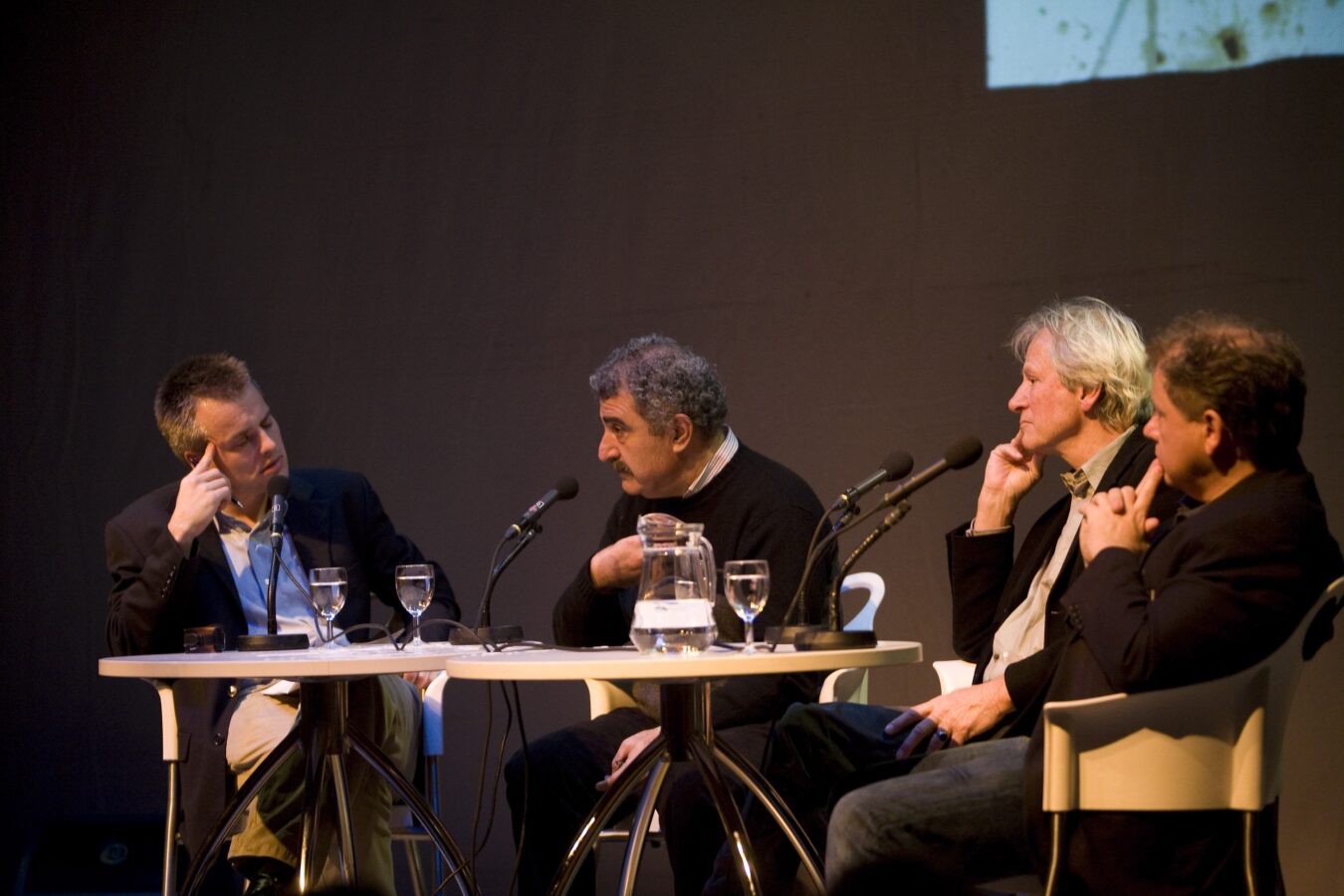
From mushroom cloud to collapsing Twin Towers. With Bas Heijne, Gerrit Jan Wolffensperger, Hassan Daoud and Joris Luyendijk (host). In English.
20080206105315

Information

Date and time Friday 18 January 2008 23:05 tot 23:55 uur
Location Theater aan het Spui - kleine zaal

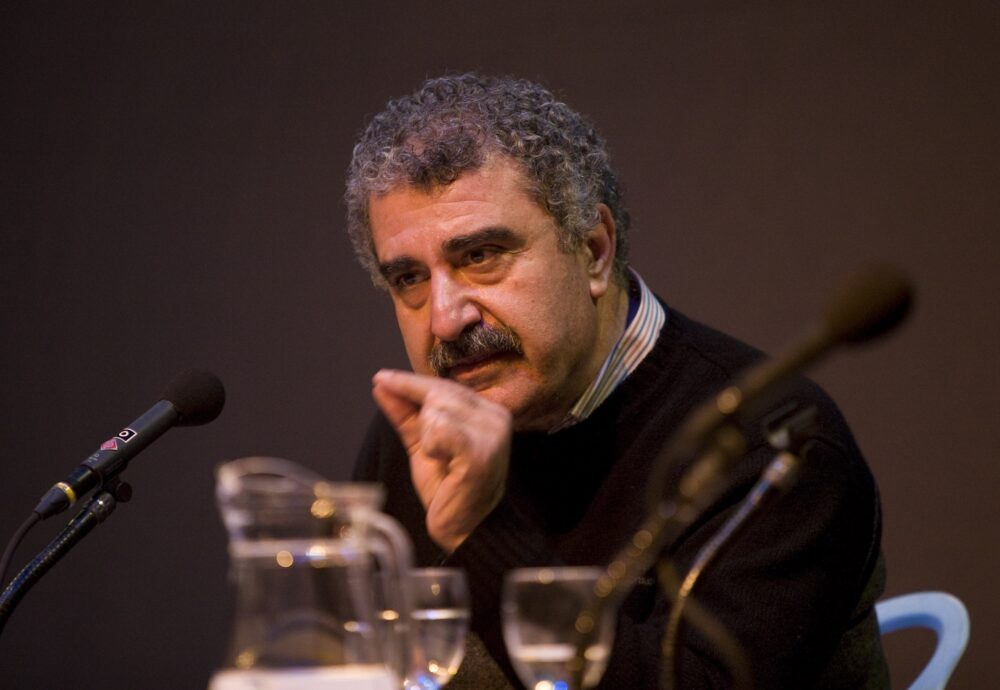
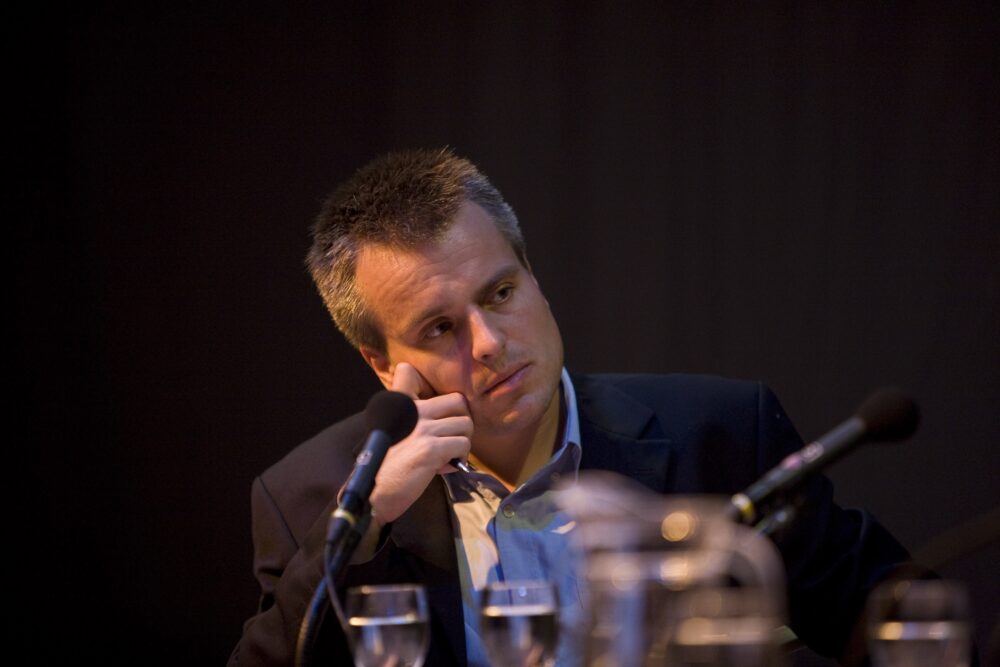
Image of fear number one: the Twin Towers collapsing. What represented fear before this event? The mushroom cloud? Bas Heijne, Gerrit Jan Wolffensperger and Hassan Daoud show what disturbs them now and what disturbed them in the past. Joris Luyendijk asks them if the 'image language of fear' developed in the course of history and if so, if it has changed since 9/11. With recent and older footage from the media and from films, the Middle East and the West. In English
Joris Luyendijk

(Amsterdam, 1971) travelled to Egypt at age 24 to do research among Egyptian contemporaries. That not only earned him a degree in religious anthropology, but also his debut, Een goede man slaat soms zijn vrouw (A Good Man Sometimes Hits his Wife). It was an instant success and Volkskrant and Radio 1 Journaal asked him to become a correspondent in the Arab World. Later he also worked for NRC Handelsblad and NOS. During his stay he wrote Een tipje van de sluier (A Corner of the Veil) and after his return to the Netherlands in 2003 Het zijn net mensen (People Like Us), on his experiences as a correspondent. Meanwhile Luyendijk has shifted his attention elsewhere: Dutch politics and sustainability. His latest book, Je hebt het niet van mij, maar…Een maand aan het Binnenhof (Don’t mention my name, but… A Month in Parliament), caused a great deal of controversy in Dutch journalist circles. Joris Luyendijk took a closer look at the bell-jar world of Dutch politics. With some amazement he describes how close the link between journalists, lobbyists, public relations officials and politicians is. In 2006 and 2007 Luyendijk hosted the tv interview programme Zomergasten (Summer Guests) and in 2007-2008 and 2008-2009 Wintergasten (Winter Guests). Since March 2010 he is one of the regular hosts of the late night radio current affairs programme Met het oog op morgen (With a View to Tomorrow).
20080206105246

Bas Heijne

(Nijmegen, NL, 1960) writes essays, short stories and plays, and is a columnist with the daily newspaper NRC Handelsblad. He published the novels Laatste woorden (Last words) and Suez and received the Henriëtte Roland Holst Prize in 2005. In 2011's Moeten wij van elkaar houden, het populisme ontleed (Do We Have to Love One Another? Populism Dissected) Heijne shows how globalisation and individualism pave the way for populism. Angst en schoonheid (Fear and Beauty) was published in 2013, an essay about Dutch writer Louis Couperus, whom Heijne admires. In the same year his documentary about Couperus was broadcast. In 2015 he hosted the five-part documentary De volmaakte mens (The Perfect Human). In 2016 his essay Onbehagen – nieuw licht op de beschaafde mens (Discontent - new light on civilized man) was published. In 2017 Heijne received the P.C. Hooft Award for his essayistic works.
20131029170754 1

Gerrit Jan Wolffensperger

(1944) is a former politician, former parliamentary leader of D66 and former chair of the Dutch broadcasting authority. From 1998-2003 he chaired the NOS, later renamed Public Broadcasting. He also chaired the Dutch Photo Institute and World Press Photo. Wolffensperger studied law and economics and was a photographer. In 1973 he became a lecturer at the law faculty of the University of Amsterdam. From 1986 to 1997 he was an MP for D66, the last three years as parliamentary leader.
20071120093502

Hassan Daoud

(Lebanon, 1950) after his study of Arabic Literature Daoud worked as a journalist during the civil war in Beirut, among other things as a correspondent for the Arabic newspaper al-Hajaat, published in London. Right now he is executive editor of the cultural pages of the daily paper al-Mustakbal. In addition to literature and culture he occupies himself intensively with daily events in Lebanon and the Middle East. His commentaries on social and political events appear in both Arab and European papers, the Neue Zürcher Zeitung being one of them. In his literary writing Daoud refuses to concern himself with the ‘rhetoric of heroism and tragedy’ of many authors writing about the Lebanese civil war. Instead he aims his attention on the microcosm. Most of his novels are set in Beirut. The House of Mathilde (1983) depicts the life of muslims and christians in an apartment building in Beirut. Daoud, who himself grew up in a home with muslims, christians, Druzes and immigrants from Russia and Armenia, portrays a highly detailed picture of the daily life of the tenants. Between the lines the backgrounds of recent Lebanese social and political history are made visible. Daoud has published two collections of short stories and nine novels.
20080206105627

Discover

20 May 2026

Get your 2027 tickets!

Get your Early Bird tickets for the big festival nights, Friday & Saturday Night Unlimited!