Schrijversfeest (Writers' Fest)

20191125172438 1

The Schrijversfeest (Writers' Fest) is a festive program with readings and musical performances accompanying the awarding of the four literary prizes of the City of The Hague by Robert van Asten, alderman for Culture. As laudatio givers you will see and hear writer and philosopher Joke Hermsen, poet Tjitske Jansen and NRC literary editor Thomas de Veen. Musical odes will be performed by classical accordeonist Oleg Lysenko, piano player and composer Tijn Wybenga and trumpet player Alistair Payne. The opening poem will be read by poet Jasper Albinus; host will be Noraly Beyer.
A regular feature is the finale of the educational project Spot on Young Poets: the finalists, secondary school students from The Hague, read poems they wrote during school workshops. Among them Mirle Wittekoek, who won the Young Campert Prize last year. The audience determines which of the finalists wins this award for a young Hague poet this time.

Writer, poet and essayist Stefan Hertmans wins the Constantijn Huygens Prize for his entire body of work. Hertmans achieved his big breakthrough in 2013 with the novel Oorlog en terpentijn (War and Terpentine). The book is a delicate and intense ode to his grandfather, who grew up in poverty, fought at the front in World War I, and lost the love of his life too soon. He worked through his grief by painting.

Hertmans has been a highly respected Dutch literary writer for much longer. According to the jury, since his 1981 debut with the experimental prose book Ruimte (Space), he has built up a body of work that covers almost every genre. His collected poetry runs to about 1,000 pages, published as Muziek voor de overtocht (Music for the Crossing). His prose comprises novels, stories, as travel book and essays. He has also written theatre texts and published notable monographs about philosophy and visual art.

Paul Demets (1966) wins the Jan Campert Prize for his volume of poetry De Klaverknoop (The Shamrock Knot), a smashing collection in which each image is loaded and meaningful without making the poetry impenetrable. Demets' big achievement is knowing how to tie up the language without constricing the reader. These poems keep on sizzling in your mind.

Marente de Moor (1972) wins the F. Bordewijk Prize for her novel Foon. The tragic attempts of man to control, comprehend and direct nature lie at the heart of her work. It expresses a great love of science and a deeply felt understanding of the futiliy of human endeavour. She resolutely leads her reades to the edge of the woods, well knowing that sooner or later, something will happen to call forth the bears. Foon is a masterfully written novel of ideas about humans who are less and less able to stand the mysteries of existence, written by one of the most idiosyncratic authors writing in the Dutch language.

Gideon Samson (1985) wins the biannual Nienke van Hichtum Prize for his book Zeb. The book's freakish incidents are served up as simple logic in an otherwise completely realistic environment. The disruption mostly affects the mind of the reader - an effect that is happy, funny and playful but also covers up an ominous feeling of alienation. Zeb. adds a unique and absurdist work to the Dutch youth literature canon.

This program is a collaboration with the Jan Campert Foundation / Literature Museum. In Dutch.

Information

Date and time Sunday 19 January 2020 from 14:30 to 16:00 hrs
Location Theater aan het Spui - Zaal 1

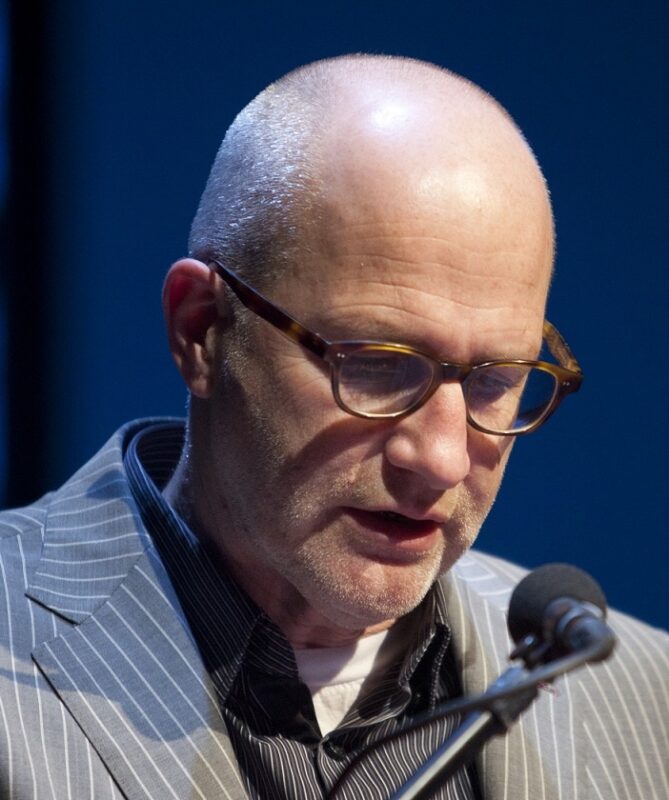
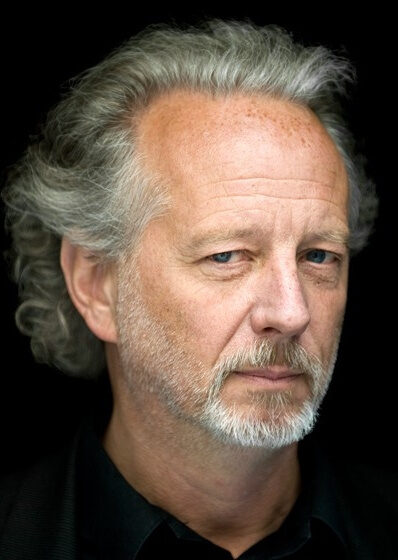
Stefan Hertmans

(Belgium, 1951) is a writer of poetry, novels, essays, plays, and short stories. He debuted in 1981 and has more than thirty books to his name, including prize-winning titles like the poetry collection Muziek voor de overtocht (Music for the Crossing, 1995) and the novels Gestolde wolken (Solidified Clouds, 1988) and Naar Merelbeke (To Merelbeke, 1994). His international breakthrough, the family saga Oorlog en terpentijn (War and Turpentine, 2013), sold over 250,000 copies and was published in 24 languages. The book is based on some writings that Hertmans received from his grandfather. The reconstruction of the story begins in about 1900 in a working-class Ghent neighbourhood and gets an unexpected twist during the Great War. Hertmans taught at the Royal Academy of Fine Arts in Antwerp and has delivered lectures at universities around the world. He was awarded the Constantijn Huijgens Prize 2019 for his body of work.
20190930142004 1

Aad Meinderts

(1957) is director of the Literatuurmuseum in The Hague and chair of the Jan Campert Foundation. He studied Dutch language in Leiden and, as of 1982, worked for the organisation that looks after the national Dutch literary heritage (formerly the Letterkundig Museum). He organised exhibitions about writers such as Remco Campert, Miep Diekmann, and Cees Nooteboom. From 2002 to 2005 he was director of the Haags Historisch Museum/Museum de Gevangenpoort, and afterwards of Stichting Lezen. In 2009 he returned to the Literatuurmuseum as director. Meinderts has publications to his name on writers Anna Blaman, Emmy van Lokhorst and Sonja Witstein. He also wrote Een literaire roadtrip: in 30 dagen langs 100 schrijversgraven (2010), ‘Uit geil en bloed bestaat dit rotte leven!’: Max Kijzer (1893-1944) (2021) en In gekroonde stoeten (2022).
20131030145922 1

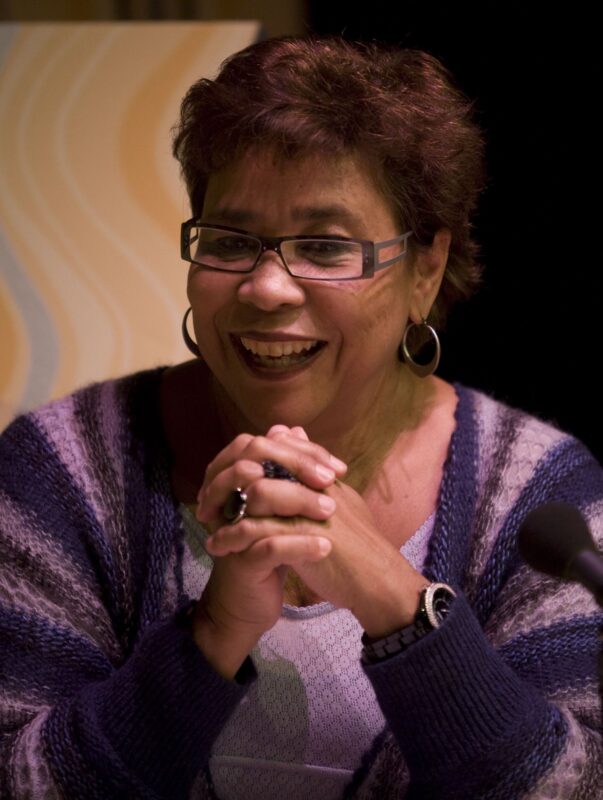
Noraly Beyer

(Curacao, 1946), born to Surinamese parents, was an editor/newsreader on Dutch TV (1985-2009) and the Dutch World Service (1983-2008). She had roles in theatre productions such as Ajax, Hemel boven Berlijn (Sky Above Berlin), MedeaThe Vagina Monologues and De Afscheidsmonologen (The Farewell Monologues) as well as writing plays herself. In addition, she regularly hosts debates and writes columns. In 2009 she received the Cosmic Award for her advocacy for more diversity in Dutch media. A memoir of her youth in Curaçao, De Antillen en ik (The Antilles and Me), was chronicled by John Leerdam. In 2018 she played the role of storyteller in The Passion.
20110124151412

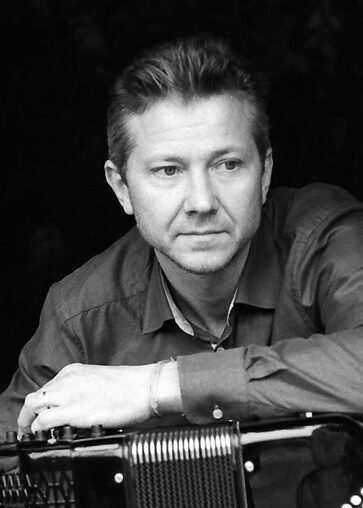
Oleg Lysenko

(Ukraine, 1974) studied at the music academies in Poltava, Kiew and Enschede. In 1999 he released his first CD, Awakening featuring works by a.o. Vivaldi, Bach, Pachelbel and Piazolla. He specialized in Argentine tango on bayan and bandoneon at Codarts Rotterdam. As a soloist, he won the 2005 National Accordion Competition in The Netherlands with his rendition of Victor Vlasov's "Five Views of the Land of the Gulag Archipelago", also the title piece of his 2012 CD Gulag. He prefers genre-transcending projects in which visual art, literature and music enhance and flow into one another. He developed such projects with writer and visual artist Armando, sculptor and illustrator Koenraad Tinel, and with writers, journalists and filmmakers, including Stefan Hertmans, Cherry Duyns and Peter d'Hamecourt, among others. For his double-CD De sneeuwstorm (The Snowstorm, 2022), Lysenko arranged and played on bayan Georgi Sviridov's music to Alexander Pushkin's story of the same name, recited by Martinus Nijhoff Prize-winning Pushkin translator Hans Boland. With fundraising events and benefit performances, Oleg raises money to pay for an ambulance for the Ukrainian region of Poltava, where his family comes from.
20230124154720 1

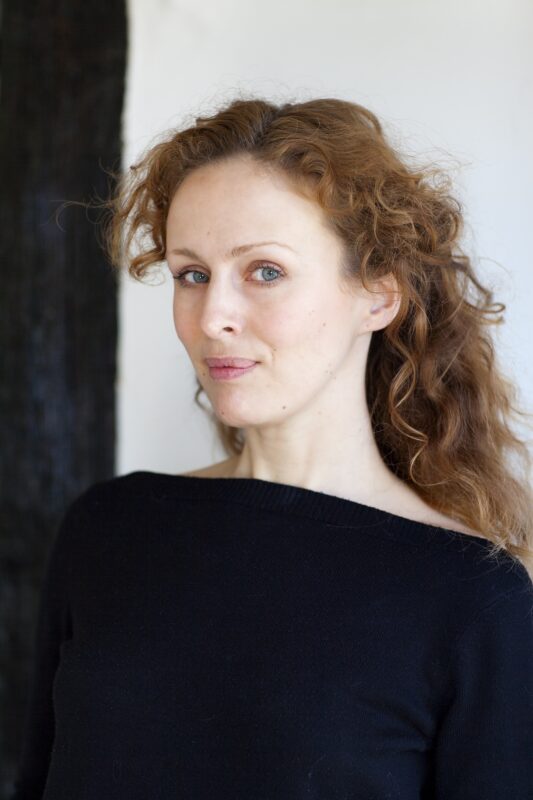
Marente de Moor

(The Hague, 1972) made her mark with the novels she wrote so far. In 2007 De Moor made her debut with De overtreder (The offender). In 2011 she won the AKO Literature Prize with De Nederlandse maagd (The Dutch virgin), in which an 18-year-old goes in search of her father's war past in 1936. Roundhay, tuinscene (2013) tells about Louis Le Prince, who made a short film long before Edison and Lumière. De Moor studied at St Petersburg's drama school, worked in Russia as a correspondent and wrote articles and columns for De Groene Amsterdammer. In 1999 her columns were compiled under the title Petersburgse vertellingen (Petersburg stories). Her novel Foon (2018), set at an abandoned house in the woods around Saint Petersburg, was awarded the Jan Wolkers Prize for best nature book and the F. Bordewijk Prize.
20131114104011 1

Joke Hermsen

(Middenmeer, NL, 1961) is a writer and philosopher specialized in female authors and philosophers. Hermsen debuted as a novelist with Het dameoffer (The Lady's Sacrifice, 1998), about a daughter who discovers her mother's love affair. She followed up with the historical novel Tweeduister (Twilight) about T.S. Eliot and Virginia Woolf. Her successful volume of 2009 essays Stil de tijd - Pleidooi voor een langzame toekomst (Stop Time: Plea for a slow future) was reprinted 20 times. This was followed by, among others, the novel Blindgangers (Duds, 2014), the essay Melancholie van de onrust (Melancholy of Unrest, 2017), the novel Rivieren keren nooit terug (Rivers Never Turn Back, 2018) and the essay Het tij keren met Rosa Luxemburg en Hannah Arendt (Turning the Tide with Rosa Luxemburg and Hannah Arendt, 2019).
20181113162057 1

Paul Demets

(Belgium, 1966) received the Jan Campert Prize for his collection of poetry De Klaverknoop, in which he searches for mankind and every image is laden and meaningful, without making the poetry impenetrable. For his debut De papegaaienziekte (The Parrot Disease, 1999) he received the Prize for Literature of the Province of East Flanders in 2001. He not only writes poetry, but is also a poetry critic for De Standaard, Awater, Poëziekrant and Ons Erfdeel, and essayist. Demets' collection De bloedplek (The Bloodstain, 2011) was awarded the Herman de Coninck Prize, both by the jury and by the public. From the beginning of 2016 until the end of 2019, Demets was countryside poet of East Flanders. As a result, two collections of poetry will be published in the spring of 2020. And he is working on a biography of the Flemish writer and painter Paul Snoek. About poetry he wrote in Vrij Nederland: "I mainly want to see, hear, feel and taste poetry now. Close watching, listening, feeling, tasting."
20191124232100 1

Gideon Samson

(Netherlands, 1985) won both the 2019 Gouden Griffel and the biannual Nienke Van Hichtum Prize for his children's book Zeb. The jury wrote: "With Zeb., Samson adds an uniquely absurdist element to Dutch youth literature." His 2007 debut Niks zeggen! (Say Nothing!) won the Vlag en Wimpel, and with 2009's Ziek (Sick) he became the youngest-ever winner of the Zilveren Griffel. His youth thriller Zwarte zwaan (Black Swan), about attending your own funeral, also won a Zilveren Griffel. His young adult book Overspoeld (Inundated), based on conversations with tsunami survivor Julius 't Hart, won the Gouden Lijst. His 2016 book Eilanddagen (Island Days) also won the Vlag en Wimpel. As absurdist as it may be, his work always contains a philosophical untertone.
20191110223038 1

Tijn Wybenga

(1993) aced his Jazz Composition studies at the Amsterdam Conservatory. With his 14-member AM.OK Collective (Amsterdam Modern Orchestra), Wybenga builds innovative bridges between contemporary jazz, classical and electronic music. The jazz pianist, arranger and composer was nominated for the 2017 Rogier van Otterloo Award. In 2015 Wybenga took first prize in the Princess Christina Composition Competition.
20191122150643 1

Tjitske Jansen

(Barneveld, 1971) is a poet and a writer. In 2003 her overwhelming debut poetry collection Het moest maar eens gaan sneeuwen (It's about time it snowed) appeared. She finished her study as drama tutor and fell in love with youth theater. That bond with youth can be seen in her poetry, that often, although not especially written for these groups, bring out enthusiastic reactions from children. In 2009 her poetry collection Koerikoeloem (2007), a personal story interspersed with fairytale-like observations, was awarded the Anna Bijns Prize. In her prose debut Voor altijd voor het laatst (For ever for the last time, 2015) Jansen is again personal, clever and moving.
20191129134240 1

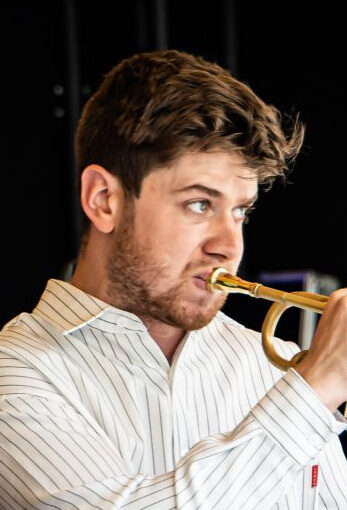
Alistair Payne

is a trumpeter and composer born in Southern Scotland. After having had lessons in the Scottish professional scene, he went to study at the Conservatorium in Amsterdam. He currently lives in Amsterdam and studies with musicians such as Yaniv Nachum, Ruud Breuls, Jasper Blom and Reinier Baas.
20191217204349 1

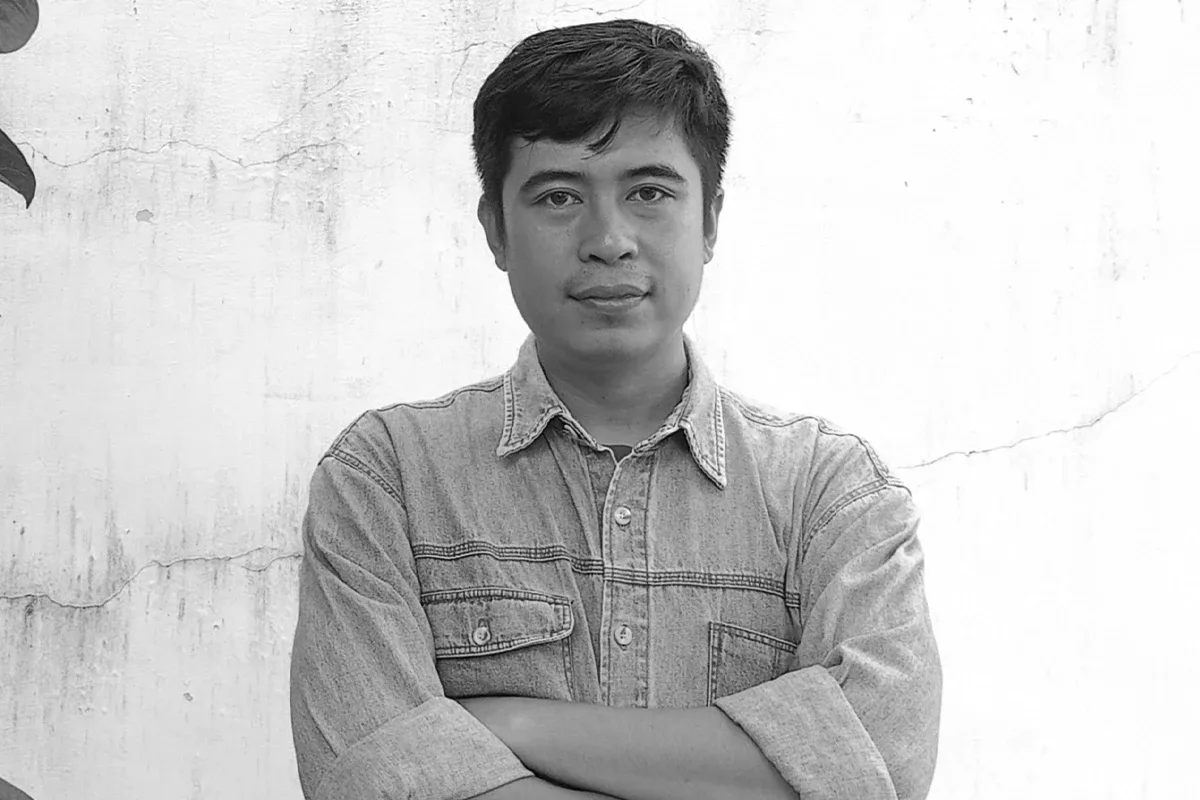
Jasper Albinus

(The Netherlands, 1997) appears on stage as poet and spoken word-artist. In 2017 he joined the Poetry Circle, a platform for performing writers and writing performers, and took part in the Slow Writing Lab of the Dutch Foundation for Literature in 2018. In his work he makes issues of identity, history and politics hit home. He may appear at literary festivals or in theatres, and sometimes adds a poetic note to a debate. He performed at the Oerol, Brainwash and Writers Unlimited festivals, among others.
20231019103140 1

Thomas de Veen

(1986) is a literary editor at NRC Handelsblad, the national Dutch newspaper with which he has been associated since 2011 as a reviewer of youth literature and Dutch fiction. Previously he studied history and Dutch at the University of Amsterdam and wrote about literature for the weekly newspapers Kidsweek and 7Days. He was a member of literary juries and contributed to various magazines, collections of essays and the book The ABC by Annie MG; from the A van Abeltje to the Z by Ziezo, a colourful reference work edited by Joke Linders.
20191211203155 1

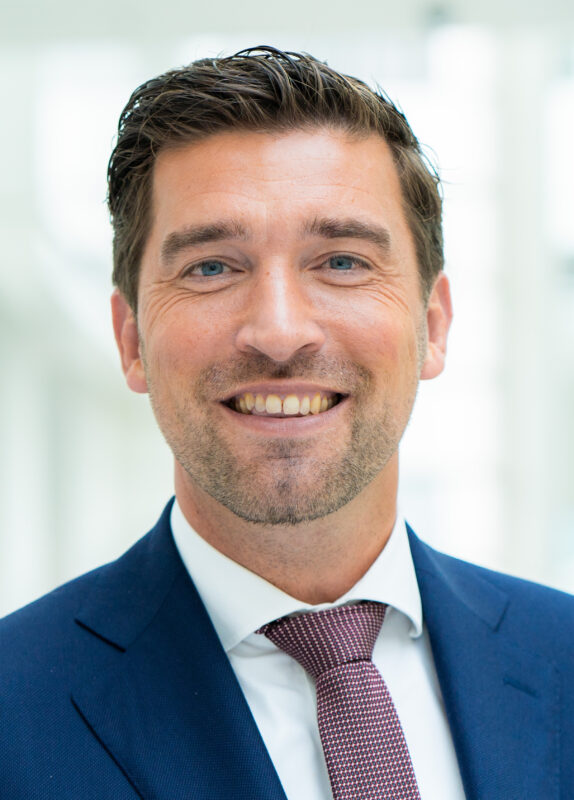
Robert van Asten

(Voorburg, 1978) is Alderman for Mobility, Culture and Strategy of the City of The Hague since June 2018. Libraries, monuments and cultural heritage are also part of his policy areas. Furthermore he is Alderman of Segbroek, one of the eight The Hague districts. Before taking office as Alderman, Van Asten was a member of The Hague's City Council for D66 since 2014. He studied tax law at Leiden University and worked for, among others, Deloitte and Vistra.
20181205103306 2

Discover

20 May 2026

Get your 2027 tickets!

Get your Early Bird tickets for the big festival nights, Friday & Saturday Night Unlimited!