The Real Thing 1: Morality

Ethicists, writers and artists about their quest for truth and genuineness. A full evening's, three-part programme hosted by Michaël Zeeman. Part 1: morality. If people lose their moral bearings, can the law keep them on the straight and narrow path?Writer/ethicist Marjolijn Februari reads her column, and will talk about morality and writing with the German writer Juli Zeh and the South African writer/criminal lawyer Chris Marnewick. In English.
20090123135509

Information

Date and time Saturday 17 January 2009 20:10 tot 21:00 uur
Location Theater aan het Spui - grote zaal

Ethicists, writers and artists talked to each other about their quest for truth and genuineness. A pure tone, a clear line, the rules of the game: What do these concepts mean to them? The Real Thing was a full evening's, three-part programme hosted by Michaël Zeeman.


Part 1: morality. If people lose their moral bearings, can the law keep them on the straight and narrow path? But what if the law itself is bad? Writer and ethicist Marjolijn Februari read a column specially written fot this programme: ‘Who keeps guard over morality?’ Then the German writer Juli Zeh, the South African writer and criminal lawyer Chris Marnewick and Marjolijn Februari talked about morality and the profession of letters.

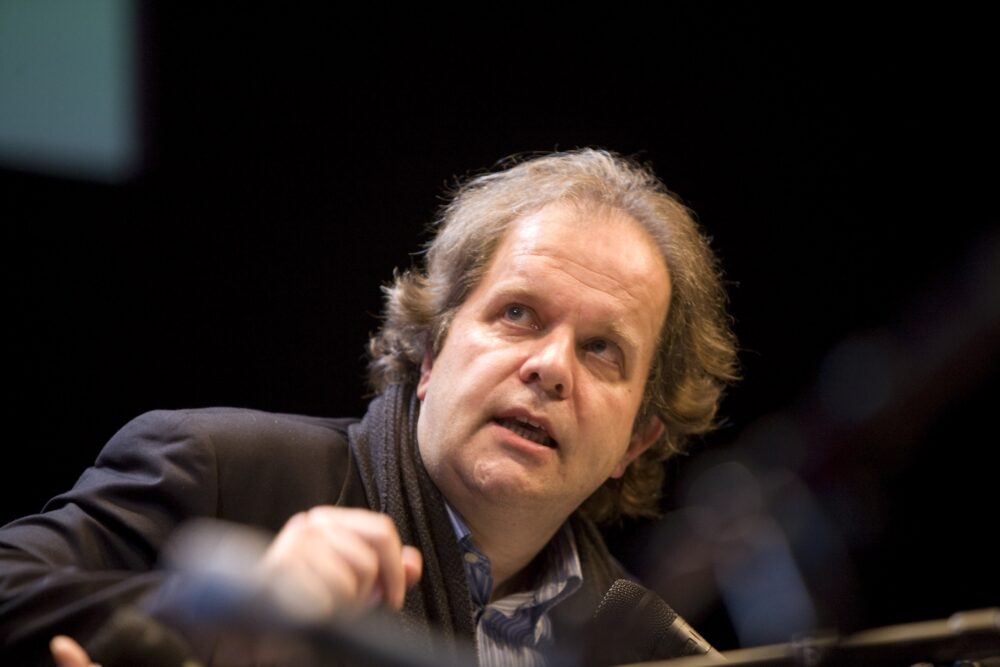
Michaël Zeeman

(Marken, 1958-2009) was a poet, a writer and a commentator, with a regular column on the Forum page and the book pages of the Volkskrant. Zeeman was the editor of the arts section of the Volkskrant and from 2006-2007 its Rome correspondent. In 2006 he and the writer Abdelkader Benali published an exchange of letters, exchanging ideas on politics, life, love and literature. In 2002 Zeeman received the Gouden Ganzenveer (Golden Goose Quill) for his merits for Dutch literature. Zeeman became well-known in the 1990s as the host of his monthly book programme 'Late at night after a short walk', later to be renamed 'Zeeman with books'. In 1991 he published his first volume of poetry, Beeldenstorm (Iconoclasm), winning him the C. Buddingh Prize. His second volume Verhoudingen (Relationships) appeared in 1995. In the same year he published short stories entitled De Verduistering (The Darkening). He died in 2009.
20080206143715

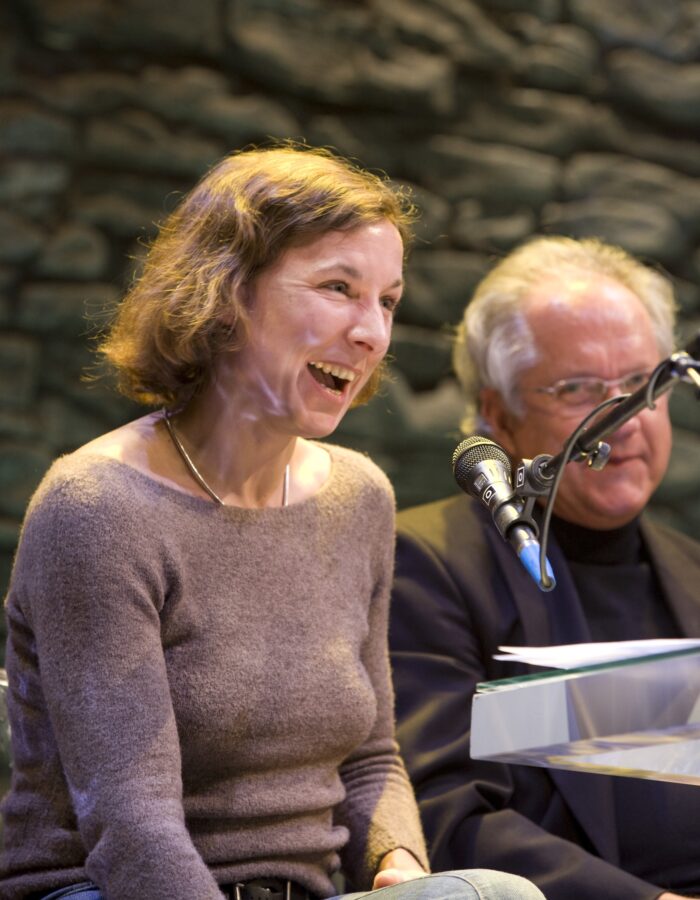
Juli Zeh

(Bonn, 1974), according to a Dutch newspaper she is 'the most exciting German writer around, and an expert in international law, in addition to being a writer, which appears from the topics of her books but also from the detailed description of the criminal investigation in her latest novel Schilf (2007), a philosophical whodunit about two friends, rival phycisists, faced with a kidnapping and a murder. In her second novel Spieltrieb (2004), in which two grammar school pupils torment a teacher to extremes, moral responsibility plays an important part. When their game gets out of hand, the judge has to decide. Zeh also writes nonfiction, essays and plays. Her most recent work, Das land der Menschen (Land of the People, 2008), is a children's book, in which she playfully deals with themes like prosecution and tolerance. Her novels have been published in more than twenty-five countries.
20080916110908

Chris Marnewick

(South Africa, 1948) kicked up a lot of dust in South Africa with his debut Shepherds & Butchers (2008) about the death penalty. Marnewick, a lawyer by profession and a lecturer in law, ingeniously succeeds in interweaving fact and fiction. He bases his novel on real murders and executions in 1987. The death penalty was abolished in South Africa at the close of the 1980s, but many of Marnewick's compatriots plead for its reintroduction in order to curb the violence in te country. With his detailed and factual description of the executions and their emotional consequences Marnewick shows his readers the moral objections attached to the death penalty. In addition, Shepherds & Butchers has led to a discussion on the boundaries between fact and fiction, which are often completely vague in the book.
20081202170251

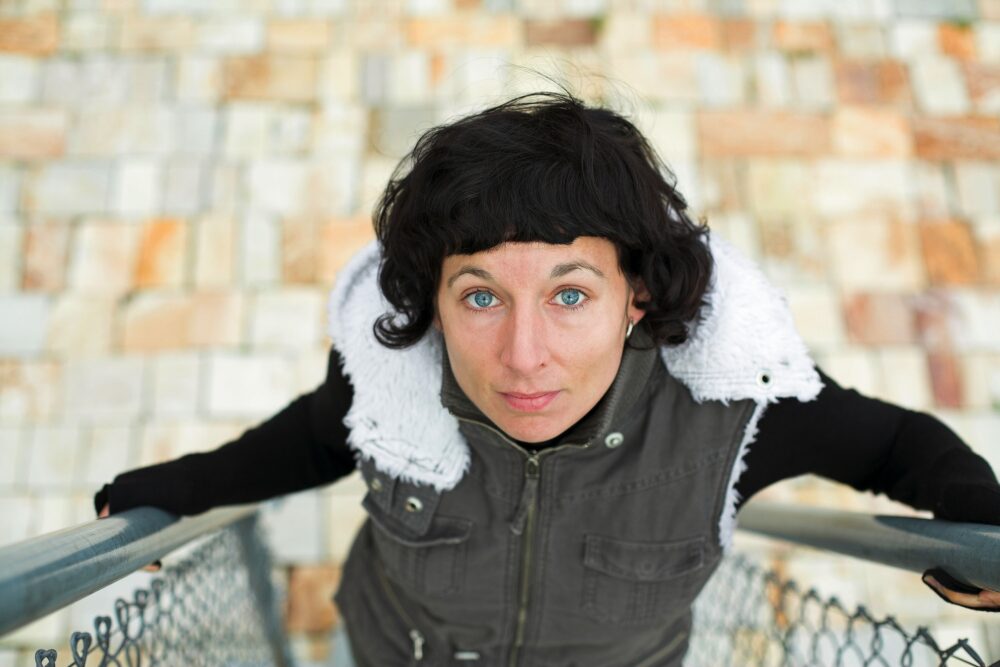
Maxim Februari

(Coevorden, NL, 1963) was born as Marjolijn Drenth. Besides being a writer, he is an ethicist, an art historian, and a lawyer. Februari understands the art of turning moral dilemmas and legal issues into elegant prose. "It's got to be exciting and entertaining. If you write a pamphlet, no one will read it," he commented. His novel De literaire kring (The Book Club, 2007), on the morals of the Dutch cultural elite, got a very positive reception. From 2001 to 2010 Februari wrote columns for the Volkskrant newspaper. Some of these columns were published in Park Welgelegen - Notities over Morele Verwarring (Welgelegen Park: Notes on Moral Confusion, 2004). In his PhD thesis Een Pruik van Paardenhaar & Over het Lezen van een Boek (A Wig of Horse's Hair & On Reading a Book, 2000), nominated for the Golden Owl Award, he examines the relationship between economics and ethics. Currently he writes a weekly column for opinion page of NRC Handelsblad. Some of these, together with some Volkskrant columns, have been anthologised in Ons soort mensen (Our Kind of People, 2011). De maakbare man (The Makeable Man), notes on transsexuality, was published in 2013.
20121213162959

Discover

20 May 2026

Get your 2027 tickets!

Get your Early Bird tickets for the big festival nights, Friday & Saturday Night Unlimited!