Winternachten Lecture - Tim Parks

20110124121525

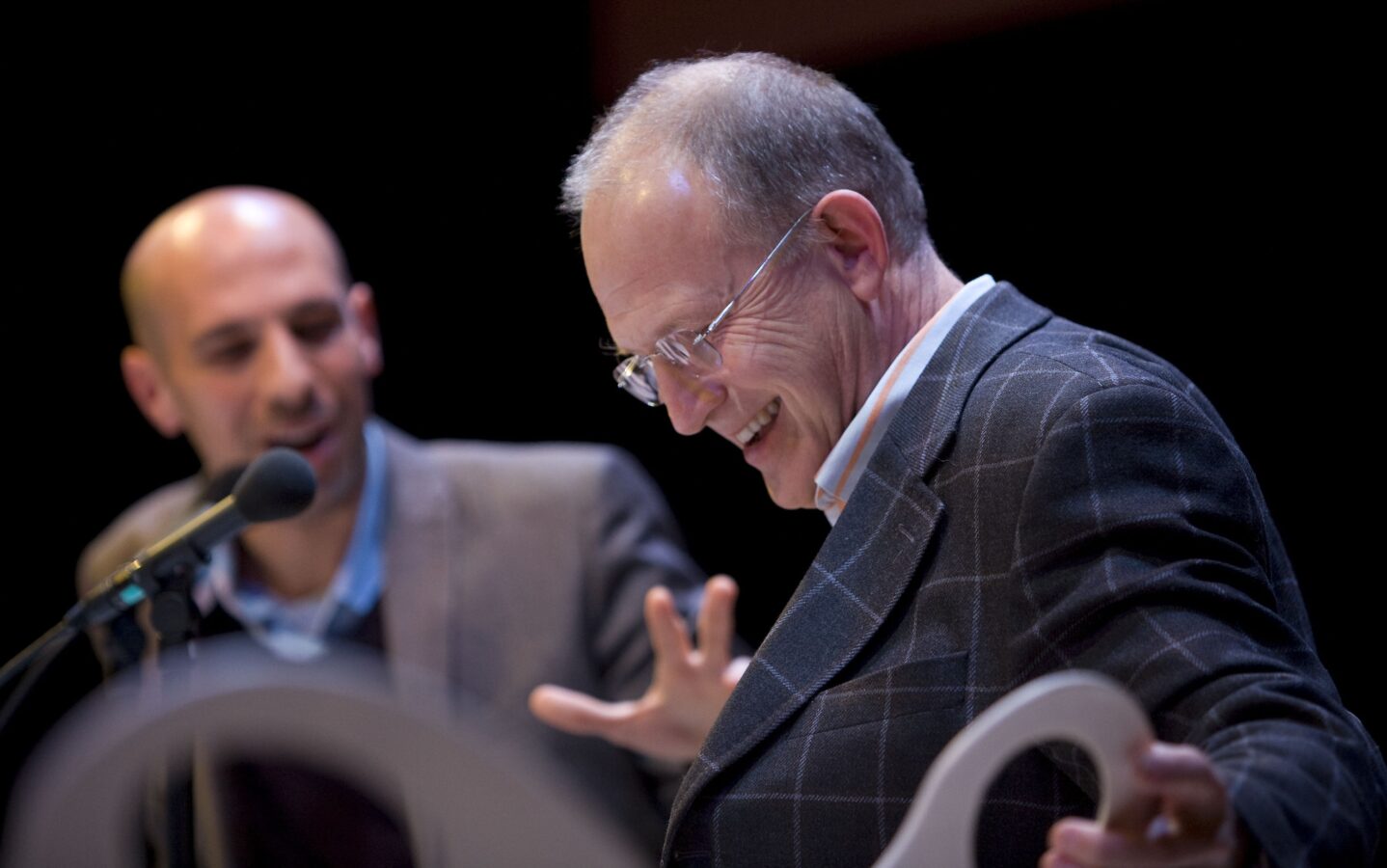
‘I have a problem with the growing internationalisation of literature,’ the British writer Tim Parks recently argued in an interview with Bas Heijne in NRC Handelsblad. On Thursday 20 January 2011 he opened the Winternachten Festival. 

‘Writers don’t aim at local situations and local issues, because an international audience isn’t interested in them. That makes the literature change.’ And that’s what worries Parks. He fears that literature will deteriorate into an impersonal message for a readership of merely outsiders. ‘When you read those kinds of books you don’t have the feeling of looking in on someone else, of ending up in another culture. That makes a lot of literature superficial and untruthful.’

In his Winternachten Lecture Tim Parks elaborated on his disquieting observation. Because many questions remain to be answered. What choice do writers have? Do they have to restrict themselves to the same patterns? Are cultures still so isolated that this is the result? And what about writers who have become estranged and left behind their native soil and culture?
Abdelkader Benali talked to Parks after his lecture and put his views to David van Reybrouck, Maaza Mengiste and Elif Batuman.
This was the first evening in the festival, and the official opening. Before the lecture by Tim Parks, writer Nelleke Noordervliet, chairperson of the festival board, gave the opening speech
In English.

Information

Date and time Thursday 20 January 2011 from 20:00 to 22:00 hrs
Location Theater aan het Spui - grote zaal

Tim Parks

(Manchester, 1954) grew up in London and studied at Cambridge and Harvard. Since 1981 he has lived in Italy, where he teaches literary translation at IULM university, Milan. He is the author of fourteen novels including Europa (1997) which was shortlisted for the Booker Prize. A corrosive exposé of EC hypocrisy, Europa is narrated by savagely unhappy Jerry Marlowe who, together with his former mistress and a bus full of feckless colleagues and students, under­takes a journey to Strasbourg to petition to save a job that Jerry does not believe in. In the 1990s Parks wrote two personal accounts of life in northern Italy, Italian Neighbours and An Italian Education (published in the Netherlands in 2002,), and some years later A Season with Verona, which set out to describe Italy through the way the country engages with football. All three books achieve an exhilarating anthropological precision while the narrative voice oscillates between an insider’s and an outsider’s point of view. His most recent book, Teach Us To Sit Still, is the thought-provoking and highly entertaining story of the author's quest to overcome ill health. Parks has also translated works by Machiavelli, Moravia, Tabucchi, Calvino and Calasso and writes regularly on translation issues. His Translating Style, an analysis of Italian translations of English modernists is used as teaching material in a number of universities. Parks also publishes in the New York Review of Books and the London Review of Books.
20100929110847

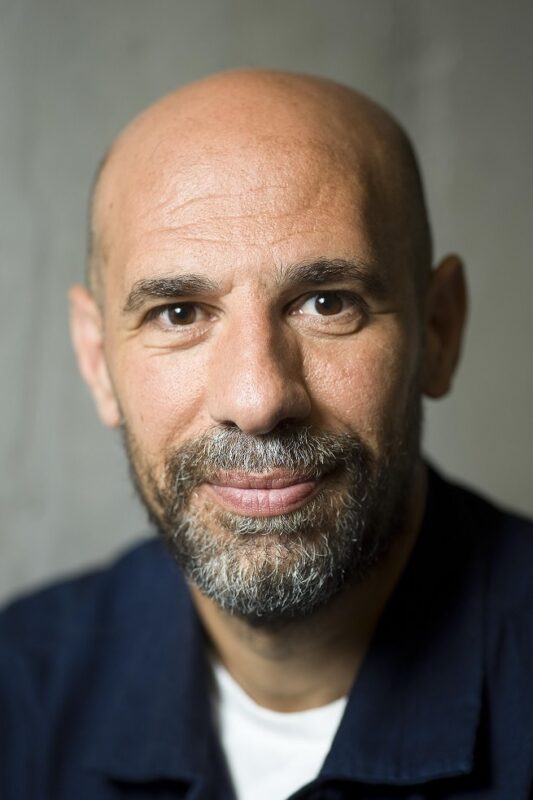
Abdelkader Benali

(Morocco, 1975) is an award-winning writer, poet, playwright and curator. His 1996 debut, Bruiloft aan zee (Wedding By the Sea), was an immediate success. His second novel, De langverwachte (The Long-awaited) won him the prestigious 2003 Libris Literature Award. Benali's subjects vary, but sports and the migrant who never really feels at home are recurring themes. He has written novels about his great passion of running, about his travels, and about migrants' cultural identity (Bad Boy). His work has been published internationally. Recent books include the novel Paradijsvogel boven Hoge Woerd (Bird of Paradise over Hoge Woerd, 2022) and Het andere verhaal (The Other Story, 2022), an essay about his research into 75 years of modern Moroccan art.
20231120143900 1

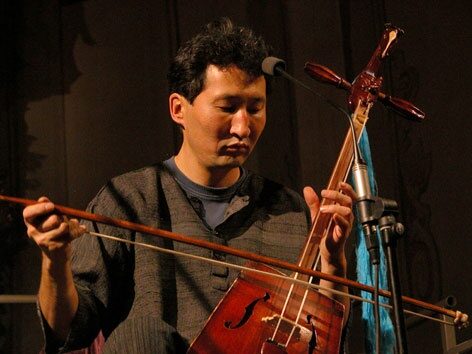
Epi

EPI (1968, Ulaanbaatar) with his singing and music sustains the traditions of his native country Mongolia in a modern fashion. As a virtuoso throat singer and player of the morin khur, a typically Mongolian two-string horsehair instrument, Epi, born Enk Jargai, is extremely versatile. He cherishes the age-old nomad songs from his fatherland, but doesn’t mind sharing the stage with jazz musicians or hiphoppers. Epi grew up in a small village with Mongolian nomads, but because of his penchant for music he ended up at the conservatory. In 1993 he played in Germany for the first time, which is now his adopted country. Epi performs worldwide as a soloist or with other musicians. So far he has released one solo-cd, entitled Hoirr Öngö, which means ‘between two worlds’.
20101202181218

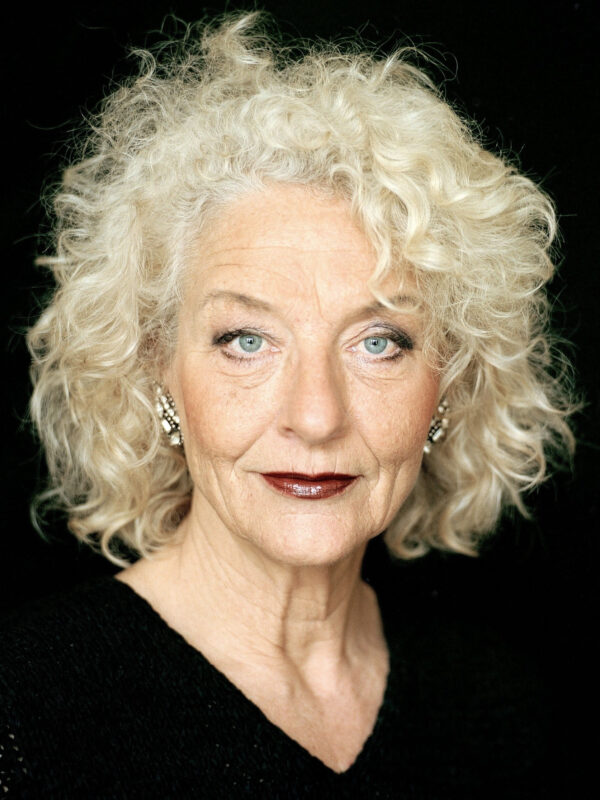
Nelleke Noordervliet

(Netherlands, 1945) writes novels, stories, essays, lectures and columns with a strong historical bent. She debuted with 1987's Tine of de dalen waar het leven woont (Tine, or the Valleys Where Life Lives), a fictitious biography of 19th-century Dutch writer Multatuli's first wife. Her book De naam van de vader (The Name of the Father) won the 1994 Multatuli Prize. In 2002 she wrote Pelican Bay, about slavery in the Caribbean and the Netherlands. Her essay collection Schatplicht (Tribute) appeared in 2013, and her 2016 novel Aan het eind van de dag (At the End of the Day) is simultaneously a portrait of a career woman and a snapshot of the second half of the 20th century. De val van Thomas G. (The fall of Thomas G.) tells about the publisher of a controversial book. Noordervliet's body of work was awarded the 2018 Constantijn Huygens Prize.
20181203095828 1

Maaza Mengiste

(Ethiopia, 1971) debuted in 2010 with the heartbreaking Beneath the Lion’s Gaze. This novel was hailed by The Guardian as one of the ten best recent African books. The story is set in the 1970s and begins with the last days of Emperor Haile Selassie. Mengiste continues with the cruel regime of the socialist Derg, who is etimated to have caused 100,000 deaths: "I wanted to show the humanity and the destruction of the people who suffered under this regime." Central themes of Mengiste's fiction and non-fiction are migration, the Ethiopian revolution, and the life of black African immigrants in Europe. She currently works for various orgranisations that support displaced people and human rights. Several Amerian celebrities like Meryl Streep and Alicia Keys worked on her film project Girl Rising, about the situation of girls around the world. Mengiste lives and works in New York City.
20100712134754

David Van Reybrouck

(Belgium, 1971) is an author, historian and archaeologist, known for his multifaceted contributions to literature and intellectual discourse. He is currently Philosopher Laureate of the Low Countries. Upon his appointment, he published De wereld en de aarde (The World and the Earth, 2025), in which he makes a groundbreaking proposal to radically broaden our thinking—and our politics. For the greatest security issue of our time is not the world with its mutual conflicts, but the earth, which is becoming increasingly disrupted. His oeuvre covers a range of genres, including historical non-fiction, poetry, and theater. Among his best-known works are Congo (2010), about the country's bewildering history, and Revolusi (2020), which places Indonesia's struggle for independence in a global perspective through eyewitness accounts. In addition to his literary work, Van Reybrouck is known as ‘one of Europe's leading intellectuals’ (Tagesspiegel), whose ideas relate to themes such as democracy, climate, and colonialism. He regularly publishes opinion pieces in international publications. 

Go to the website of David Van Reybrouck
Instagram: @david.vanreybrouck
20251015162805 1

Elif Batuman

(1977, New York) made her debut in 2010 with The Possessed, a book about her favourite Russian writers, including Tolstoy, Pushkin, Dostoyevsky and Chekhov. In pursuit of literary truth, Batuman repeats Pushkin’s wanderings in the Caucasus, and travels to Tolstoy’s ancestral estate to investigate whether the great man might in fact have been murdered. The search leads to digressions on a wide range of subjects, from literary mores and translations to questions of love, songs by The Smiths, and the making of the film King Kong. By following the footsteps of her literary heroes, Batuman succeeds in bringing them to life and giving them a place in today’s world. Batuman,born in New York of Turkish parents, received a doctorate in comparative literature from Stanford University. She frequently writes for the New Yorker. Her essays are striking because of their fresh, comical, yet solid style. Her first book appeared in Dutch translation in 2010. She is the recipient of a Rona Jaffe Foundation Writers’ Award (2007) and a Whiting Writers’ Award (2010).
20101202170832

Discover

20 May 2026

Get your 2027 tickets!

Get your Early Bird tickets for the big festival nights, Friday & Saturday Night Unlimited!