Winternachten in Tropentheater: Counter Talk - literature from the Turkish region
20081013111917

On Sunday afternoon, Tegenspraak (Counter Talk) a programme in cooperation with Winternachten with literature from the Turkish region, took place in Tropentheater Amsterdam. For a long time there has been a critical tradition in Turkish literature, with writers aiming their grievances at the powers that be. As early as the Ottoman Empire there has been sharp criticism, notably from the poet Tefik Fikret. Fikret shuns the Sultan and all religion. He takes a stand against everything that is regarded as holy and against the glorification of history. For the programme Tegenspraak: Turkish Controverses five Turkish authors were invited, all of them writing in the critical literary tradition of Fikret, authors who in their literary work and in columns deal with politics and society.
The writers treated the audience on their literary current affairs. The programme was hosted by Margreet Dorleijn and Funda Müjde. See www.tropentheater.nl.

Information

Date and time Sunday 18 January 2009 from 14:00 to 16:30 hrs
Location KIT Tropentheater - Amsterdam

Selim Temo

(Turkey, 1972) was born in the south eastern Kurdish region of Batman. He gained a lot of praise with a two-part anthology of Kurdish poetry which appeared in 2007 and cost him years to complete. Temo not only selected the poems but translated them in Turkish as well. In addition to being a translator Temo is a poet and a novelist. Since 1995 he has published three books of poetry, winning him the Yasar Nabi Nayir prize in 1997. The three collections of poems, Ah! Tamara (1995), Ugultar (2000) and Kirgin Nehirler Meseli (1997) appeared in 2008 in a new edition. His 1998 novel Çiftlere Cinayet Dersleri (literally: Lessons in Killing for Couples) was awarded a prize. Temo made his debut in 1994 with a play and studied ethnology at the University of Ankara.
20081204130216

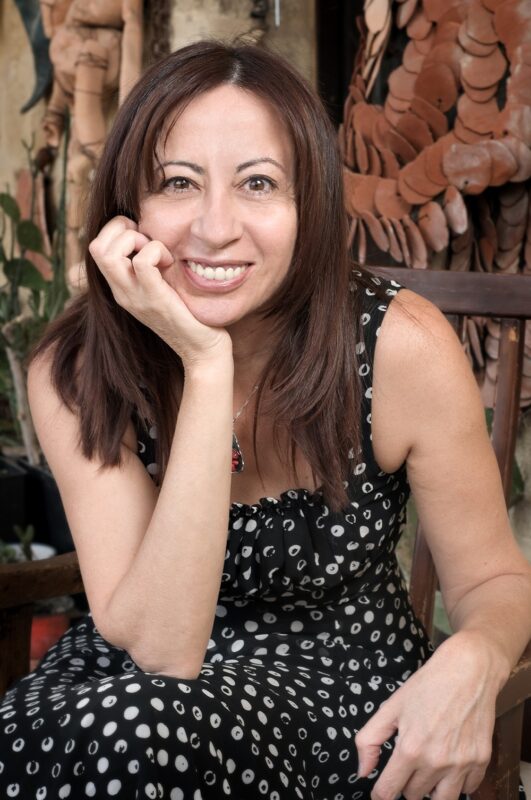
Nese Yasin

(Cyprus, 1959) in her poetry not only tries to build a bridge between the Greek and Turkish part of Cyprus, but also in daily life. Her most famous poem ‘Which part' she wrote in 1974 but it is still important to her: ‘My father says: Do you love your fatherland? My fatherland has been split in half, which part must I love?’. The division of Cyprus remains an important theme in her work, but she also writes about youth traumas and love. The daughter of the Turkish poet Ozker Yasin, Yasin was born on the Turkish part of Cyprus, but lives in the Greek southern part. In 2006 she was the first Turkish Cypriot since 1963 to enter the parliamentary election on the Greek part. Yasin teaches Turkish-Cypriot literature at the Greek-speaking University of Cyprus. She also works as a radio journalist. She has published five books of poetry and a novel and has won several literary prizes. Her work has been translated into Greek, Hungarian, German and English. In the Netherlands a number of her poems were published in an anthology of Cypriot literature Wij wonen in een taal (We Live in a Language; 2004).
20080929102855

Perihan Magden

(Turkey, 1960) was praised by Orhan Pamuk as 'one of the most inventive and outspoken writers of our age'. In June her 1991 debut was published by Athenaeum-Polak & Van Gennep: The Errand-Boys Murders. A hallucinating tale about a bizarre city where mysterious murders take place. Her second novel, Two Girls (2002), was a best-seller in Turkey and has been made into a film and translated in English. Magden is known in Turkey as a columnist. In 2006 she was charged allegedly for inciting the Turkish population against the army. She was jeered at by an angry mob in court but finally acquitted. This frightful period was an inspiriation for her latest novel Biz Kimden Kaciyorduk Anne (Who Are We Fleeing for, Mother?; 2007), describing the mortal fear of a woman and her daughter.
20080929105405

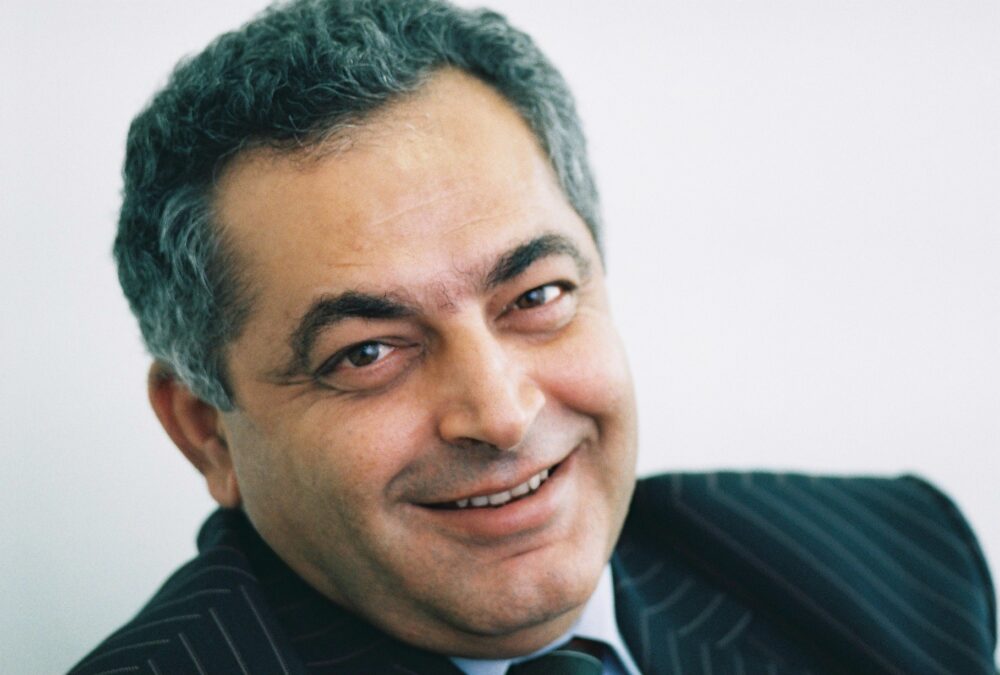
Kamran Nazirli

(Azerbaijan, 1958) is known in Azerbaijan as a writer and a translator of English literature in Azeri, a language closely related to Turkish. Since 1997 Nazirli has written several novels and short stories. Society is a Mirror of Politics (1999) was awarded the prestigious Azerbaijan Hassan Zardabi Prize, named after the founder of the first newspaper in Azeri, appearing in 1875. One of Nazirli's short stories to have been translated into English is The Old Baby, about an Azerbaijani refugee family trying to survive. Kamran Nazirli has translated works by English and American writers into Azeri, among them novels and poems by Edgar Allan Poe, Lord Byron and Oscar Wilde.
20081006110351

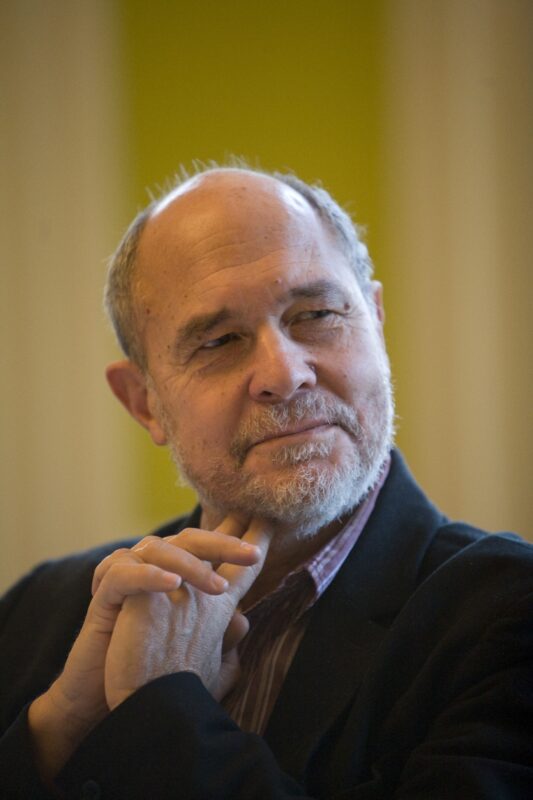
Gündüz Vassaf

(Turkey, 1946) has been called 'the spokesperson of our phantasies, the freest spirit of our prose' by none other than Orhan Pamuk. In his penetrating work Vassaf deals with varying themes like migrant labour, historiography, the falsification of history and the failure of capitalism. Vassaf, a writer in addition to being an internationally respected psychologist, mixes stories with essay-like passages and philosophy with literature. Vassaf is a leading figure in the public debate in Turkey. He has had a weekly column in de newspaper Radikal since 1997. These columns were put together in a book in 2008, entitled Turkey, where are you?. Hell Be Praised (1992), on the result of totalitarianism in daily life was a best-seller in Turkey and published in English. In 2008 the book was translated into Russian. We Still Need to Be Heard (1983) was re-issued in 2003 and translated into French and German. It is pioneering work with keen observations of Turkish workers' children in Western Europa. His latest book, from 2013 is titled Mostari: A Bridge Keeper’s Diary, around his stay in Mostar, and the bridge that was demolished in the war, and was recently rebuilt. As Vassaf indicates "It is a novel, an epic poem, the love story of a passerby who becomes enamoured by the bridge."
20090122125123

Margreet Dorleijn

(1956) works as a linguist at the University of Amsterdam, specializing in Turkish literature, ethnic variaties of Dutch, bi-lingualism and language and identity. With Hanneke van der Heijden she translated among others My Name is Red and Snow by Nobel prize winner Orhan Pamuk and The Flea Palace by Elif Shafak. The two also edited a Dutch anthology of modern Turkish short stories.
20081110150256

Funda Müjde

(Turkey, 1961) is an actress, comedienne, moderator, hostess and columnist. She is well-known due to her leading role in the film Julia’s Secret and roles in a number opf popular Dutch TV series. From 1999 to 2012 she wrote a weekly column in national Dutch newspaper De Telegraaf, providing a humourous and critical view of Dutch intercultural society. A selection of her columns was published in 2004, titled Algemeen Beschaafd Turks (Common Turkish Pronunciation). Following a car accident in 2007, she has had to use a wheelchair. Müjde writes, acts and presents as she is, with a personal perspective on political and societal themes, sometimes provocative and always with humour. In 2016 she returned to the theatre with Funda Draait Door, in which she tells about her life's journey.
20081208175852

Discover

20 May 2026

Get your 2027 tickets!

Get your Early Bird tickets for the big festival nights, Friday & Saturday Night Unlimited!