Writers Conference - part 2

20071031143034

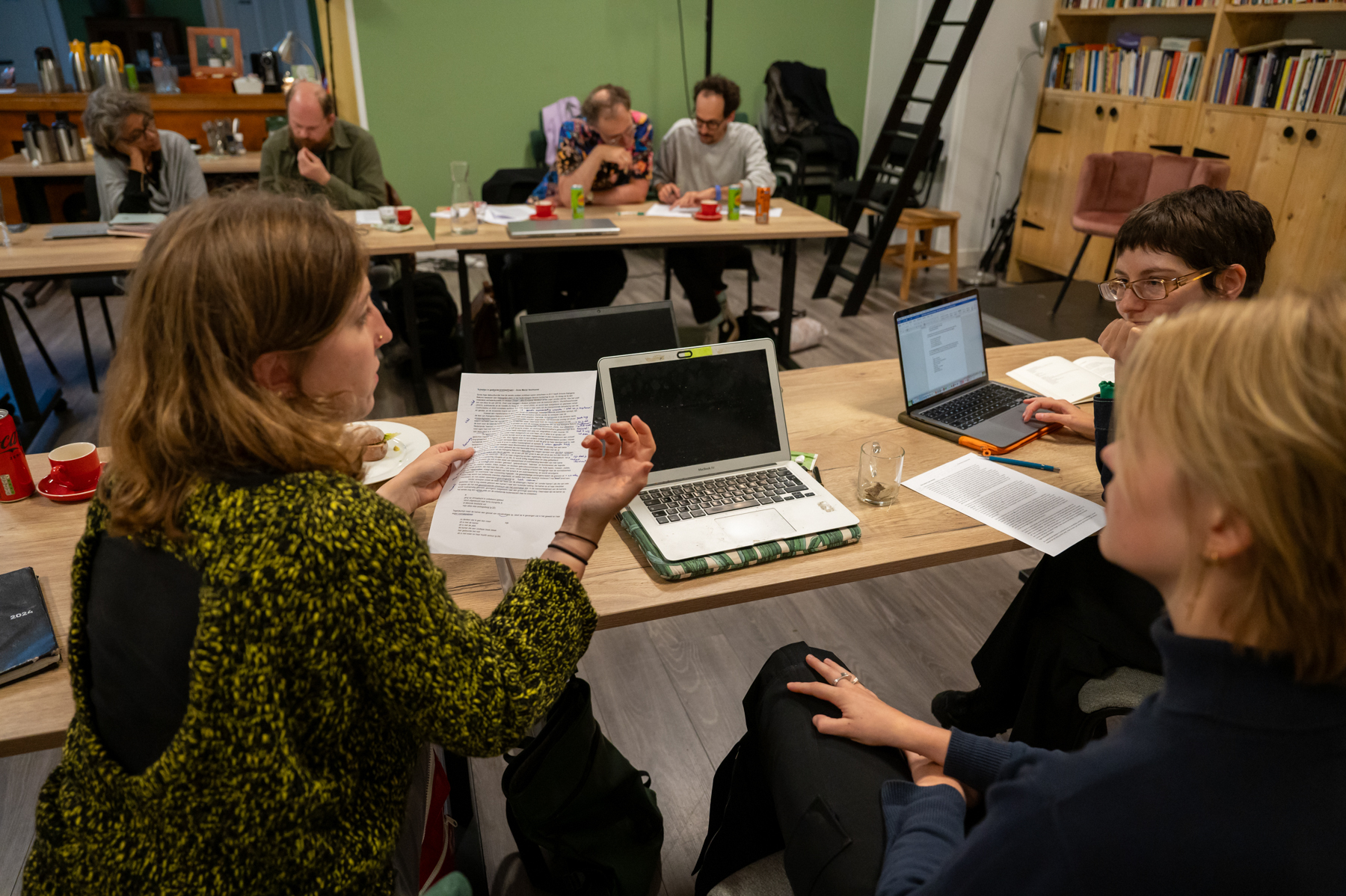
Final session of a two day closed writer's meeting with the four writers travelling on invitation of Winternachten, and four Turkish writers: Bejan Matur, Hakan Gunday, Hamdi Koc and Melida Tuzunoglu, on the theme Global writing - global conscience. The sessions are chaired by writer Gündüz Vassaf.

Information

Date and time Tuesday 2 November 2010 from 10:00 to 13:00 hrs
Location Nederlands Consulaat Istanbul

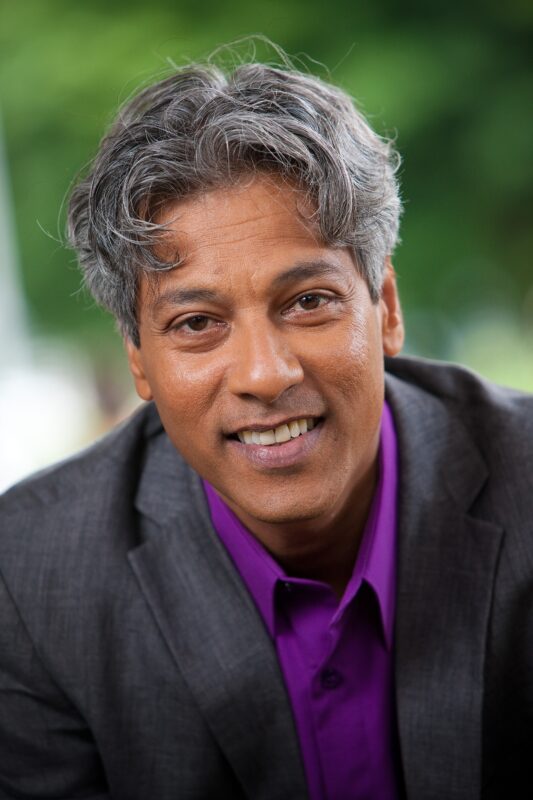
Anil Ramdas

(Paramaribo, 1958 - Loenen aan de Vecht, 2012) made his debut in 2011 as a novelist with a book describing the life of Badal, a migrant who, like Ramdas himself, is an inspired, committed writer and columnist. Popular among white Dutchmen, but unread by his own people. The multicultural society and the position of the journalist are recurring subjects is his work. A writer, journalist, film, radio and television maker, Ramdas grew up in the Hindustani community in Suriname. At the end of the 1970s he came to the Netherlands to study social geography. He worked among others for De Groene Amsterdammer and as a columnist, essayist and correspondent in India for NRC Handelsblad. Ramdas made various radio and tv programmes like In Mijn Vaders Huis (In my father's house), a series of interviews on the clash between cultures and the role of science and the media. The interviews were published in book form. From 2003-2005 he was director of the debating centre De Balie in Amsterdam. In 2007 he went to live in Suriname for a year and wrote Paramaribo: de vrolijkste stad in de jungle (Paramaribo, the merriest town in the jungle, 2009), in which he takes a critical look at his native country. Since September 2010 he hosted the VPRO opinion programme Z.O.Z.He died on 16 february 2012.
20100901102144

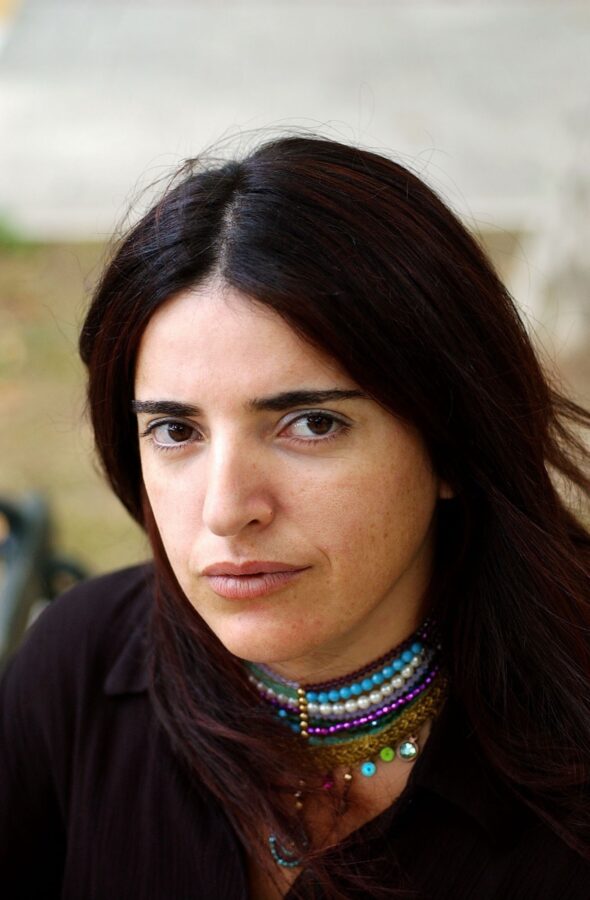
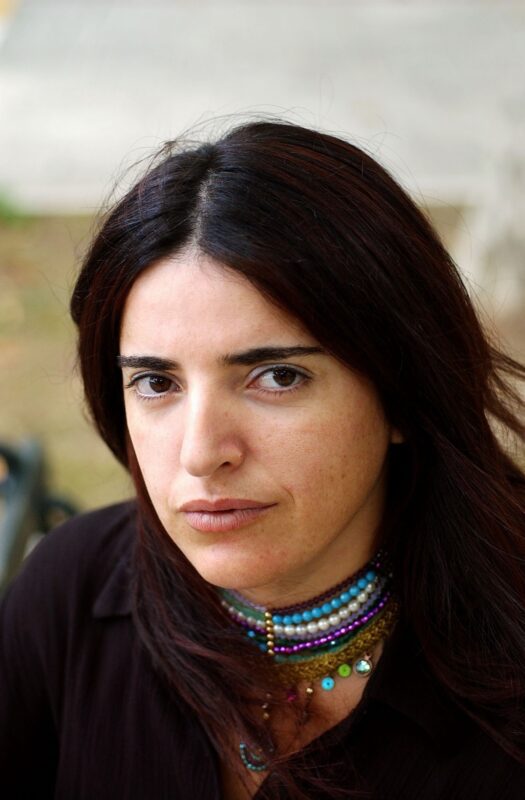
Bejan Matur

(Turkey, 1968) is of Kurdish descent. In 2011 Dağın Ardına Bakmak (Looking Behind the Mountain) appeared, for which she took to the mountains to interview PKK rebels, the first time a writer sketched the personal stories and traumas of the Kurdish fighters. In 2011 Doğunun Kapısı: Diyarbakır (The Gate of the East: Diyarbakir) also appeared, a portrait of the 3000 year old capital of Kurdistan. As a columnist for the English language newspaper Zaman Matur writes regularly about the Kurdish question. In addition she chairs the Diyarbakır Cultural Art Foundation. She also leads social projects for women, children and adolescents and makes a tv-programme on culture, art and politics. She read law at the University of Ankara. Since the publication of her first book of poetry in 1996, Rüzgâr Dolu Konaklar (Wind-Filled Countryhouses) she has created her own mythology - inspired by age-old Sufi traditions from the region of her birth. Meanwhile she has six books of poetry to her name and an anthology with poems she translated. Her work has been translated in seventeen languages.
20071031143034

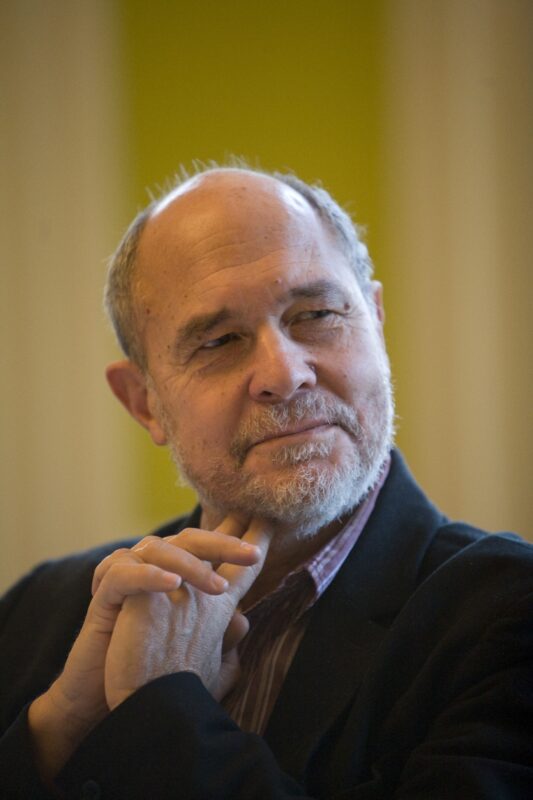
Gündüz Vassaf

(Turkey, 1946) has been called 'the spokesperson of our phantasies, the freest spirit of our prose' by none other than Orhan Pamuk. In his penetrating work Vassaf deals with varying themes like migrant labour, historiography, the falsification of history and the failure of capitalism. Vassaf, a writer in addition to being an internationally respected psychologist, mixes stories with essay-like passages and philosophy with literature. Vassaf is a leading figure in the public debate in Turkey. He has had a weekly column in de newspaper Radikal since 1997. These columns were put together in a book in 2008, entitled Turkey, where are you?. Hell Be Praised (1992), on the result of totalitarianism in daily life was a best-seller in Turkey and published in English. In 2008 the book was translated into Russian. We Still Need to Be Heard (1983) was re-issued in 2003 and translated into French and German. It is pioneering work with keen observations of Turkish workers' children in Western Europa. His latest book, from 2013 is titled Mostari: A Bridge Keeper’s Diary, around his stay in Mostar, and the bridge that was demolished in the war, and was recently rebuilt. As Vassaf indicates "It is a novel, an epic poem, the love story of a passerby who becomes enamoured by the bridge."
20090122125123

Hakan Gunday

was born on 29th May 1976, Rodos. He finished his elementary education at Brussels. He graduated from Tevfik Fikret High School and studied at Translation Studies of French Language at Hacettepe University. He went to Political Sciences at Universite Libre de Bruxelles then Political Sciences Faculty at Ankara University. Günday’s first novel “Kinyas ve Kayra” published in 2000, “Zargana” at 2002, “Piç” at 2003, “Malafa” at 2005 and “Azil” at 2007. He lives between Istanbul and Antalya.
20101101091007

Hamdi Koç

was born in Fatsa, Ordu, Turkey in 1963. He is a writer and translator. He studied in METU and accomplished his degree in English Language and Literature in İstanbul University. He made part of the publishing board of Hokka Magazine. He translated works by Shakespeare, Faulner, Beckett and Joyce into Turkish. His first novel "Dying songs of Children" in 1992, his last novel, "The afternoon of an ex-husband" was published in 2009 by Doğan Kitap.
20101025213056

Hassan Daoud

(Lebanon, 1950) after his study of Arabic Literature Daoud worked as a journalist during the civil war in Beirut, among other things as a correspondent for the Arabic newspaper al-Hajaat, published in London. Right now he is executive editor of the cultural pages of the daily paper al-Mustakbal. In addition to literature and culture he occupies himself intensively with daily events in Lebanon and the Middle East. His commentaries on social and political events appear in both Arab and European papers, the Neue Zürcher Zeitung being one of them. In his literary writing Daoud refuses to concern himself with the ‘rhetoric of heroism and tragedy’ of many authors writing about the Lebanese civil war. Instead he aims his attention on the microcosm. Most of his novels are set in Beirut. The House of Mathilde (1983) depicts the life of muslims and christians in an apartment building in Beirut. Daoud, who himself grew up in a home with muslims, christians, Druzes and immigrants from Russia and Armenia, portrays a highly detailed picture of the daily life of the tenants. Between the lines the backgrounds of recent Lebanese social and political history are made visible. Daoud has published two collections of short stories and nine novels.
20080206105627

Melida Tüzünoglu

was born in 1984, Istanbul. She studied Sociology and Film Studies at Boğaziçi University. She obtained her master’s degree in Sociology and Social Anthropology from Central European University in Budapest with a published thesis work examining visual culture and collective memory. She went to the Netherlands in 2008, for studying politics and culture in Europe. She gained her second master’s degree from Universiteit Maastricht, while working in government’s research institution for the projects of social integration in Holland. Turning back to Istanbul, she started working at Doğan Media Company. She is also a PhD candidate at Bahçeşehir University. She has been publishing stories in the literature magazine ‘Kitap-lık’ since 2005. Working on her forthcoming novel, she writes literary pieces, art critiques, comments for various magazines.
20101101092421

Ramsey Nasr

(The Netherlands, 1974) is a poet, writer, actor and director. He made his poetry debut in 2000 with 27 gedichten & Geen lied (27 Poems & No Song). Nasr acts in films and TV series and is a member of the International Theatre Amsterdam ensemble. His stage and screen roles have been awarded multiple times. He also writes theatre pieces, columns, essays and opinon pieces. From 2009 to 2013 he was the Dutch Poet Laureate. In his essay collection De fundamenten (The Fundamentals, 2021), he assesses a corona pandemic-struck nation; Nasr compacter (2021) gathers the best of his poems from a two-decade career. In 2023 he created a series for Dutch TV about objects from his own collections, Dr Nasrs Wunderkammer (Dr. Nasr's Chamber of Wonders).
20231030143806 1

Ronelda S. Kamfer

(South Africa, 1981) is one of today's most important South African authors. She writes in Cape-Afrikaans, a spoken language containing English words and slang. Her work has been translated into Dutch, French, Greek, Italian and English. Her first poetry collection Noudat Slapende Honde (Now Then Sleeping Dogs, 2008) paints a sharp picture of poverty. Santekraam (2012) contains stories in verse about a fishing village that must make way for a military site. Mammie (2017) is a loving as well as raw ode to her mother. Chinatown (2021) is typically hard-hitting. Kamfer's poems, as controlled as they are intimate and darkly humourous, tackle violence, the position of women, love and parenthood. Her first novel, Kompoun, was published in 2021. She compiled Die maan is swart (The Moon is Black, 2022), a collection of poetry by Adam Small, and has translated two of Kirsty Applebaum's Princess Minna children's books into Afrikaans.
20211118142156 2

Discover

20 May 2026

Get your 2027 tickets!

Get your Early Bird tickets for the big festival nights, Friday & Saturday Night Unlimited!