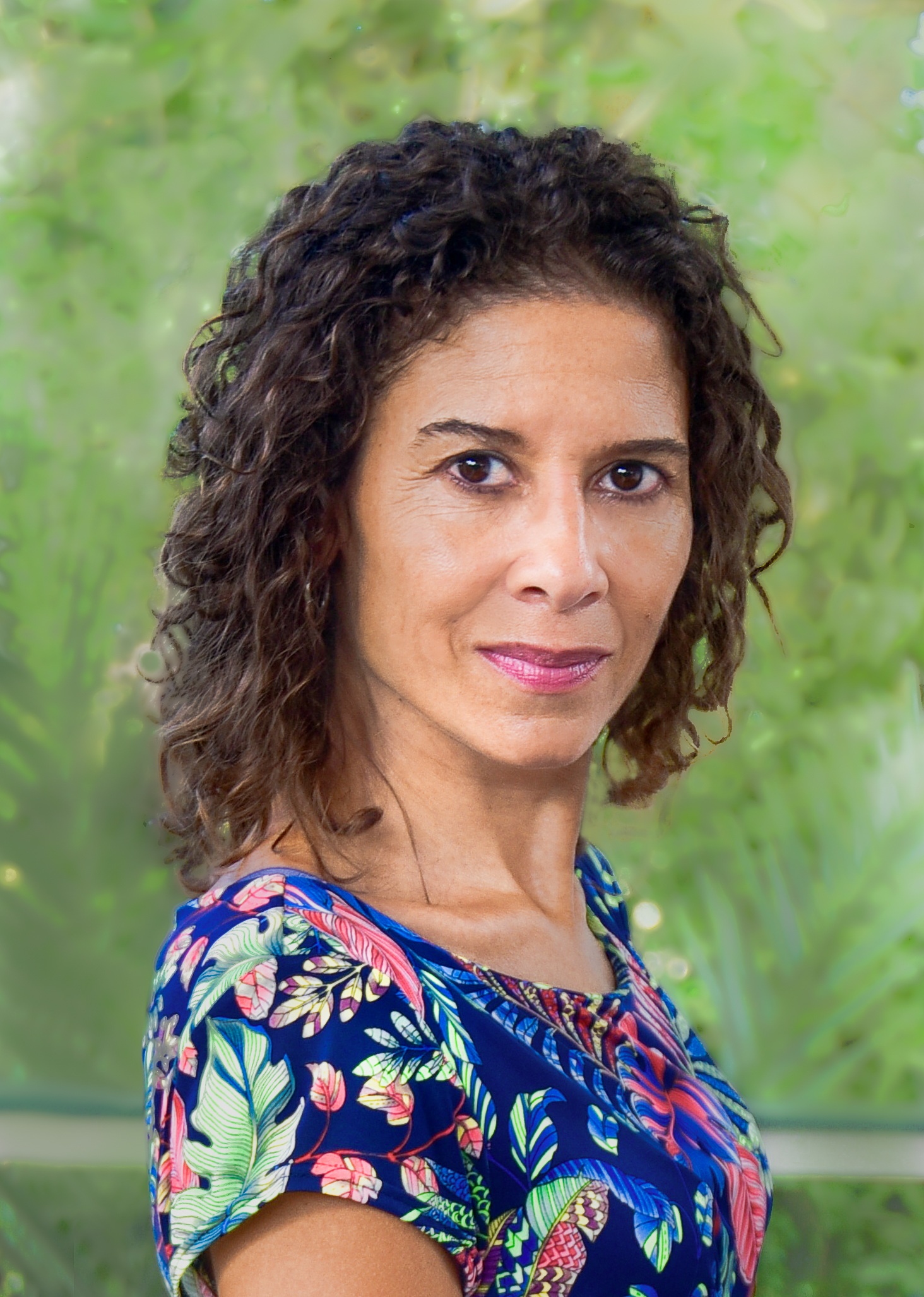
Tessa Leuwsha
(Netherlands, 1967) is a fiction and non-fiction author, documentarian and critic. In 1995 she emigrated to Surinam as a freelance journalist and in 1997 published Reishandboek Suriname, a cultural travel guide. Her first published short story Voor William (For William) won the incentive prize of the Kwakoe literary awards. In 2005 her novel debut de Parbo-blues appeared, followed in 2009 by the novel Solo, een liefde (Solo, a love) about the ambition of two lovers in colonial Surinam who desire a better life. Her non-fictional Fansi's stilte, een grootmoeder en de slavernij (Fansi's Silence, a Grandmother and Slavery, 2015) tells the life of her grandmother. In Plantage Wildlust (2020), she describes life on a Surinamese plantation in the early 20th century, during the period of contract labour, through various characters. De wilde vaart (Tramp Trade, 2022) recounts, in text and image, a boat journey in which Leuwsha and her husband travel Surinamese waters in search of their own core and the resilience of a people. Leuwsha is cultural attaché of the Dutch Embassy in Paramaribo, and writes columns, articles and reviews for various Surinamese media.
Past events
Great Expectations for Suriname?
Tessa Leuwsha and Rihana Jamaludin in some sense share a mirrored life: the one grew up in the Netherlands and went to Suriname, the other grew up in Suriname and left for the Netherlands. Noraly Beyer talks to the writers about Suriname, the Netherlands and literature. In Dutch.