For happiness and fatherland

20050226133530

Information

Date and time Friday 16 January 2004 21:35 tot 22:20 uur
Location Theater aan het Spui - grote zaal

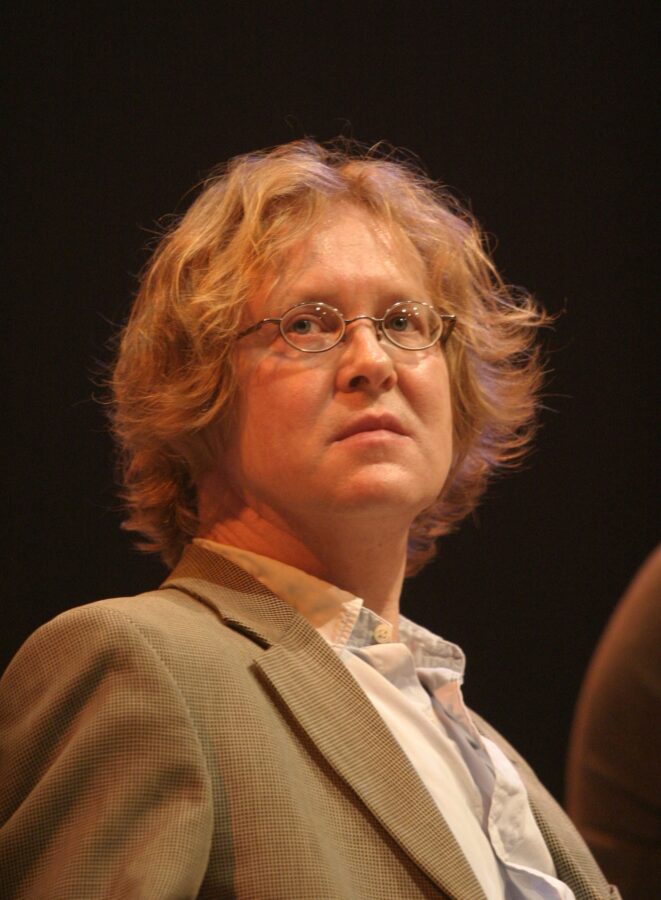
A surpressed people walks towards the New Land. But is new always better? When does an ideal become an obligatory ode or a failure? Should we abolish ideals and is it better to allow dreams to remain dreams? Writers Thomas Rosenboom and Frank Westerman on the future of idealism and writing for a illusion filled society.

Thomas Rosenboom

(Doetinchem, 1956) grew up in Arnhem. He studied psychology in Nijmegen. After three years he broke off his study. As he wanted to become a writer he studied Dutch literature in Amsterdam, in which city he stayed after graduating. In 1982 he made his debut with the story Bedenkingen (Objections) (later included in De mensen thuis (People at Home)) in the magazine De revisor. Publieke werken (Public Works) won him the Libris Literatuurprijs twice (he had already won it for the novel Gewassen vlees (Washed Flesh). Less known but equally eventful is Vriend van verdienste (Friend of Merit) that came before it. His books have found their way to a wide audience and are all available.
20050226133530

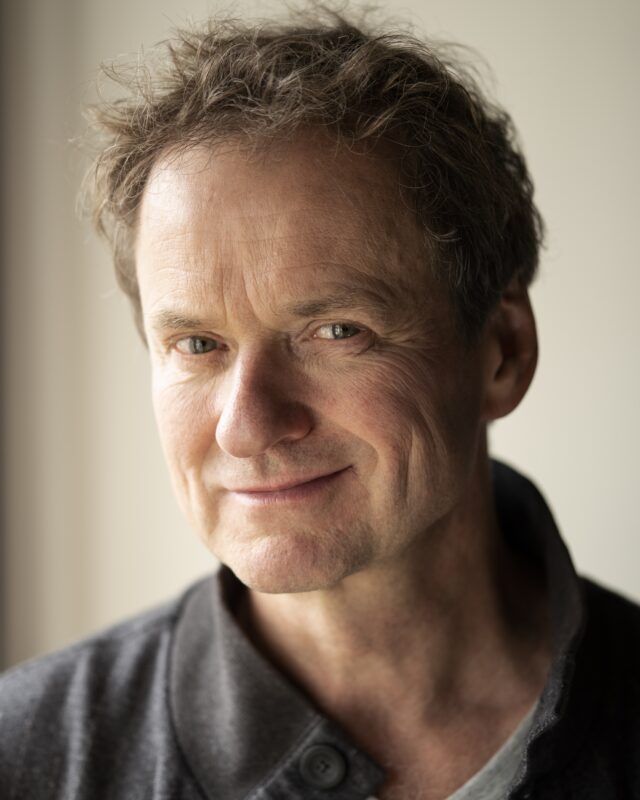
Frank Westerman

(Emmen, NL, 1964) studied tropical agricultural engineering and was a correspondent for the Volkskrant and NRC Handelsblad newspapers in Belgrade and Moskow. He wrote about his time there in 1994's De Brug over de Tara (The Bridge over the River Tara). Together with journalist Bart Rijs he wrote 1997's  Srebrenica, Het zwartste scenario (Srebrenica, the Blackest Scenario). Ingenieurs van de ziel (Engineers of the Soul) was published in 2002, an inquiry into the foundations of the Soviet system and the role of writers. De Graanrepubliek (The Grain Republic), about the struggle between rich gentlemen farmers and communist workers in Groningen, was published earlier. Westerman's novel El Negro en ik (El Negro and Me), inspired by a preserved South African in a Spanish museum, was published in 2004 and won the Gouden Uil prize. His revised and augmented 2015 edition of De Slag om Srebrenica (The Battle for Srebrenica) won the Prinsjes Book Prize for best political book. Een woord een woord (One Word One Word) appeared in 2016, in which he tests the strength of free speech under the pressure of terrorist threats. As a child, he experienced the Molukkan train hijacking at close quarters; as a correspondent, he witnessed Chechen terror in Russia. Drawing on these gripping experiences, he describes a series of hostage dramas. In Zeven dieren bijten terug (Seven Animals Bite Back), Frank Westerman encounters seven magnificent creatures in the wake of Willem Barentsz. Along the way, the reader becomes captivated by the wondrous tale of seven polar animals and what they have to tell us at our latitude.
20250218135334 1

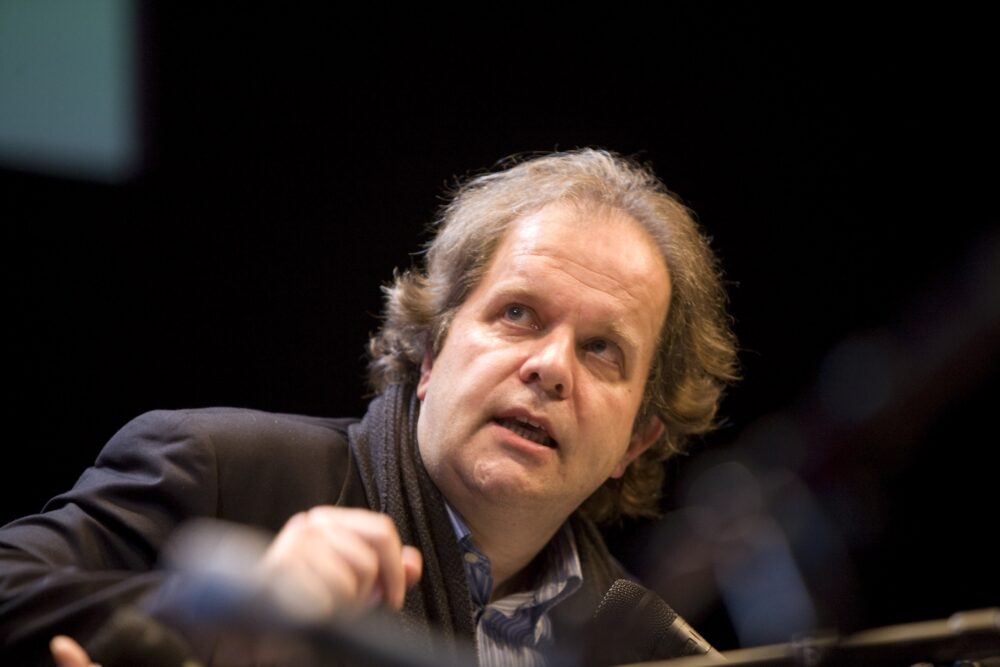
Michaël Zeeman

(Marken, 1958-2009) was a poet, a writer and a commentator, with a regular column on the Forum page and the book pages of the Volkskrant. Zeeman was the editor of the arts section of the Volkskrant and from 2006-2007 its Rome correspondent. In 2006 he and the writer Abdelkader Benali published an exchange of letters, exchanging ideas on politics, life, love and literature. In 2002 Zeeman received the Gouden Ganzenveer (Golden Goose Quill) for his merits for Dutch literature. Zeeman became well-known in the 1990s as the host of his monthly book programme 'Late at night after a short walk', later to be renamed 'Zeeman with books'. In 1991 he published his first volume of poetry, Beeldenstorm (Iconoclasm), winning him the C. Buddingh Prize. His second volume Verhoudingen (Relationships) appeared in 1995. In the same year he published short stories entitled De Verduistering (The Darkening). He died in 2009.
20080206143715

Discover

20 May 2026

Get your 2027 tickets!

Get your Early Bird tickets for the big festival nights, Friday & Saturday Night Unlimited!