Long live satirical poetry

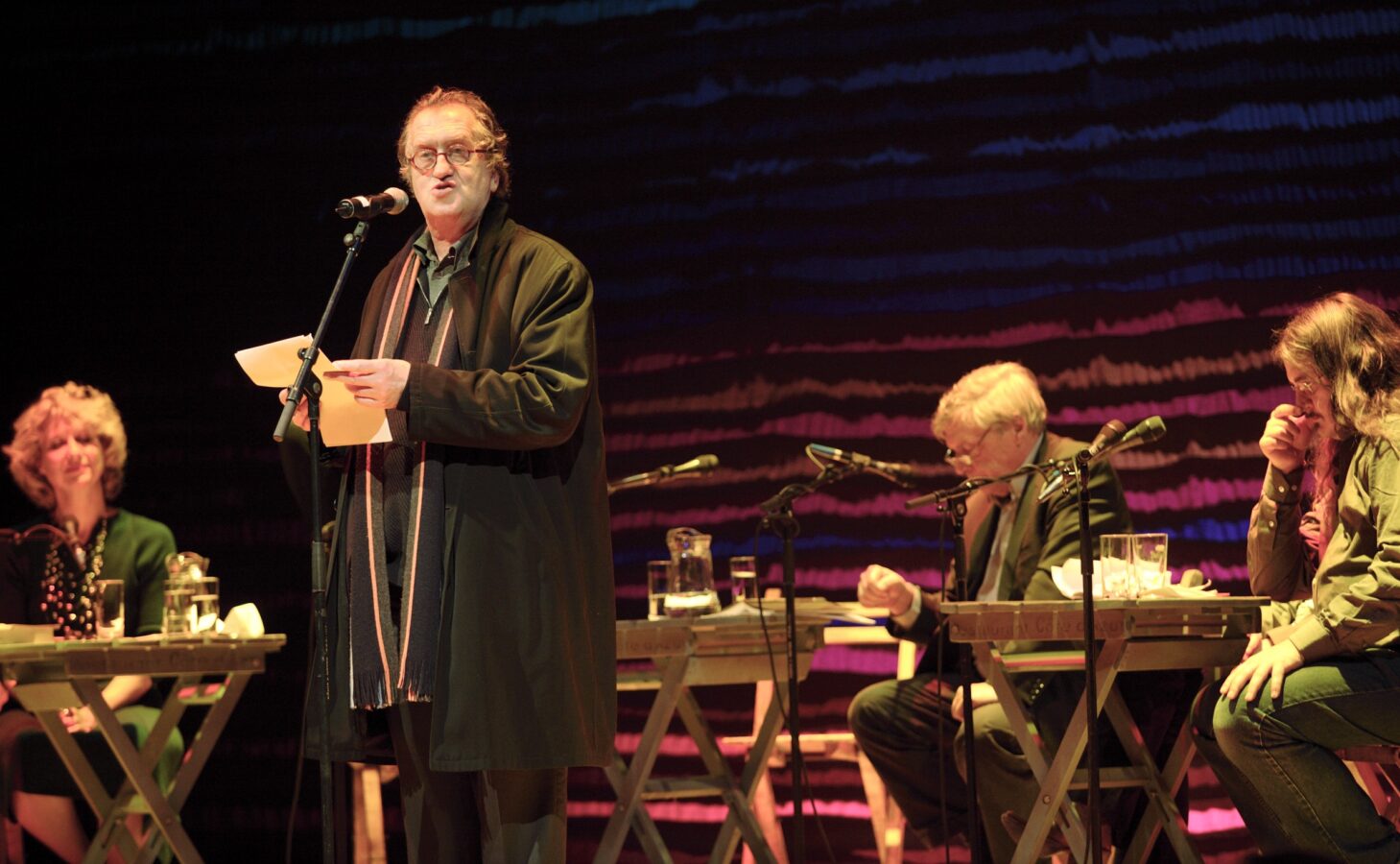
Five poets each wrote a satirical poem on the Dutch character: Maria Barnas, Frank Koenegracht, Gerrit Komrij, Ilja Leonard Pfeijffer and Hans Verhagen. They breath new life into this literary tradition. Chaired by Joyce Roodnat. Dutch spoken.
20060125141310

Information

Date and time Saturday 21 January 2006 22:55 tot 23:45 uur
Location Theater aan het Spui - grote zaal

Een Antwerpse Mis-pop
Een Swijn van den Bisschop
Derft hier komen raesen
En gnurcken, en knorren
En schelden, en morren
En kijven, en kauten
Met Rijmen vol fauten


This is how the poet W.G. Foquenbroch once wrote about an Antwerp bishop. The satirical poem has become less popular over the years. However, this is unfortunate, because the Dutch character lends itself very much to satire. Five poets each wrote a satirical poem on the Dutch character: Maria Barnas, Frank Koenegracht, Gerrit Komrij, Ilja Leonard Pfeijffer and Hans Verhagen. They breath new life into this literary tradition. Chaired by Joyce Roodnat. Dutch spoken.
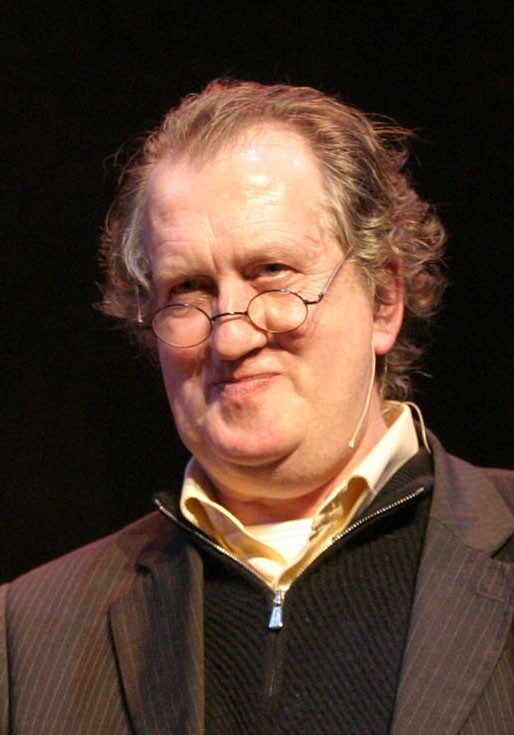
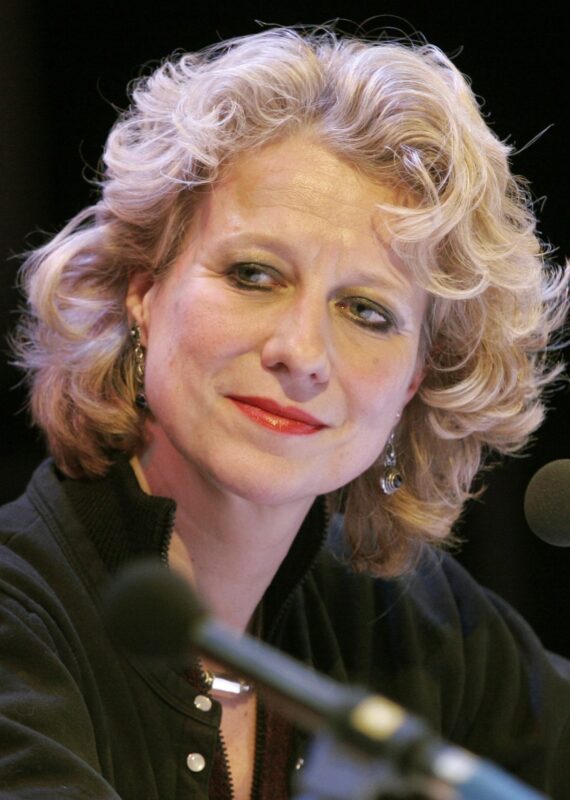
Joyce Roodnat

is a journalist and since 1980 writes for the newspaper NRC Handelsblad about her great passion: film. Since 1995 she is chief art editor of the same newspaper. In the popular feature 'Aan de wandel ' (Rambling) she describes trekking in the Netherlands and the rest of the world. Roodnat also writes literature. Her first novel 't Is zo weer nacht (It will soon be night again) was awarded the Geertjan Lubberhuizen prize and the Debutant prize in 2002. In 1995 she published De bergrede in het licht van de vedantaleer (The sermon on the mount seen from out the vedanta principles), about the most important Hinduistic beliefs and philosophy. This year her second novel was published, entitled Sterrenschot, which is loosely based on historical fragments of the family of her husband Erik van Zuylen.
20050225164058

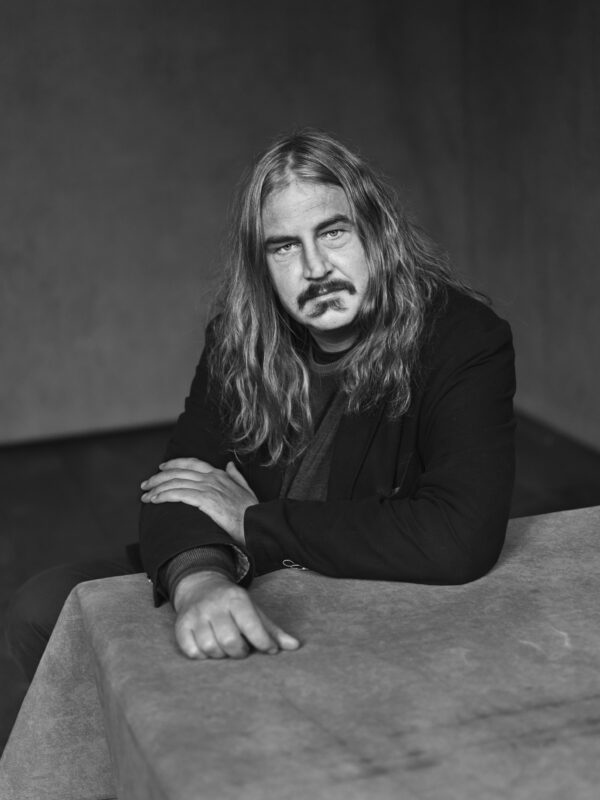
Frank Koenegracht

(Rotterdam, 1945) is a psychiatrist in Leiden. In 1970, acting on advice from Lucebert, he sent several poems to the publishing house De Bezige Bij. One year later he made his debut with the collection of poems Een gekke tweepersoonswesp (A crazy twin wasp). A few years later, in 1976, his second collection, entitled Camping De Vrijheid (Camping Freedom) was published. In 2003 appeared Vroege sneeuw (Early snow), a collection which includes a selection from his earlier works. Koenegracht was awarded twice for his complete oevre: in 1990 he received the Anna Blaman Prize, and in 2001 the Frans Erens Prize. In his poetry he resists again and again the established order. Since his debut he continues to show his disgust of the middle classes. Although a little bizarre, his poems remain yet familiar, maybe because delusion and reality often cross one another. The motto of his recent collection of poems is " Frank Koenegracht's world is not a happy one, however there is a lot to laugh about".
20060125142500

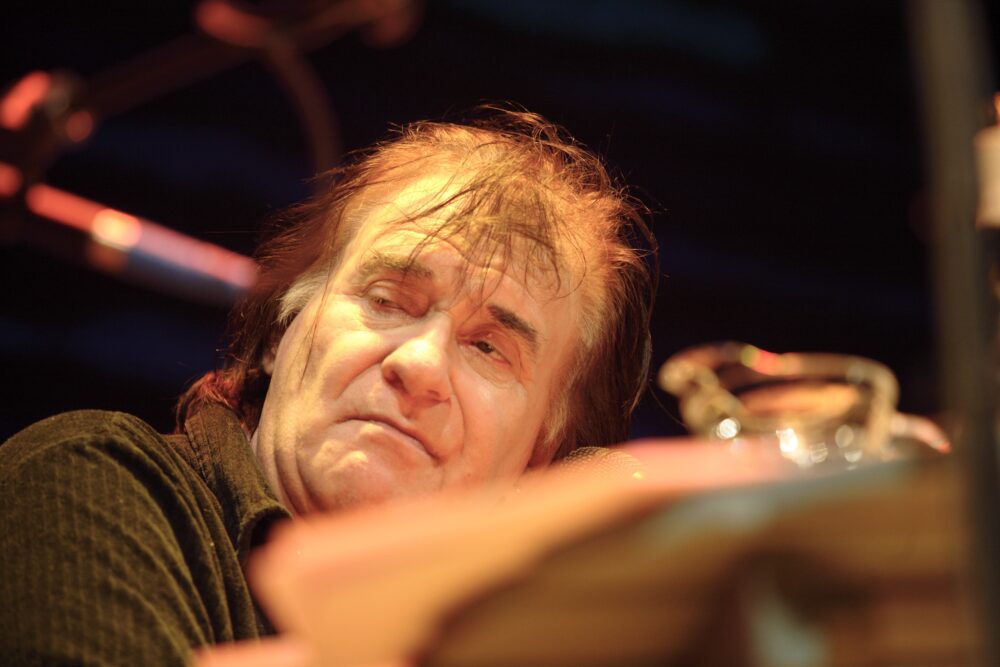
Gerrit Komrij

(Winterswijk, 1944) was the first Poet Laureate of the Netherlands. He is considered one of the best columnists in the country, a novelist, renowned translator, and an enhtusiastic reviewer of poetry. Komrij is a cat in a Strange Warehouse, as he called a book of collected essays that came out in 2001. The world is never a trusted or obvious place, but if you look good, there's always something surprising around. 'I don't think I'm a no-nonsense guy. There's too much noise inside of me'. Komrij, who has lived in Portugal since 1984, is one of the most productive Dutch writers. Since 1968 he has published several works annually. Recently Komrij's choice of the one-hundred best Dutch poems (2008) appeared, in addition to an anthology of Dutch children's poetry in over 1000 poems (2007) and Kakafonie (2006), an 'encyclopaedia of shit'. In 2005 he published Eendagsvliegen (Ephemera, literary diary entries) and a volume of poetry Fata Morgana.
20050226145252

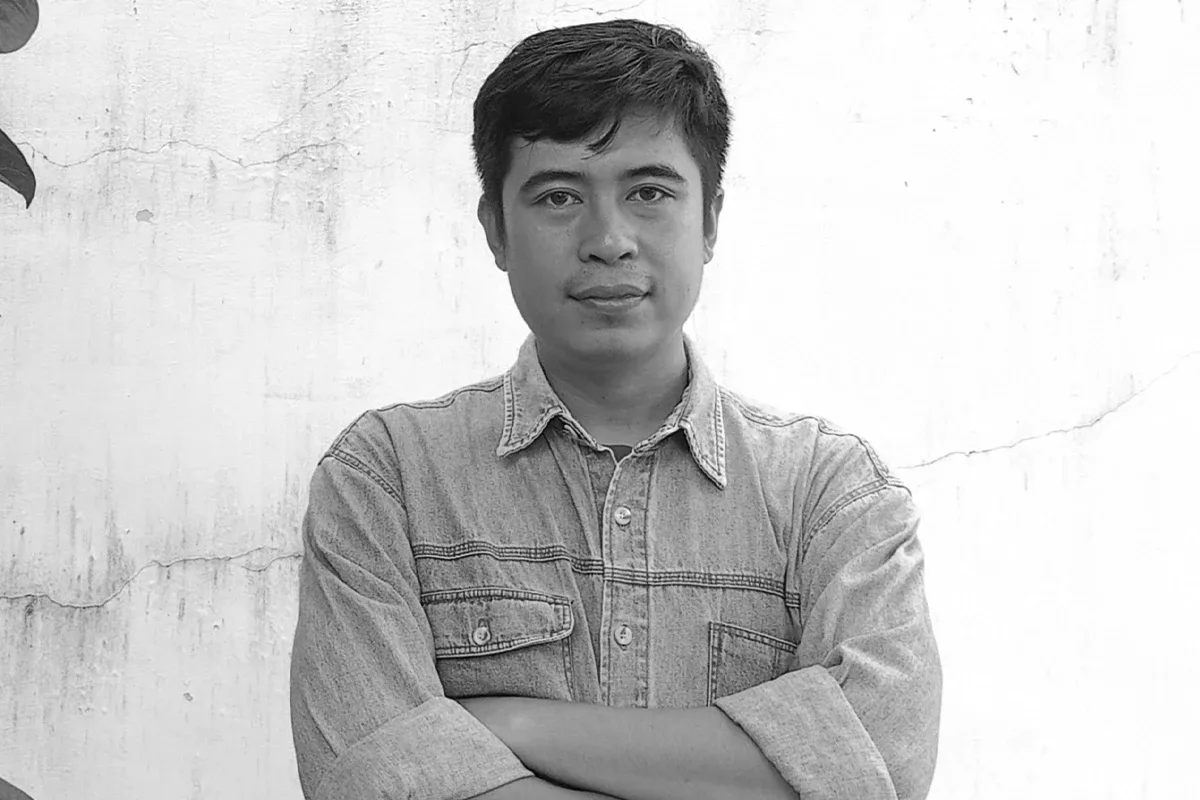
Ilja Leonard Pfeijffer

(Netherlands, 1968) is a classicist and writer. He has more than 40 titles to his name, including poetry, novels, short stories, plays, scientific studies, translations and anthologies. His work has earned many nominations and prizes, including the 2014 Libris Literature Prize for his novel La Superba, an ode to the city of Genoa, where he lives and works. In 2016 he published Brieven uit Genua (Letters from Genoa), an autobiography in letter format and the counterpart to La Superba, which also discusses the publication of the novel. Grand Hotel Europa (2018), a book about love in times of mass tourism, nostalgia, European identity, and a part of the world that has become a museum, was nominated for the 2019 Libris Literature Prize and translated into 10 languages. Pfeijffer never eschews debate, expressing himself in essays, columns and TV programs.
20161024135611 1

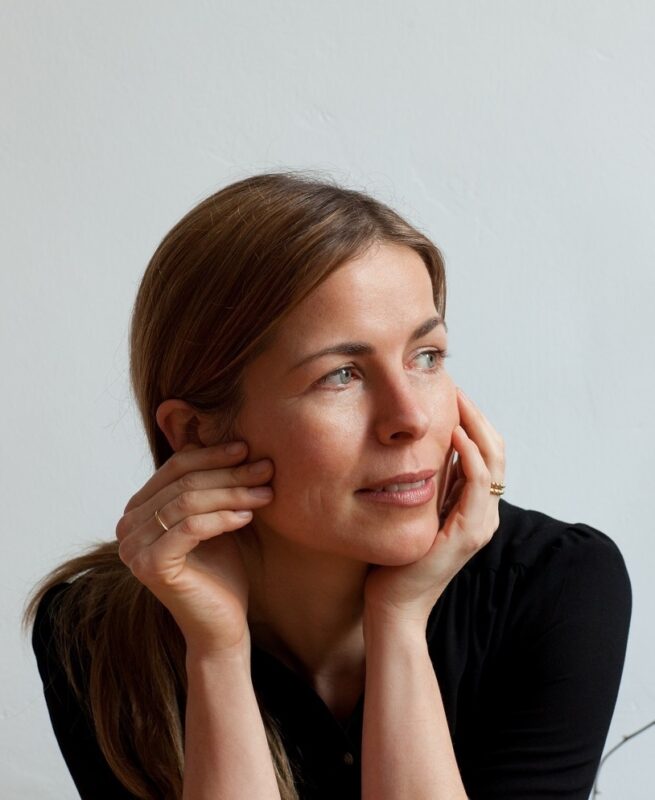
Maria Barnas

(Hoorn, NL, 1973) is a writer, poet, and visual artist. Both her writing and art explore how depictions of reality are shaped and distorted. In 2014 she won the Anna Bijns Prize for Jaja de oerknal (Yaya the Big Bang, 2013). The jury praised the "linguistic universe" of this third collection: "Barnas uses poetry as a way to throw a canvas of words over everything. Each poem is an attempt to capture something ethereal, to preserve, to document." Barnas studied at Amsterdam's Rietveld Academy and Rijks Academy. Her 2003 poetry debut Twee zonnen (Two Suns) won the C. Buddingh Prize in 2004. This was followed by the 2009 J.C. Bloem Prize for Er staat een stad op (A City Stands On It, 2007). Barnas also writes about art and literature for De Groene Amsterdammer and Vrij Nederland magazines, among others. Her NRC Handelsblad newspaper columns from 2007 to 2010 are anthologized in Fantastisch (Fantastic). She also published two novels, Engelen van ijs (Ice Angels, 2007) and De baadster (The Bather, 2000).


20141112170947 1

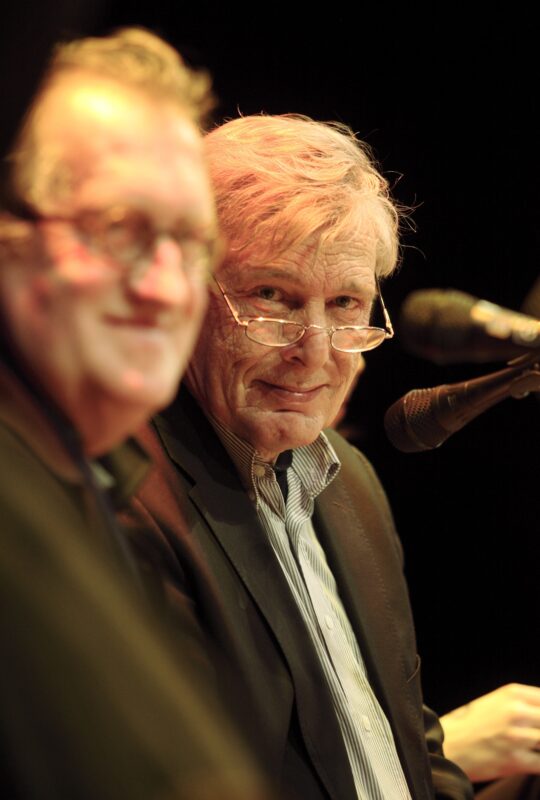
Hans Verhagen

(Vlissingen, 1939) is a poet, journalist, programme maker and painter. He followed a musical and journalistic training and has worked since the age of seventien as a journalist for the daily and weekly press. From 1962 until 1966 he was editor of the magazines Gard Sivik and De Nieuwe Stijl. Not only is he well known as a writer, he also earned a reputation for his film and television programmes, such as 'Hoepla' (Whoops) en 'Het gat van Nederland' (the Dutch hole). In 1961 he made his debut with the collection of poems Anatomie van een Noorman (Anatomy of a Norseman), which he published on his own. Two years later his second collection Rozen & motoren (Roses & engines) was published by a recognized publisher. In 1968 appeared Sterren cirkels bellen (Stars circles bells) and in 1971 Duizenden zonsondergangen (Thousands of sunsets), which reveals Verhagen's capabilities as a romantic poet. Recently his latest work was published, entitled Moeder is een rover (Mother is a robber). For some years now he has been working as a succesful visual artist.
20060125142131

Discover

20 May 2026

Get your 2027 tickets!

Get your Early Bird tickets for the big festival nights, Friday & Saturday Night Unlimited!