Syria, What's Next?

20150430103416 1

Watch the video-registration of this programme. What will the future of Syria look like once the war has come to an end? Moderator and writer David Van Reybrouck discussed this question with the Syrian novelist Nihad Siries and the Palestine/Syrian poet Ghayath Almadhoun. Both are in exile. They read from their work, and met Laila Zwaini, a researcher on shari'a, rule of law, tribes, and social change in the Arab and Muslim World. They were joined by the Belgium writer Lieve Joris, who wrote a book about Syria. Will Syria go the same way as Iraq, where the attempt to establish a democracy has failed completely? Will it, in all its religious and ethnic diversity, ever become a stable state? Could it ever become the home that the Syrian authors in exile dream of?

This evening is in English. A programme of B Unlimited, organised by Writers Unlimited in co-operation with The Hague Central Library, and with support of the Municipality of The Hague, PEN Netherlands and Theatre of Wrong Decisions. Curated by Tom Dommisse.

Information

Date and time Friday 29 May 2015 from 20:30 to 22:00 hrs
Location Podium B - Centrale Bibliotheek Den Haag, Spui 68, 5e etage

Lieve Joris

(Neerpelt, 1953), a Flemish prose writer, studied psychology in Leuven, Belgium, and journalism in the Netherlands. Her novel Een kamer in Cairo (A Room in Cairo) tells us about her stay in Cairo, and her awareness that she'll never be part of that strange world. In 1985 she made her first journey to the former Belgian colony the Congo. In Terug naar Kongo (Back to the Congo) (1987) she reflects upon her experiences and impressions there. Later she focused on the Middle East and wrote the book De poorten van Damascus (The Gates of Damascus) (1993). In her book Dans van de luipaard (Dance of the Leopard) (2001) she tells about her second stay in the Congo in 1997, a time of unrest and civil war. In her newest book Op de vleugels van de draak (On The Wings of The Dragon), Joris journeys between Africa and China. Lieve Joris is a committed observer and knows like no other how to portray a post-colonial Africa. Her work has been awarded repeatedly, both in Flanders and in France.
20071129153838

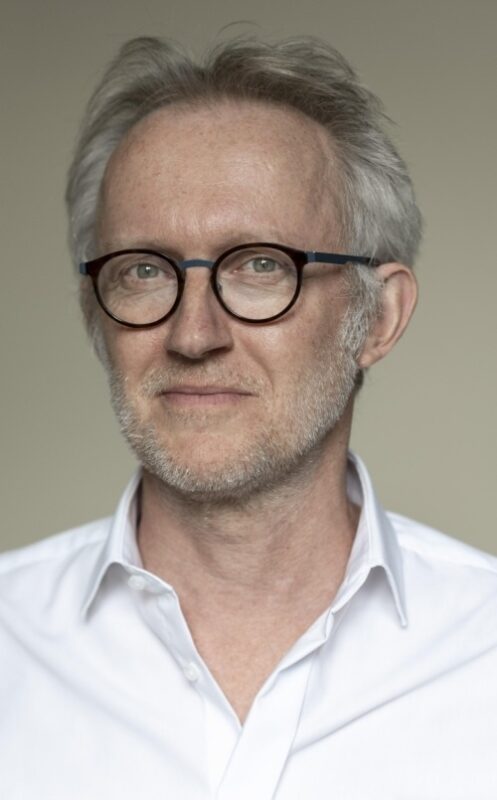
David Van Reybrouck

(Belgium, 1971) is an author, historian and archaeologist, known for his multifaceted contributions to literature and intellectual discourse. He is currently Philosopher Laureate of the Low Countries. Upon his appointment, he published De wereld en de aarde (The World and the Earth, 2025), in which he makes a groundbreaking proposal to radically broaden our thinking—and our politics. For the greatest security issue of our time is not the world with its mutual conflicts, but the earth, which is becoming increasingly disrupted. His oeuvre covers a range of genres, including historical non-fiction, poetry, and theater. Among his best-known works are Congo (2010), about the country's bewildering history, and Revolusi (2020), which places Indonesia's struggle for independence in a global perspective through eyewitness accounts. In addition to his literary work, Van Reybrouck is known as ‘one of Europe's leading intellectuals’ (Tagesspiegel), whose ideas relate to themes such as democracy, climate, and colonialism. He regularly publishes opinion pieces in international publications. 

Go to the website of David Van Reybrouck
Instagram: @david.vanreybrouck
20251015162805 1

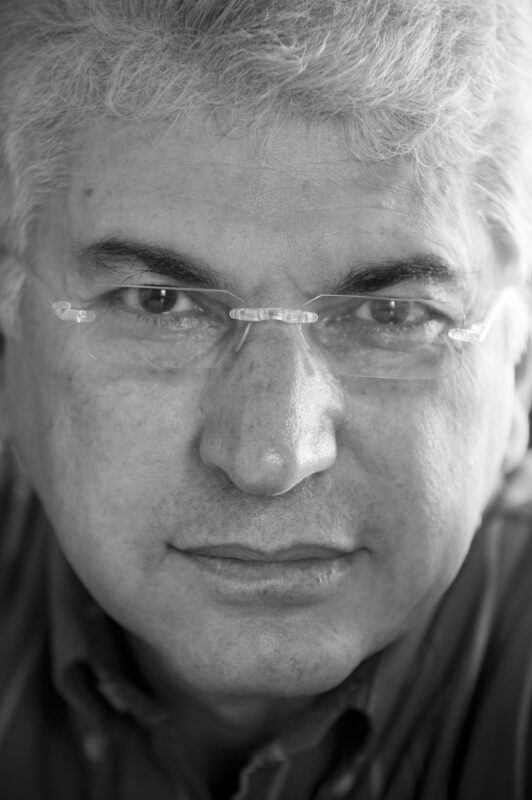
Nihad Siries

(Syria, 1950) was a construction engineer before becoming a renowned writer in the Arab world. In addition to novels he writes popular tv series. His novel The Silence and the Roar (2004), this year appeared in a Dutch translation and is still of topical interest. Siries' great strength is that he succeeds in turning fear into humor. The international press compared him to Orwell, Kafka and Kundera. In his novel Siries describes the commemmoration of the twentieth year in power of a ruler. A cheering crowd blocks the streets. The writer Fathi Chin, a man in his thirties and an opponent of the regime, wants to visit his mother but is swept along by the frantic crowd. When a woman falls, he helps her and ends up in a hospital and in the tentacles of bureaucracy. He ends the day in the arms of the beautiful Lama - in a country where sensuality between two walls is the only freedom left.
20130909151143 1

Laila al-Zwaini

studied Arabic language and cultures (MA), and Dutch law (LL.M) at Leiden University. Between 2007 and 2009, she headed the Rule of Law Unit of the United Nations Assistance Mission in Afghanistan (UNAMA). From 2001-2005 she co-directed the action-research project Rights at Home for the International Institute for the Study of Islam in the Modern World (ISIM, Leiden). Al-Zwaini works as an independent scholar and lecturer, and advises national and international organisations and governments. In 2013, she established Re:Orient, a bureau for applied research on shari'a, rule of law, tribes, and social change in the Arab and Muslim World. She currently develops a project to advance the discourse on civilism (madaniya) and the civil state in the Arab world.
20150430201818 1

Discover

20 May 2026

Get your 2027 tickets!

Get your Early Bird tickets for the big festival nights, Friday & Saturday Night Unlimited!