Krusa Laman - Curaçao

20100408185333

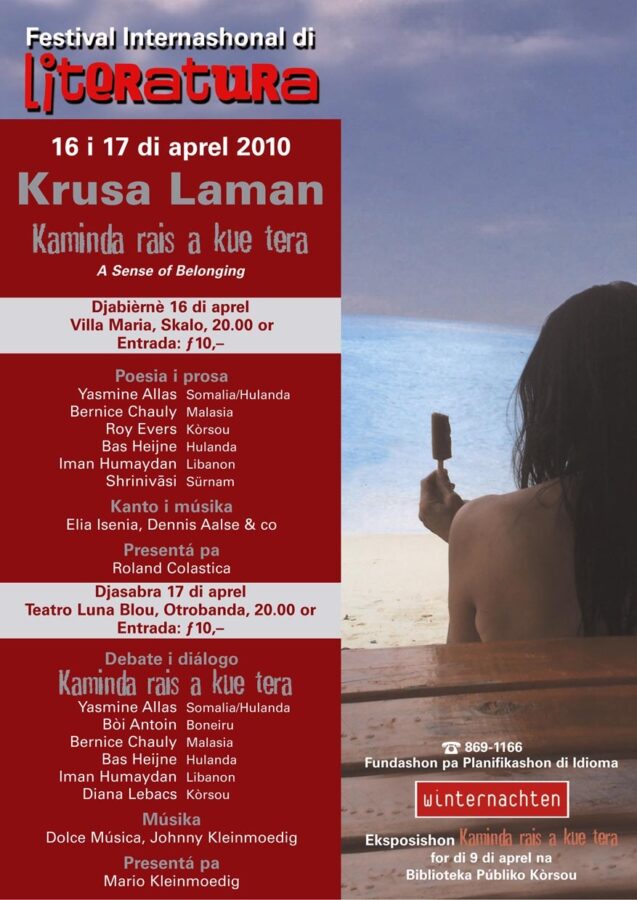
On Curaçao the Fundashon pa Planifikashon di Idioma (Foundation for language planning), is the organisational partner for Winternachten. During the festival Krusa Laman on Curaçao all writers and performers will use their own language. Their words will be projected in the local language, Papiamentu. The translations have been taken care of by the FPI. This year's theme 'A sense of belonging' has been translated as the metaphor Kaminda rais a kue tera.
This theme is leading for the festival in Curaçao, and will be dealt with from different perspectives. A substheme is migration, and migration in literature. For FPI, the Curaçao anthropologist Richenel Ansano wrote a sensitive essay, Between Love and Terror: Having a Sense of Belonging is no Joke. This essay is available for free for the audience.

The public library of Curaçao also gives special attention to the theme Kaminda rais a kue tera. On 9 April there will be a festive opening of an exhibition on Krusa Laman and the theme, with all sorts of information on the participating writers and artists, their work, countries of origin, etc..

Then there are the workshops for secondary school pupils, at the schools that will be visited by the authors. Creative writer Elodie Heloise is preparing the children and students for the festival in workshops. During these workshop the pupils will deal with the theme, and deliver materials for the exhibition in the library.

Of course the theme A Sense of Belonging is also present in the public performances. There are the readings of the authors, but besides this the visual artist Frouwkje Smit has made an artistic slideshow with pictures of a number of well known and lesser known people from the island, including writers and artists. Al the authors were asked to choose their favourite spot on Curaçao, where they feel most at home. They also chose a text with the spot. The slideshow is combined with music, and will be shown on Friday 16 April in Villa Maria, Scharloo. The versatile artist Roland Colastica will be the M.C. of that evening.

Information

Date and time Friday 16 April 2010 from 20:00 to 22:30 hrs
Location Villa Maria - Curaçao

Bas Heijne

(Nijmegen, NL, 1960) writes essays, short stories and plays, and is a columnist with the daily newspaper NRC Handelsblad. He published the novels Laatste woorden (Last words) and Suez and received the Henriëtte Roland Holst Prize in 2005. In 2011's Moeten wij van elkaar houden, het populisme ontleed (Do We Have to Love One Another? Populism Dissected) Heijne shows how globalisation and individualism pave the way for populism. Angst en schoonheid (Fear and Beauty) was published in 2013, an essay about Dutch writer Louis Couperus, whom Heijne admires. In the same year his documentary about Couperus was broadcast. In 2015 he hosted the five-part documentary De volmaakte mens (The Perfect Human). In 2016 his essay Onbehagen – nieuw licht op de beschaafde mens (Discontent - new light on civilized man) was published. In 2017 Heijne received the P.C. Hooft Award for his essayistic works.
20131029170754 1

Bernice Chauly

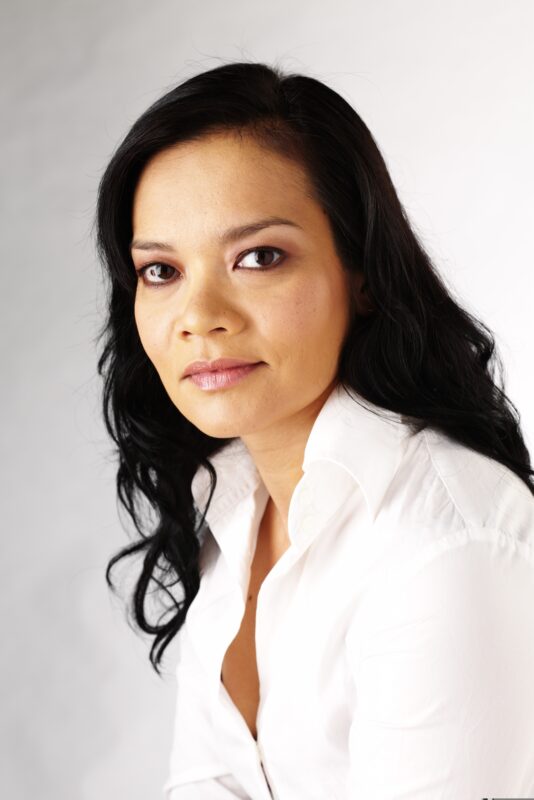
(Georgetown, Penang, Malaysia, 1968) is a Malaysian writer, poet, actor, photographer and filmmaker. She graduated with a B.Ed in English Literature and TESL (Teaching English as a Second Language) from the University of Winnipeg, Canada, and has worked extensively in the arts for over 20 years. Of Chinese and Punjabi parentage, her work stems from the desire to tell stories, and she has worked with marginalised communities from sex workers and refugees to indigenous peoples, in mediums that incorporate film, photography and prose. She has published two collections of poetry, going there and coming back (1997), The Book of Sins (2008), a collection of short stories, Lost in KL (2008) and a critically-acclaimed memoir Growing Up With Ghosts (2011), an exploration of grief, personal and political history, and bloodlines. She works in both Bahasa Malaysia and English, and her work has been exhibited, screened, published locally and internationally. She is also the founder of Readings and CeritAku, two live literary platforms in Kuala Lumpur, now in its eighth year. She lives in Kuala Lumpur with her two daughters and she keeps a blog of her work at bernicechauly.wordpress.com.
20100224115701

Iman Humaydan

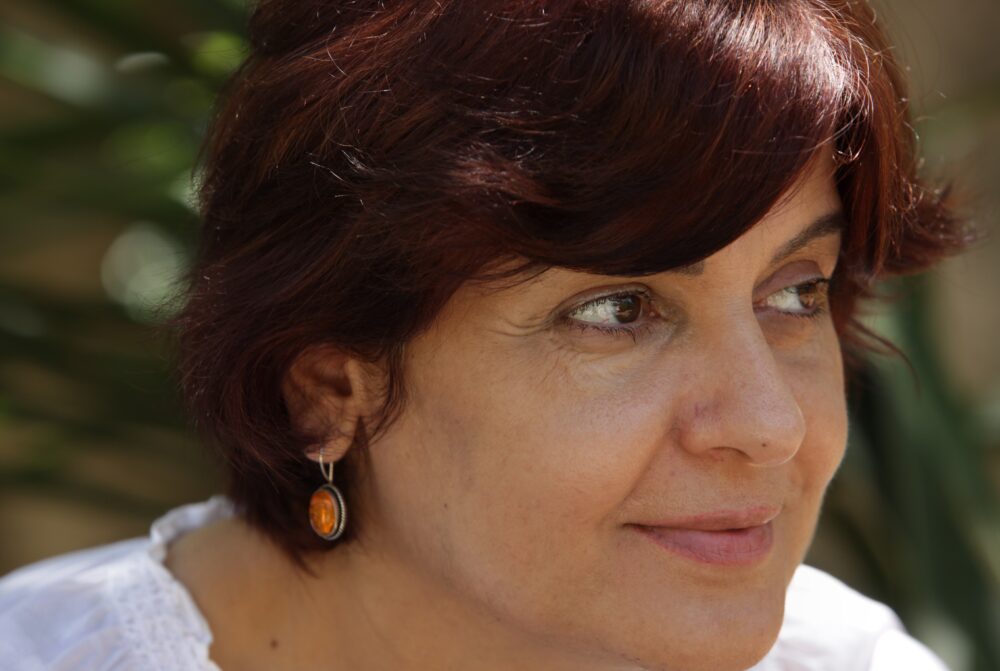
(Libanon, 1956) broke through internationally in 2004 with her debut novel B as in Beirut. The story is told by four different women, who have to learn to cope with the consequences of the civil war. The most penetrating is the story of Warda, who goes crazy with grief and guilt-feelings because her father dies in a bomb attack and she loses her little daughter on top of that. In her second book Wild Mulberries (2008) Iman Humaydan describes life in a small Lebanese village in the 1930s. The main character Sarah is a young girl dreaming of a better future and a meeting with her mother, who fled the village and its patriarchal rules when Sarah was small. Iman Humaydan likewise grew up in a small Lebanese village, but in a tolerant family. Her third novel Hayawat Okhra (Other Lives) came out in 2010. It recounts the life of a woman coming back home after so many years of exile to rediscover her city and past. Hayawat Okhra will be published in English and French by the end of 2011. She studied sociology in Beirut and works as a researcher, journalist, and in launching and implementing development projects in Lebanese rural areas.
20091111113147

Yasmine Allas

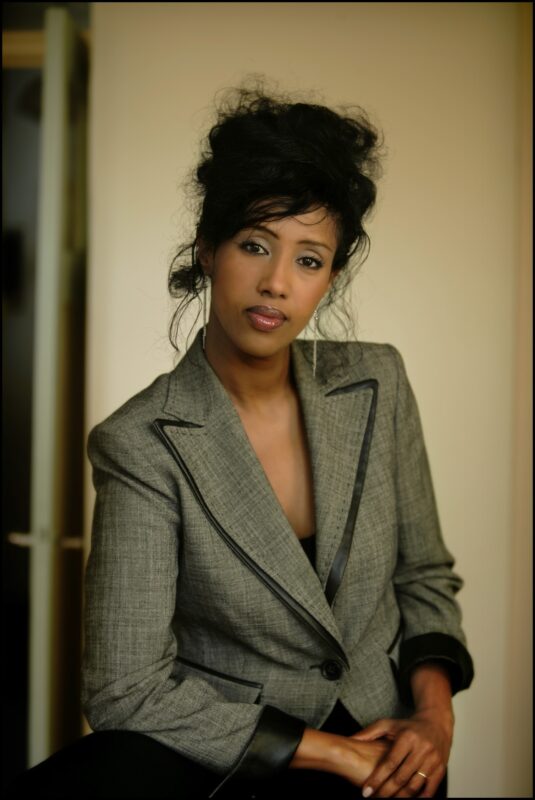
(Somalia, 1967) fled her native country and settled in the Netherlands in 1987. First she wanted to become an actress, but now she has made a name for herself as a writer. In her novel Een nagelaten verhaal (A Bequeathed Story (2009), she describes a young woman who, invited by a documentary film maker, returns to her motherland for the first time after 23 years. It turns out to be an emotional journey, as she discovers that the country has been ruined, and little is left of her past. Yasmine Allas has been involved in the public debate in the Netherlands. Her book Ontheemd en toch thuis (Homeless Yet Home, 2006) is a collection of essays on life in the multicultural Netherlands, published in the Volkskrant. She calls a spade a spade and often touches sour spots. To her, religious fanaticism is a divisive element in society and must be battled. Social wrongs have played a role in her work from her debut, Idil, een meisje (Idil, a Girl, 1998), in which she describes the troubled life of a Somali girl and exposes the circumcision of women.
20121030153636

Diana Lebacs

(Curaçao, 1947), has Indonesian, European, local, Surinamese and Indian roots. She was a teacher, school leader, trainer and coach for educational innovation and has been writing since she was 23 in Dutch and Papiamentu. On her island Curaçao, besides being known as a writer, she is also known as an actress, storyteller, reciter, dramatist/stage director and she’s also actively involved in stimulating and coaching new local writing talent. She obtained her Bachelor of Education in Papiamentu at the Faculty of Arts of the University of the Netherlands Antilles (UNA), and is currently doing her Master of Education in Papiamentu. She received the Zilveren Griffel for her children’s book Nancho van Bonaire (Leopold, 1976). And in 2003 she was awarded the Culture prize for Youth literature of the Prins Bernhard Cultuurfonds Nederlandse Antillen en Aruba for Caimins Geheim (Leopold/Stichting NANA, 2001). In 1994 she published her first adult novel: De langste maand (In de Knipscheer, 1994), which shows the jungle of drug addiction and unemployment in Curaçao. Her most recent publications are a picture book in Papiamentu called, Fula fula (2005, publication Rotary Curaçao), ‘Vrouwen aan het woord: Waarover we niet moeten praten’ (2007, In de Knipscheer). Unda Olivier ta / Waar is Olivier?(2009) is her latest children’s book in Papiamentu and Dutch, published by Fundashon Sembra Buki in Curaçao. Currently, Diana is working on her second adult novel.
20100407132310

Elia Isenia

(Curaçao, 1957) is a singer, composer, cultural icon and story teller. She also writes poems and recites them. As a cultural agent, she receives a lot of information from the elderly about the traditional culture of Curaçao. It is from them that she has learned various work songs. Elia is often invited to schools and organizations to share her knowledge and experience with them. Besides all of the above, she is an expert in seú, tambú and tumba, the authentic rhythms of Curaçao. In 1991 Elia became the first Tumba Queen of Curaçao. In 2010 she was crowned for the third time as Tumba Queen for her winning tumba Mi pueblo a mandami (My People Have Sent Me), for which Elia herself wrote the lyrics and melody. On several occasions Elia represented Curaçao abroad, among others, in Cuba, Venezuela, the Dominican Republic, Ecuador, Suriname and the Netherlands.
20100407132415

Roy Evers

(Curaçao, Otrobanda, 1947), a mathematician and computer specialist, considers himself a stranger in The Land of Writers. Otrobanda, the neighborhood where he was born and raised, is where he harvests his inspiration. In 2006 he was proclaimed ‘Baluarte di Otrobanda’ (Otrabanda Stalwart), an achievement award for Otrobanda natives. In his book Si no yobe lo pinga (2006), we can follow the adventures of Katan, the typical granny, mother or auntie from Curaçao, reflecting daily life in the alleys of Otrobanda. Using the pseudonym ‘Kompader’ (godfather), he successfully writes for ordinary people. In his opinion, Curaçao finds itself in a crisis of identity and in his stories he holds up a mirror to its face. In Awa di dos be no sa muha makaku (2007), the Curaçao man is typified by the protagonist Nando, a married man with two children and two lovers. In Komehein ta traha kas pa prikichi buta aden (2008) and Sansaña den Sabana (2009), he lets animals speak, stirring the imagination of the reader. His most recent book Curaçao, kort door de bocht (2009) is written in Dutch and contains one-liners addressing the Curaçao culture to the wise. Roy Evers is a columnist of the Antilliaans Dagblad and regularly submits letters to editors of newspapers.
20100407132221

Shrinivási

(Suriname, 1926) has been called the 'poet of the encounter' as he brings together cultures and people in his work. Born Martinus Haridat Lutchman, the teacher at a young age acquainted himself with his Indian roots. He was one of the first poets to write in Sarnami, the mother tongue of the Hindustani in Suriname and the Netherlands. He published some poets in Hindi too, but the larger part of his work is in Dutch. His first poems appeared in 1952 under the pen-name Fernando, but later he adopted the Hindi name for 'citizen of Suriname': Shrinivási. The poet in his work sings the praise of the multicultural population, the climate and nature of his native country. Since his debut Pratiksha (1968) Shrinivási has published various books of poetry and short stories, which stand out for their quality and musical and metaphorical language use. He collaborated in assembling various anthologies of Surinamese literature, including Diversity is power (2007). In 1984 Geert Koefoed collected a major anthology of Shrinavasi's work: Een weinig van het andere (A little of the other). In 2007 he moved back to Curaçao, where he died in 2019.
20060810113155

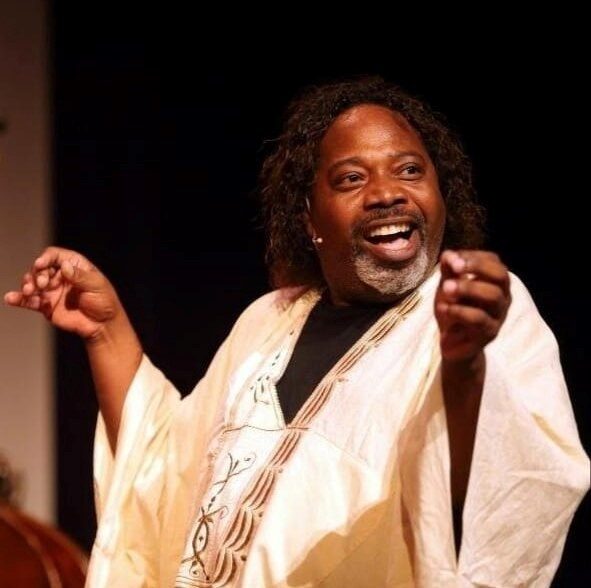
Roland Colastica

(Curaçao, 1960) is a writer, poet, playwright, actor and teacher. He made his debut in the 90s, and published, among others, books with poems and stories entitled Rueda di fe and Djis kant’i bo. After that he wrote various children’s books and gave presentations at book and theatre festivals in many different countries. He has succesfully presented his monologue Ninga bon on numerous occasions. Another one-man show by Colastica is Fo’i bo kuenta, a tragicomic mixture of stories, poems, sketches, music and songs. He has also participated in international literature festivals, like Een zee van verlangen (2001), Winternachten and Krusa Laman at The Hague, Curaçao, Aruba and Bonaire. In 2006 he received the highest cultural award in Curaçao, namely the Premio Cola Debrot for his work in the field of dramaturgy and theatre. He wrote Vuurwerk in mijn hoofd (Fireworks in my Head), a youth novel in Dutch. He is currently — thanks to the support of the Dutch Foundation for Literature — a writer-in-residence in Amsterdam, where he is working on a novel for adults.
20260305111733 1

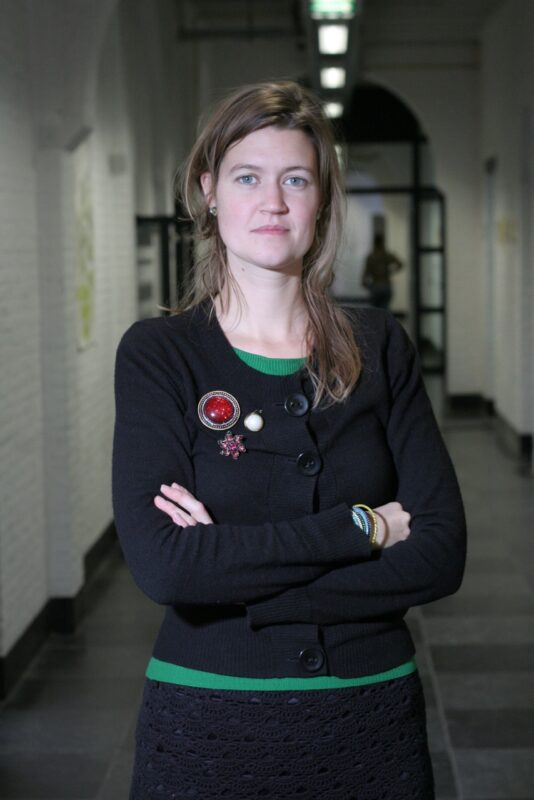
Frouwkje Smit

(Assen, the Netherlands 1980), studied photography at the art academy AKI /ARTEZ in Enschede (2000-2004). Together with other artists she worked for two years in the free form system and organized art projects. After that she did a Master education in documentary photography and moving image at the Post Sint Joost Academie in Breda (2006-2008). She sees a new challenge in each work of art. It is often about people who are looking for a new existence out of sheer necessity or in all freedom. Sometimes it is about the journey itself, the present (dreams), the now or the past (history, memories). With this, Smit wants to tell a story; her photography, videos and installations are an invitation to start an open dialog. She collects those stories both in the Netherlands and during her trips. She has lived in Uganda (Africa) for a year and she currently lives in Curaçao. Especially for the literature festival Krusa Laman in Curaçao and the corresponding theme A Sense of Belonging or Kaminda rais a kue tera, Smit, by order of the FPI, has made a slide show of the favorite places and texts of some Curaçao authors and artists. This will be shown in Villa Maria on Friday evening, the 16th of April.
20100407190129

Dennis Aalse Ensemble

Dennis Aalse (Curaçao, 1965) studied Classical music and jazz at the Sweelinck Conservatorium in Amsterdam and music therapy at the Hogeschool Utrecht. Dennis is a musician, composer, arranger and music teacher. He can play the trumpet, trombone, tuba, horn and the piano. He is the founder of the Dennis Aalse Big Band. Furthermore, he is the musical director of Stichting Artefamia Productions and the children’s band 3MGN (Dreamgene). Dennis has performed in the following bands, among others: AKEDE/Relampago/Toque de Mujer (own bands, specialized in Caribbean music); Amstelveen Symfonie Orkest led by Saskia Boon (Classical music); FRA FRA Sound led by Vincent Henar (Jazz/Surinam Beebop); Boogie Woogie led by Jaap Dekker (Jazz/Blues/Mainstream); Zamanakitoki led by Eric Calmes (Caribbean Jazz). He has produced more than 800 CD-recordings, including for Dhaddy Brokke, Oscar Hernandez (USA), Ced Ride, Tony Sherman, ERA, Edsel Juliet and Gordon.
Over the years he has composed and arranged for various bands such as Oscar Harris, Rick Breeze (Through my eyes), William Souvenir, Tutty Hansen (Ban bèk n’e rais), Hensley Ogenia (Christmas Wish), Orquesta AKEDE ( Amor de mis sueños), Cyrille van Hoof (Crazy from the heart). He is currently a music teacher at Ban Bria (MBO), SGP (VSBO) and FOSK.
20100409073447

Discover

20 May 2026

Get your 2027 tickets!

Get your Early Bird tickets for the big festival nights, Friday & Saturday Night Unlimited!