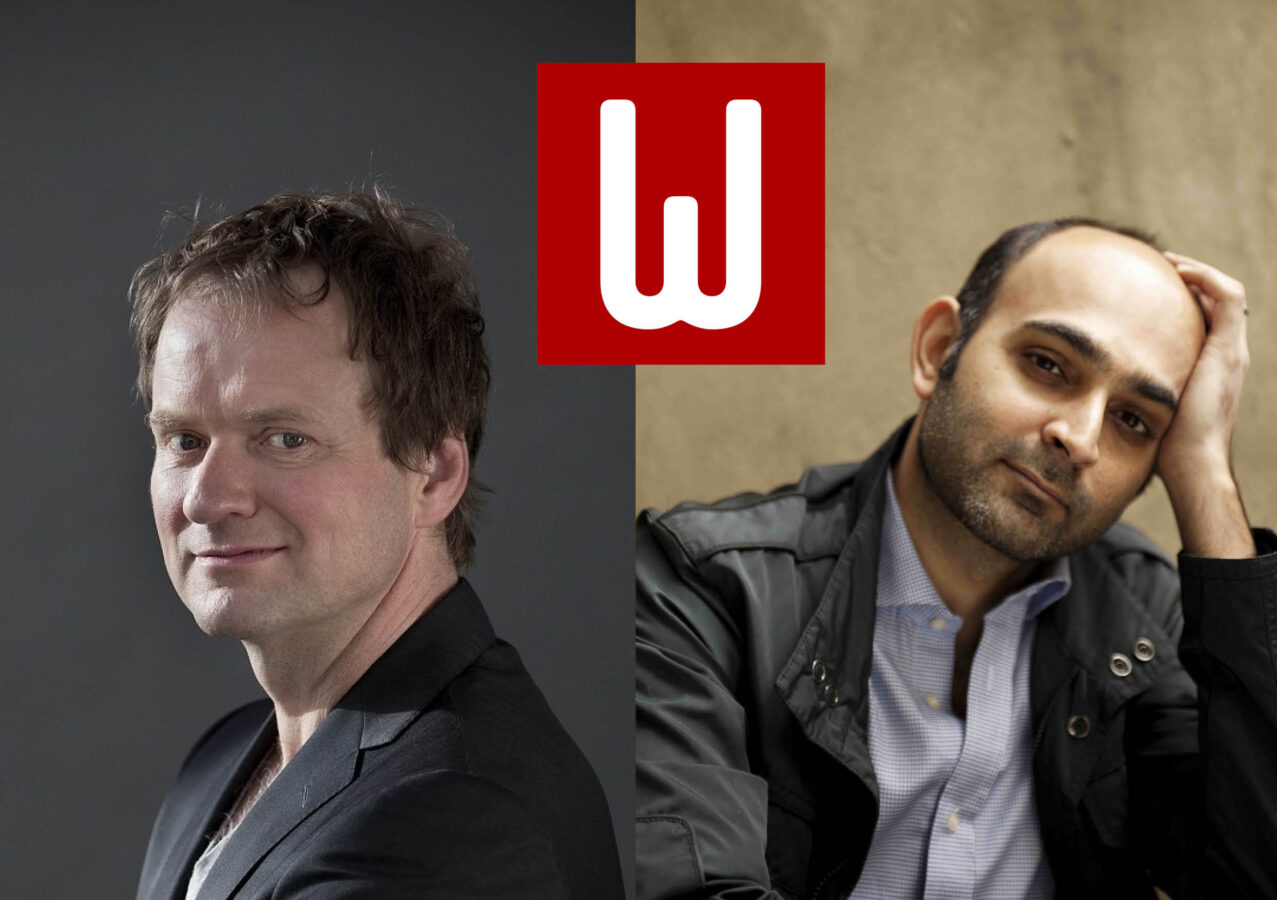
Frank Westerman meets Mohsin Hamid

20171129170202 4

Mohsin Hamid's novel The Reluctant Fundamentalist (2007) is educational: it shows how hurtful our way of doing things can seem to an outsider. And how the sheer power of the West - apart from the question of whether it is justified - creates much bad blood among people who want to take part in it with their talent and intellect, but who continue to feel shut out. This was written by Leonie Breebaart in Trouw newspaper in a discussion of Hamid's bestseller.

Now, one decade later, Mohsin Hamid had a conversation with journalist and writer Frank Westerman. The latter takes his readers back - among others in Srebrenica, the Blackest Scenario and especially in A Word, a Word - to terrorist acts from the recent past.

Which are the right words and deeds to win the battle of ideas with the fundamentalists? The conversation was hosted by Chris Keulemans.


Right after the performance, Mohsin Hamid and Frank Westerman were at Van Stockum Bookshop in the foyer for a booksigning session.

Information

Date and time Saturday 20 January 2018 from 14:45 to 15:45 hrs
Location Theater aan het Spui - Zaal 2

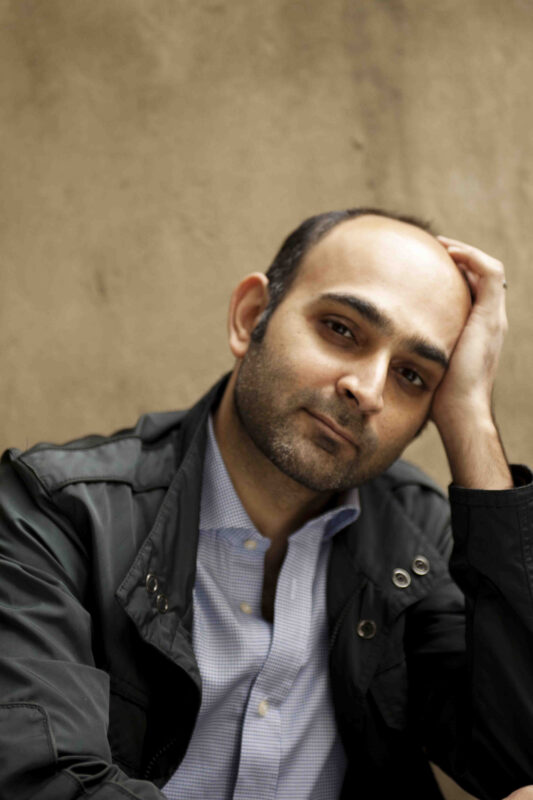
Mohsin Hamid

(Lahore, 1971) grew up in the US and Pakistan. He started writing his debut Moth Smoke (2000) during his studies at Harvard. This innovatively written novel, in which an ex-banker becomes addicted to heroin, became a cult hit in India and Pakistan. The international bestseller The Reluctant Fundamentalist (2007), about a Pakistani who gives up his top job in the US due to his disappointment with the West, was turned into a film. After his third novel, How to Get Filthy Rich in Rising Asia (2013), he wrote Discomfort and Civilization (2014), an autobiographical acount about politics, culture and religion, and Exit West (2017), a novel focused on a refugee couple in love. He also writes essays and opinion pieces in publications such as The Guardian, The New York Times and The International Herald Tribune.
20170928163646 1

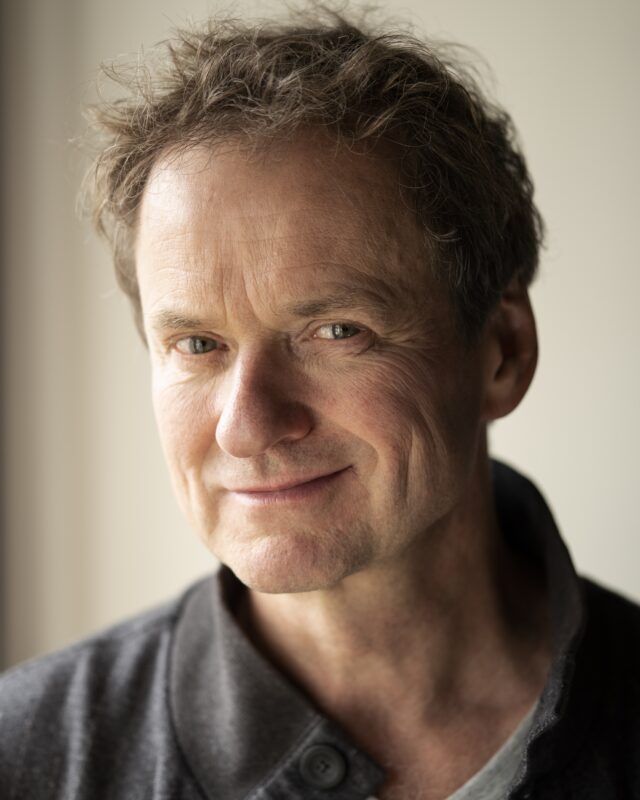
Frank Westerman

(Emmen, NL, 1964) studied tropical agricultural engineering and was a correspondent for the Volkskrant and NRC Handelsblad newspapers in Belgrade and Moskow. He wrote about his time there in 1994's De Brug over de Tara (The Bridge over the River Tara). Together with journalist Bart Rijs he wrote 1997's  Srebrenica, Het zwartste scenario (Srebrenica, the Blackest Scenario). Ingenieurs van de ziel (Engineers of the Soul) was published in 2002, an inquiry into the foundations of the Soviet system and the role of writers. De Graanrepubliek (The Grain Republic), about the struggle between rich gentlemen farmers and communist workers in Groningen, was published earlier. Westerman's novel El Negro en ik (El Negro and Me), inspired by a preserved South African in a Spanish museum, was published in 2004 and won the Gouden Uil prize. His revised and augmented 2015 edition of De Slag om Srebrenica (The Battle for Srebrenica) won the Prinsjes Book Prize for best political book. Een woord een woord (One Word One Word) appeared in 2016, in which he tests the strength of free speech under the pressure of terrorist threats. As a child, he experienced the Molukkan train hijacking at close quarters; as a correspondent, he witnessed Chechen terror in Russia. Drawing on these gripping experiences, he describes a series of hostage dramas. In Zeven dieren bijten terug (Seven Animals Bite Back), Frank Westerman encounters seven magnificent creatures in the wake of Willem Barentsz. Along the way, the reader becomes captivated by the wondrous tale of seven polar animals and what they have to tell us at our latitude.
20250218135334 1

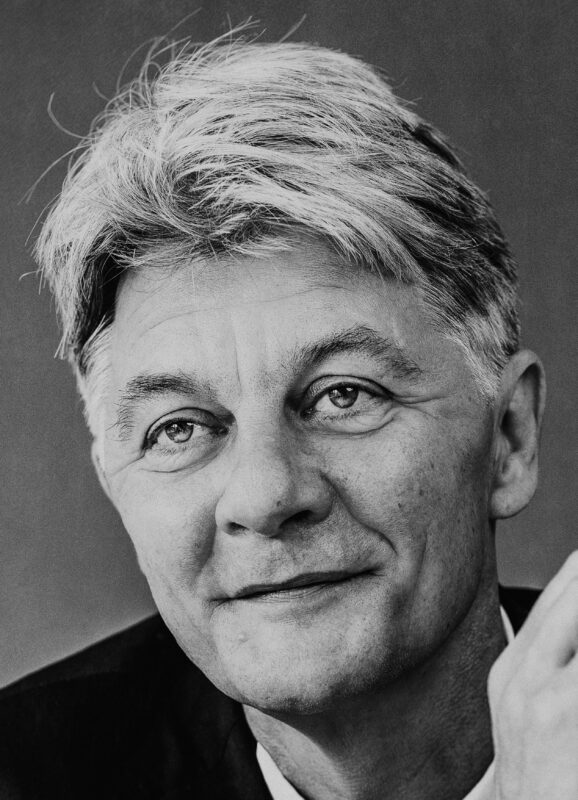
Chris Keulemans

(Tunisia, 1960) is a writer, essayist, traveller and popular panel moderator. He has published fiction and non-fiction; was the director of the debating platform and venue De Balie; and was founder of the literary bookshop Perdu and the cultural centre De Tolhuistuin (all in Amsterdam). He performed with Enkidu Khaled in their jointly created documentary play Bagdad. Due to his curiosity about how artists recreate their cities after a crisis, he travelled to Sarajevo, Beirut, Tirana, Algiers, New York, Kiev, Jakarta and Qamishlo. At the invitation of PAX, he wrote Srebrenica & PAX 1995-2020, an overview of 25 years of support to the Association of Women of Srebrenica by the IKV and PAX in response to the genocide in Bosnia. In 2021 he published Gastvrijheid (Hospitality), in which he explores the art of hospitality through a mix of travel stories, observations, memories and imagery.
20211110133423 1

Discover

20 May 2026

Get your 2027 tickets!

Get your Early Bird tickets for the big festival nights, Friday & Saturday Night Unlimited!