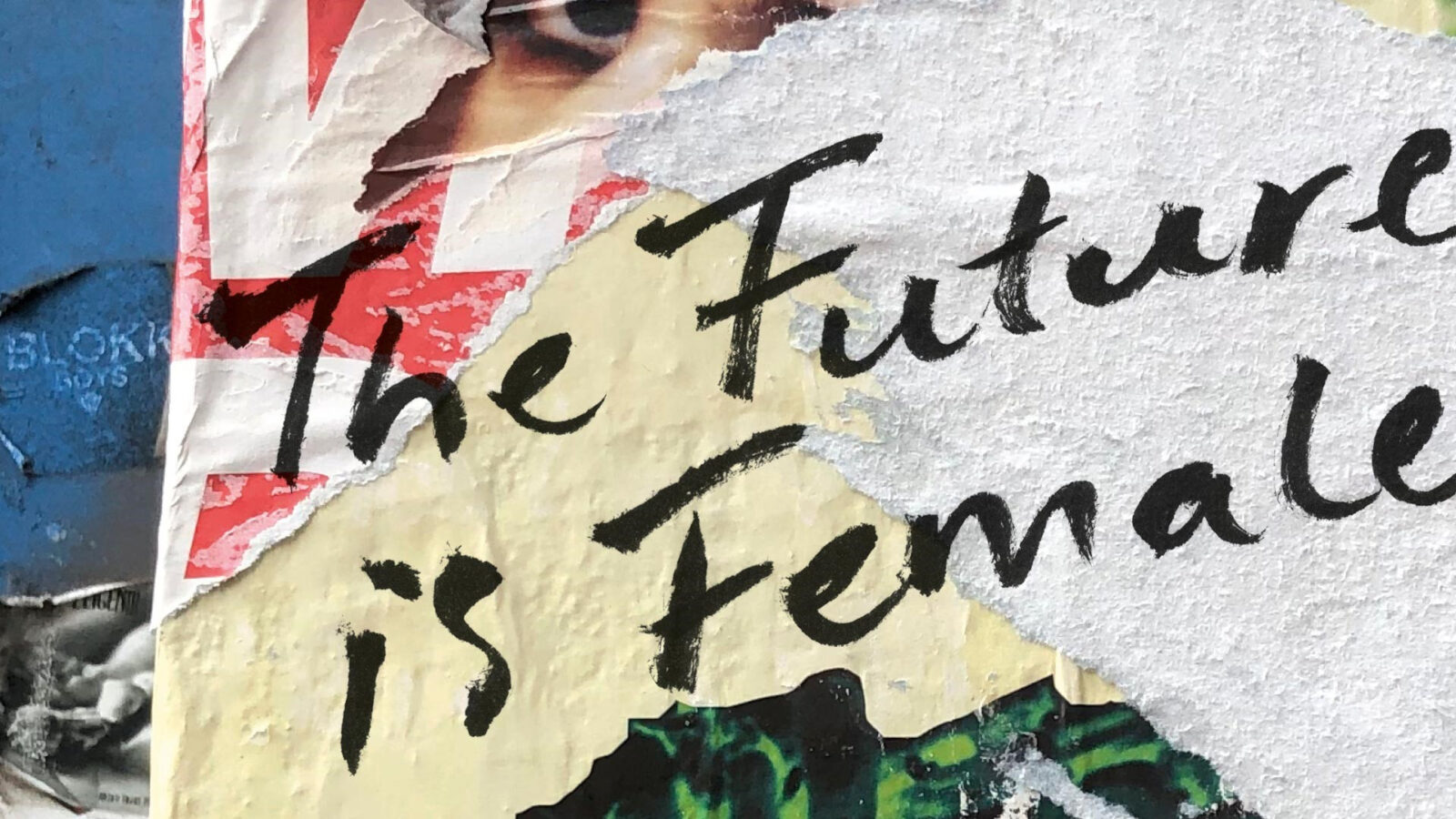
The Female Convention - #TheFutureIsFemale
20201208115352 1

It's up to us. This is what women in Poland and Turkey are demanding in their protests for gender equality and for better protection against violence. The ruling right-wing nationalist politicians in their countries want to withdraw from the so-called Istanbul Convention. This human rights convention of the Council of Europe is the world's first binding instrument to prevent and tackle violence against women. Some governments doubt the "moral implications" of this important milestone and even believe that it could be "harmful" to their societies.

3:17 - Dilâra Gürcü (France), interview.
14:10 - Mona Eltahawy (US), video essay.
17:25 - Zsófia Bán (Hungary), interview.
30:38 - Dilâra Gürcü (France), question audience.
33:03 - Kaouthar Darmoni (Netherlands), interview.
42:03 - Nazmiye Oral (Netherlands), interview.
48:48 - Kaouthar Darmoni (Netherlands), question audience.
51:09 - Mithu Sanyal (Germany) preview video piece and interview.
1:02:21 - Kaouthar Darmoni reaction on Mithu Sanyal
1:04:14 - Nazmiye Oral, question audience.
1:05:51 - Laura van Dolron (Netherlands), live written poem.
Moderated by Nicole le Fever.

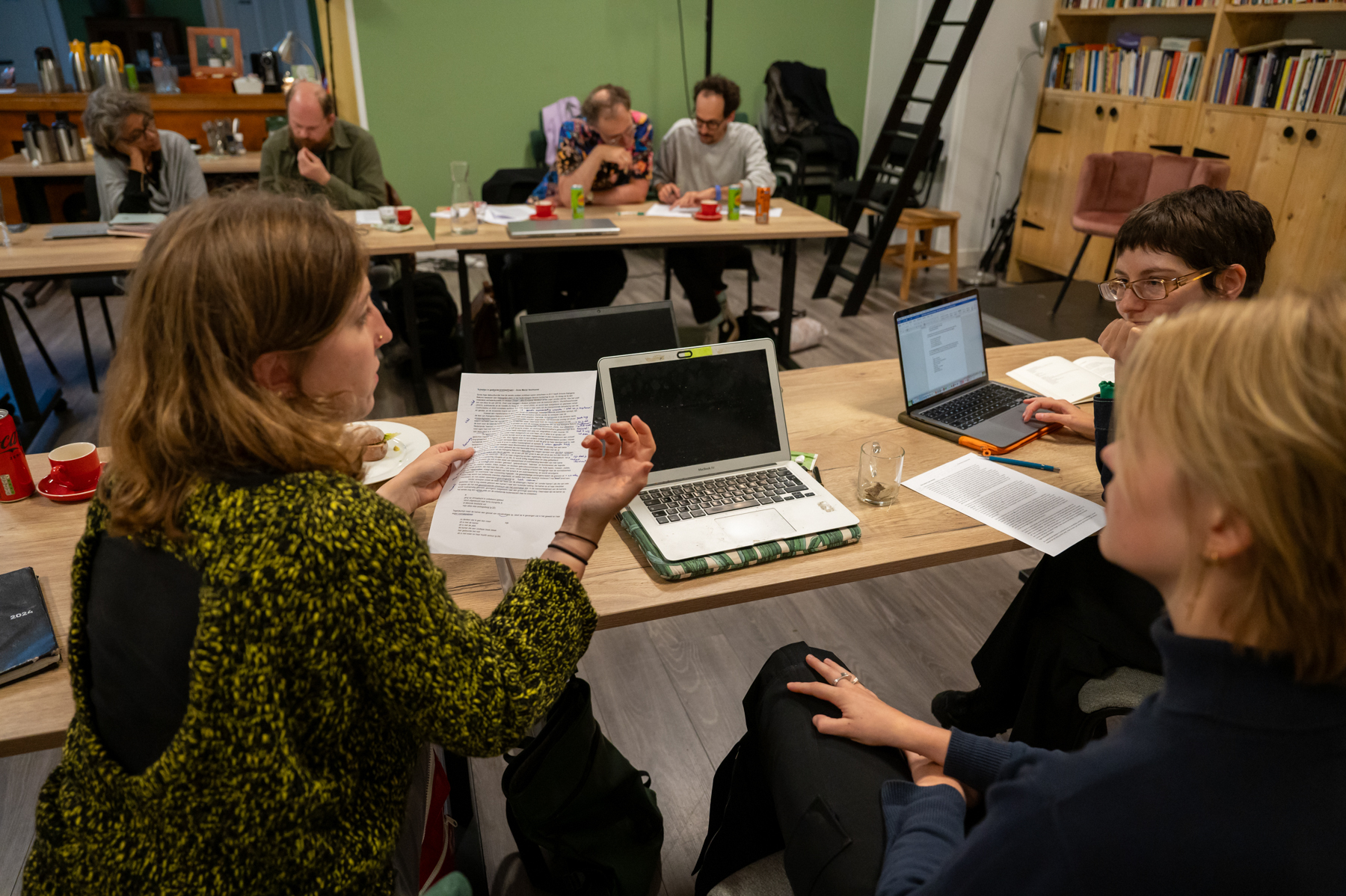
In The Female Convention, we analyzed the demonstrations and gave a voice to authors. In short: we employed literature to make the convention tangible and to breathe new life into it. This program featuring strong women and political current affairs was hosted by journalist Nicole le Fever and has been made by programme maker and writer Meltem Halaceli. Those interested could take part actively by joining the chat session, hosted by theatre maker and stand-up philosopher Laura van Dolron.

Nicole le Fever and Turkish writer, psychologist and feminist Dilâra Gürcü zoomed in on the protests in Turkey, but also on the means of protest and the role of writers and artists in this matter. Gürcü provided an impressive testimony of her life, which has changed dramatically since 2013.

The Hungarian writer and literary critic Zsófia Bán told us how she claims women's rights with the sharpness and imagination of language.

Egyptian-American journalist, writer and feminist Mona Eltahawy made it crystal clear by means of a video message that the convention does not do sufficient justice to refugees and women without residence permits, or who depend on their partners for their residence status.

We also spoke to Kaouthar Darmoni, CEO of Atria, Institute on gender equality and women's history in Amsterdam, and to actor and writer Nazmiye Oral about the role they can and want to play in this debate. How do they voice their activism and feminism from their positions?

Next, we zoomed out to a "politics of love" with the German writer, journalist and cultural scientist Mithu Sanyal. Her books Vulva (2009) and Rape: From Lucretia to #MeToo (2019) explore how our society has dealt with sexual violence for centuries, and what that says about our beliefs on sex, sexuality and gender. Her video-essay is an inspiring and confrontational report by a driven researcher about her investigation into love as a political force.

Watch here the keynote speech Love Politics by Mithu Sanyal.

Read here the text of the key-note speech 'Love Politics' by Mithu Sanyal written for this programme on request of the Winternachten international literature festival The Hague. 

(Find the Dutch-language version here/Lees hier de Nederlandstalige versie)

Read and watch on here:


Zsófia Bán
website

Laura van Dolron
website

Kaouthar Darmoni
website
website Atria - Institute on gender equality and women's history

Mona Eltahawy
website: FEMINIST GIANT newsletter
Video: Mona Eltahawys video-essays, among which FEMINIST GIANT
.

Dilâra Gürcü
Articles by Gürcü at online magazine sister-hood
Gürcüs webpage at INSEAD - The Business School for the World, Paris


Meltem Halaceli
Meltem Halaceli's publications at Dutch online news portal De Correspondent
Instagram
Facebook


MIthu Sanyal
Video: Mithu Sanyal in conversation with Verso on her book Rape: From Lucretia to #MeToo
Articles by Mithu Sanyal in The Guardian


Information

Date and time Wednesday 17 March 2021 from 20:42 to 20:42 hrs
Location Online

Meltem Halaceli

is a writer, feminist and programmer with a special interest in the Middle-East. Halaceli works as project manager for inclusivity at the University of Amsterdam and as a programmer for the Winternachten International Literature Festival The Hague. Her debut De vergeten geschiedenis van mijn grootvader Sulayman Hadj Ali (The Forgotten History of My Grandfather Sulayman Hadj Ali, 2015) deals with the discovery of her grandfather's memoirs. The book tells about her search for his life story, which ended in the First World War period, when he was a conscripted soldier - an era with direct influence on the present. Her poem Moederhuis (Motherhouse) won the El Hizjra Literature Prize. Halaceli has worked as a researcher and interpreter for various prominent programs of the Dutch national broadcaster VPRO. She is working on her second book.
20211103104105 1

Mithu Sanyal

(Germany, 1971) is a cultural scientist, journalist and author who writes about sex, gender, post-colonialism, power and racism. Her dissertation on the cultural history of female genitalia was published as Vulva. Die Enthüllung des unsichtbaren Geschlechts (Vulva: A Revelation of the Invisible Sex, 2009), a pioneering work. Since 1996 Sanyal has written features and radio plays for the German broadcaster WDR, and publishes essays and articles in publications such as The Guardian and various German magazines. Her study Vergewaltigung. Aspekte eines Verbrechens (2016; English translation Rape. From Lucretia to #MeToo, 2019) shows that beliefs about rape have a long and remarkably consistent history. In her debut novel Identitti (2021), Sanyal addresses identity politics in a story that involves a student and her Postcolonial Studies teacher, who is not the person of color she pretends to be.
20201130130747 2

Dilâra Gürcü

(Turkey, 1986) completed her high-school education at Izmir American Collegiate Institute, which included an exchange year in Rochester, New York. After completing a BA in psychology at Yeditepe University in Istanbul, she worked as a psychologist for five years. From 2013 to 2014 she wrote for the Turkish newspaper Radikal on topics such as feminism, social movements and minority rights. In 2015, she founded Turkey’s first internet platform to combat sexism, erktolia. She left the organization in 2017. In the meantime, she  has been involved with various activist projects in Turkey and France and has organized crowdfunding campaigns. Since 2014, Gürcü has written about feminism for Turkey’s first independent online magazine, T24. Her first nonfiction book, It’s No Longer Between Us (2019) emphasizes that for women, the personal must become political. She has lived in Paris since 2013, where she works in the internet technologies industry.
20201204170657 1

Kaouthar Darmoni

(Tunisia, 1968) followed Gender Studies at the Sorbonne in Paris and obtained her PhD in that field from the Lumières University Lyon II. She has lived and worked in the Netherlands for many years. She has various (academic) publications to her name, almost twenty years of experience in gender and media studies, and is also an experienced entrepreneur, a speaker about women's leadership, and a media personality. She is active in various international women's movements. Her online course, The Divine9 Dance Therapy, inspired by traditional Arabian dance, helps women find their feminine power.
20201201093020 2

Nicole le Fever

(Netherlands, 1965) started her career in youth journalism and became the Middle East correspondent for Dutch NOS News from 2006 to 2011, reporting on 22 countries from her base in Amman, Jordan. Through her work she developed great admiration for the people in the areas she covered, above all praising their helpfulness and hospitality. “When you ask for directions, whole groups walk along with you, and people are truly relieved when you reach your destination.” Since her return to the Netherlands, Le Fever has worked for the NOS newsdesk.
20120204194158

Mona Eltahawy

(Egypt, 1967) is a feminist author, commentator and disruptor of the patriarchy. Her first book, Headscarves and Hymens: Why the Middle East Needs a Sexual Revolution (2105), targeted patriarchies in the Middle East and North Africa, and her second, The Seven Necessary Sins For Women and Girls (2019), took her disruption to the global level. Her commentaries have appeared in media around the world and she creates video essays under the nom de plume FEMINIST GIANT, which is also the name of the newsletter of which she is founder and editor-in-chief.
20201216152630 2

Nazmiye Oral

is a writer, actress and theatre artist. Her 2011 debut novel Zehra features a Turkish girl who is disowned because she is different. All her work poses one central question: how does one relate to those with different opinions without denying oneself? As an actress, Nazmiye Oral performed in Oesters van Nam Kee, Combat, Hertenkamp and Baantjer. She also toured the Netherlands, Belgium and US with Gesluierde Monologen (Veiled Monologues). She wrote one of these monologues, about a wife who loses contact with her husband. In 2010 Retour Hollands Spoor premiered, her second play for the Nationale Theatre, which she wrote with Gerardjan Rijnders. In 2020, she was a featured guest in prominent Dutch TV interview program Zomergasten (Summer Guests).
20201217105355 2

Laura van Dolron

(Netherlands, 1976) expresses her idealistic self as a writer, theatre producer, director, performer and "action writer." She created her own theatrical category: stand-up philosophy. She doesn't make theatre about a better world, but makes a better world within the theatre. Van Dolron writes almost all of her own plays, and the scripts of Liefhebben (Loving) and WIJ (WE) have been published in book form. She often performs alone on stage, and sometimes with other actors. She also directs theatre performances. Since 2015 Van Dolron has performed as an "action writer," as well. At various gatherings, from theatre festivals to police workshops, she reflects live on what she observes and, with an outsider's gaze, sums up the event in clever and funny language.
20201218134023 2

Zsófia Bán

(Brazil, 1957) grew up in Brazil and Hungary. A writer, essayist, and critic, she made her fiction debut in 2007 with Esti iskola (Night School: A Reader for Grownups, 2019), followed by Amikor még csak az állatok éltek (When There Were Only Animals, 2012; Als nur die Tiere lebten, 2014). Her most recent volume of short stories is Lehet lélegezni! (Keep Breathing, 2019; Weiter atmen, 2020). Her fiction has been translated into languages including English, German, Spanish, Portuguese and Italian. Bán is also a prolific writer of essays and reviews of literature, art and visual culture. Her essay collections include The Turul Bird and the Dinosaur (2018), Exposed Memories: Family Pictures in Private and Collective Memory (2010, a co-edited volume), Test-Packing (2008), and Amerikáner (2000). Her most recent non-fiction book is Der Sommer unseres Missvergnügens (The Summer of Our Discontent, 2019, transl. by Terézia Mora). She lives and works in Budapest, where she is associate professor in the Department of American Studies at Eötvös Loránd University.
20201224163513 1

Discover

20 May 2026

Get your 2027 tickets!

Get your Early Bird tickets for the big festival nights, Friday & Saturday Night Unlimited!